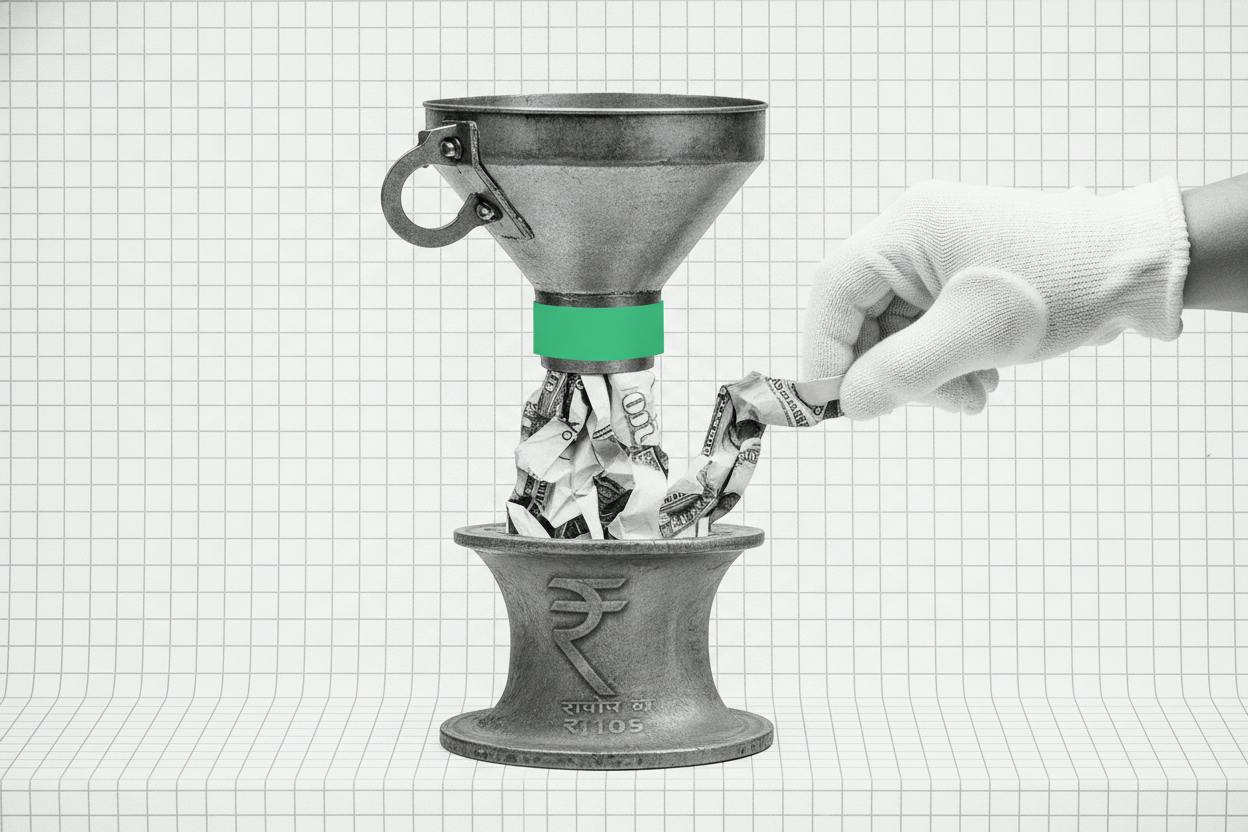
The Indian rupee edged higher on Tuesday, helped by a steady stream of foreign money flowing into the country's stock market. According to Reuters, the currency rose 0.1% as overseas investors bought Indian equities, and corporate dollar selling also provided support.
Foreign investors typically arrive with dollars and then convert them into rupees to buy shares. That conversion creates demand for the local currency, which can push its value up. The inflows have been a recurring theme in recent weeks, with foreign investors pouring billions into Indian stocks.
Why oil prices matter for the rupee
Goldman Sachs added that cooler oil prices are another tailwind for the rupee. India is one of the world's largest importers of crude oil, so when oil prices fall, the country spends less foreign currency on energy. That reduces the outflow of dollars and other hard currencies, which can help support the rupee.
The bank's view highlights how global commodity prices can ripple through emerging-market currencies. For India, a drop in oil prices is often seen as a positive for the currency and the broader economy, because it lowers the cost of imports and can help narrow the trade deficit.
The rupee's gain came even as other Asian currencies were weaker, according to Reuters. That suggests the move was driven by India-specific factors, particularly the strong appetite for Indian equities among foreign investors.
What it means for investors
For everyday investors, a firmer rupee can have mixed effects. On one hand, it can make imported goods cheaper, which may help keep inflation in check. On the other hand, a stronger currency can make Indian exports more expensive for foreign buyers, which could weigh on export-oriented companies.
For those with money in Indian stocks, the foreign inflows are a sign of confidence in the market. But investors should remember that currency moves are just one piece of the puzzle. The rupee has been caught between a strong dollar and record equity inflows, and that tug-of-war could continue.
Looking ahead, market watchers will be keeping an eye on oil prices, the dollar's direction, and whether foreign investors keep buying Indian shares. Any shift in those factors could quickly change the rupee's trajectory.
As always, it's wise to focus on your long-term goals rather than reacting to daily currency fluctuations. A diversified portfolio can help smooth out the ups and downs of any single market or currency.



