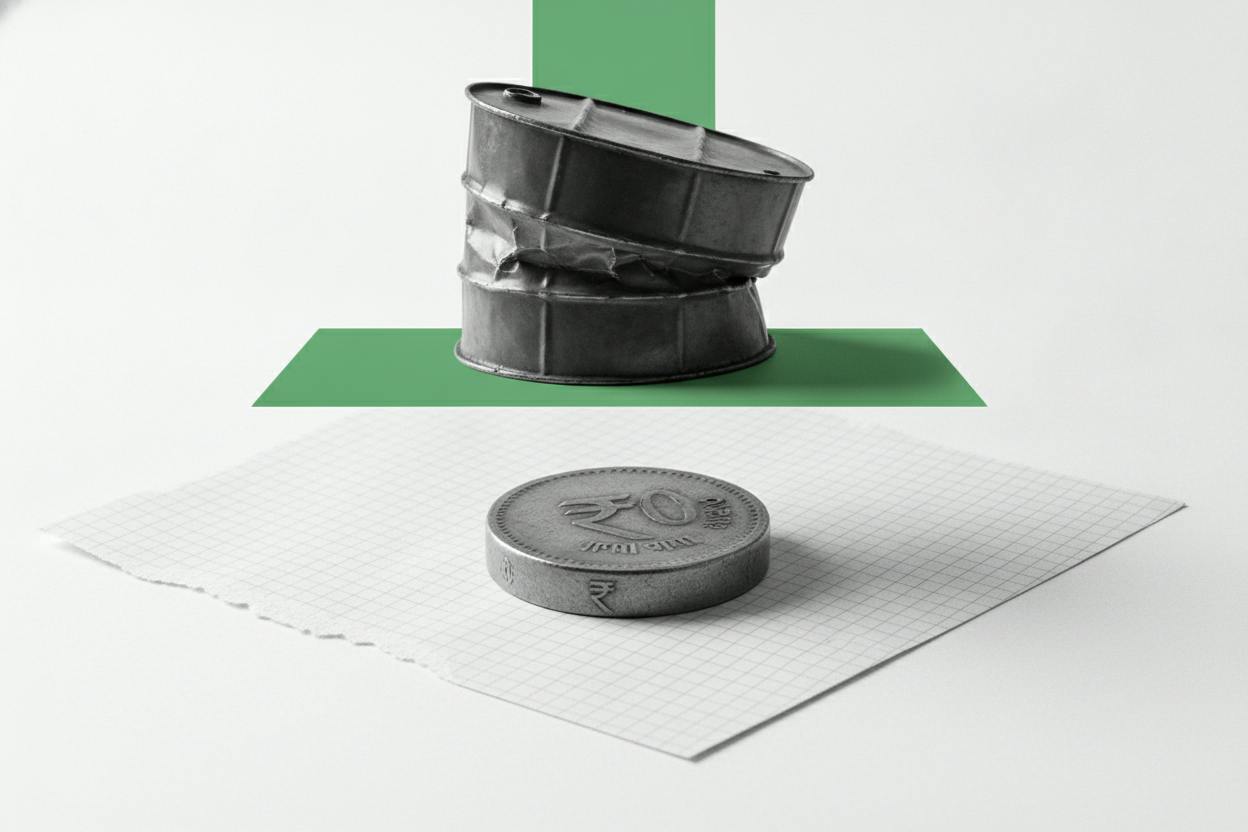
India's rupee caught a breather this week, strengthening to 94.52 per dollar as Brent crude slid toward $93 a barrel. The move offers some relief to an economy that imports nearly 90% of its crude oil, meaning energy costs have an outsized impact on the country's trade balance and currency.
When oil prices fall, India's import bill shrinks, reducing the demand for dollars needed to pay for energy. That dynamic helped the rupee firm against the greenback, even as broader market sentiment remained cautious.
Why oil prices matter so much for the rupee
India is one of the world's largest oil importers, and crude is a major component of its import bill. When oil prices rise, refiners and other importers need to buy more dollars to settle payments, which puts downward pressure on the rupee. Conversely, when oil prices drop, that dollar demand eases, giving the currency a lift.
The rupee has been under pressure for much of the year, touching 96.96 per dollar in May and down about 5% year to date. The slide was driven by a combination of high oil prices, a strong dollar, and global risk aversion. This week's drop in Brent crude, which fell toward $93 a barrel, provided a welcome reprieve.
However, analysts note that dollar buying by large banks has continued, suggesting that demand for the greenback remains firm. That could limit the rupee's upside even as oil prices soften.
What cheaper oil means for the broader economy
Lower oil prices have ripple effects beyond the currency. They can help cool inflation, as energy costs feed into everything from fuel prices to transportation and manufacturing. That, in turn, can influence the central bank's interest rate decisions.
For investors, cheaper oil is often seen as a positive for Indian equities, particularly for sectors like airlines, paints, and other industries with high energy costs. It can also improve corporate margins and boost consumer spending power.
In recent sessions, Indian shares have climbed as oil slid, with the Nifty 50 rising 1.8% on one such day. Foreign investors have also returned to Indian markets, partly on the back of easing oil prices and a softer dollar.
What it means for investors
For everyday investors, the rupee's firming is a sign that some of the pressure on the Indian economy is easing. A stable currency helps reduce uncertainty for businesses that rely on imports and can make Indian assets more attractive to foreign investors.
However, it's important to keep perspective. The rupee is still down significantly from its levels earlier this year, and oil prices remain volatile. Geopolitical tensions, global demand, and OPEC+ decisions can all send crude prices swinging again.
Investors should watch how oil prices evolve in the coming weeks, as well as the dollar's broader trend. A sustained drop in crude could provide further support for the rupee and Indian markets, while a rebound could reignite pressure.
For those with exposure to Indian stocks or bonds, the recent oil slide has been a tailwind. Indian bonds have rallied as inflation fears eased, and the rupee's stability helps reduce currency risk for foreign investors.
That said, no one should make investment decisions based on a single week's currency move. The rupee's path will depend on a complex mix of global oil supply, US interest rates, and domestic economic data.
The road ahead
This week's move is a reminder of how interconnected global markets are. A drop in oil prices can lift currencies, stocks, and bonds across emerging markets, and India is no exception.
For now, the rupee's breather is a positive development, but it's not a cure-all. The economy still faces challenges, including a wide trade deficit and the risk of further dollar strength. Investors would do well to stay diversified and keep an eye on oil prices as a key indicator for Indian markets.
As always, it's wise to focus on long-term fundamentals rather than short-term currency swings. Cheaper oil is a good sign, but it's just one piece of the puzzle.