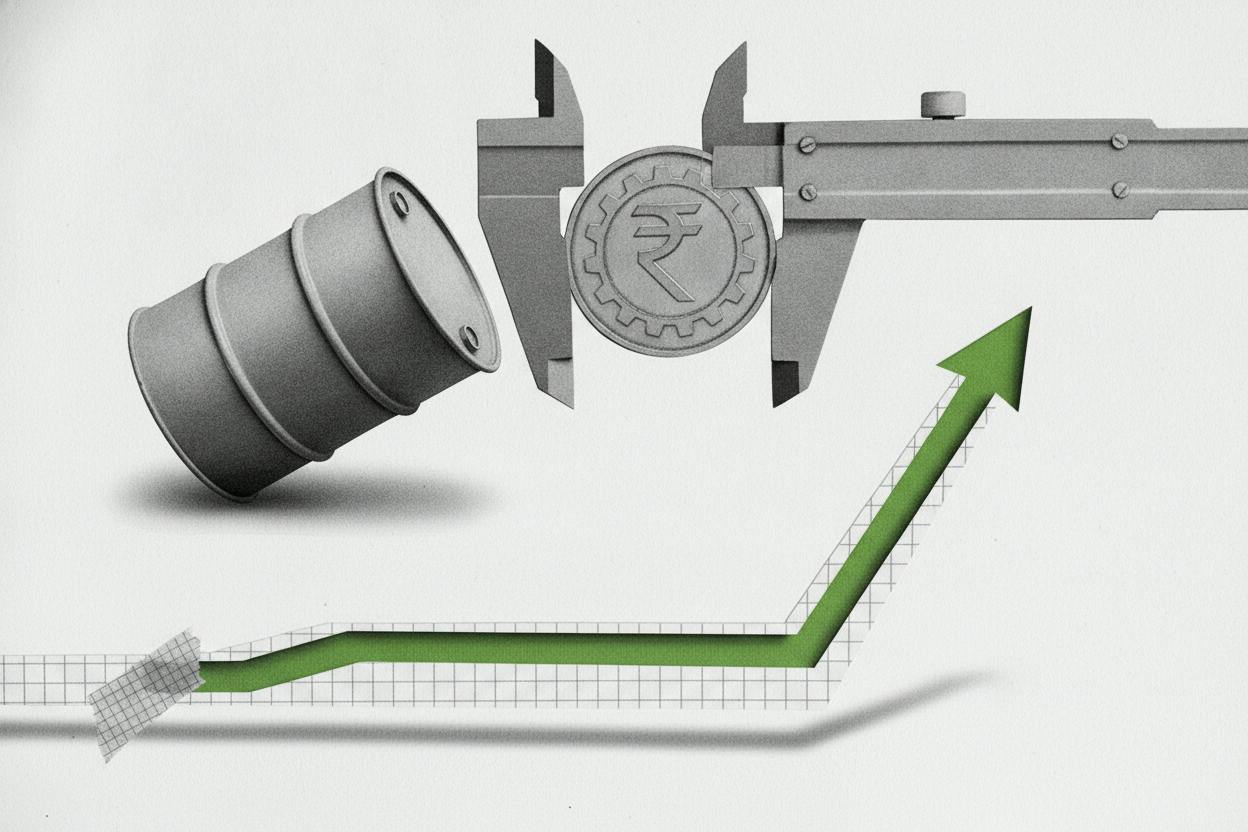
India's rupee barely moved on Tuesday, hovering near 95.90 per dollar, even as higher oil prices and rising global bond yields would normally push the currency weaker. According to Reuters, the Reserve Bank of India (RBI) likely leaned on the market to keep the spot rate steady, using tools that work behind the scenes rather than letting the exchange rate do all the adjusting.
The calm headline number, however, hides stress in the plumbing of the currency market. Reuters reported that dollar-rupee forward premiums climbed after a state-run bank executed sell/buy swaps, likely on the RBI's behalf. Think of that as the central bank meeting demand for dollars in the forward market instead of letting the spot price move. The result: the one-year forward implied yield rose to 3.5%, a signal that the cost of hedging dollar exposure is going up.
Why the RBI is stepping in
For everyday investors, the rupee's stability is a double-edged sword. On one hand, a steady currency helps keep import costs—especially for oil, which India buys in large quantities—from spiking further. On the other, the intervention has consequences. When the RBI sells dollars in the forward market, it effectively absorbs some of the pressure that would otherwise show up in the spot rate. But that doesn't make the pressure disappear; it just shifts it.
The backdrop is familiar to anyone watching emerging markets this year. Global bond yields have been climbing, with the US 10-year Treasury yield near levels not seen in years, as inflation fears bite. Higher US yields make dollar-denominated assets more attractive, pulling capital away from emerging markets like India. That typically weakens local currencies. Add rising oil prices—India imports most of its crude—and the rupee would normally be under significant downward pressure.
Instead, the RBI's intervention has kept the spot rate pinned. But the rising forward premiums tell a different story: the market is pricing in more volatility or higher costs for those who need dollars in the future. For companies that import goods or have foreign debt, this means hedging becomes more expensive, which can eat into profit margins.
What it means for investors
For Indian investors, the immediate takeaway is that the rupee's stability is not free. The RBI's actions affect the cost of borrowing and the returns on foreign investments. If you hold US dollar assets or plan to send money abroad, the forward premium matters: it's effectively the price you pay to lock in an exchange rate for a future date.
The situation is not unique to India. Across emerging markets, central banks are grappling with the same twin pressures of high US yields and commodity price swings. In Southeast Asia, the Indonesian rupiah has been hit hard, with the currency sliding to multi-year lows as US yields climb. Similarly, Latin American markets have felt the strain of a stronger dollar. The common thread is that global monetary conditions are tightening, and emerging-market currencies are bearing the brunt.
For India, the RBI's willingness to intervene suggests it prioritises stability over flexibility, at least for now. That could be reassuring for businesses that rely on predictable exchange rates, but it also means the central bank is using its reserves to defend the currency. If oil prices keep rising or US yields push higher, the pressure on the rupee could intensify, and the RBI may have to choose between letting the currency weaken or intervening more aggressively.
Investors should watch two things in the coming weeks: the trajectory of global bond yields and oil prices. If both continue to climb, the rupee's calm could be tested. The forward market is already signalling that the cost of hedging is rising, which is often a precursor to more volatility in the spot rate.
For now, the RBI's message is clear: it will use its toolkit to keep the rupee from swinging too wildly. But as the forward premiums show, the market is not entirely convinced that calm will last.