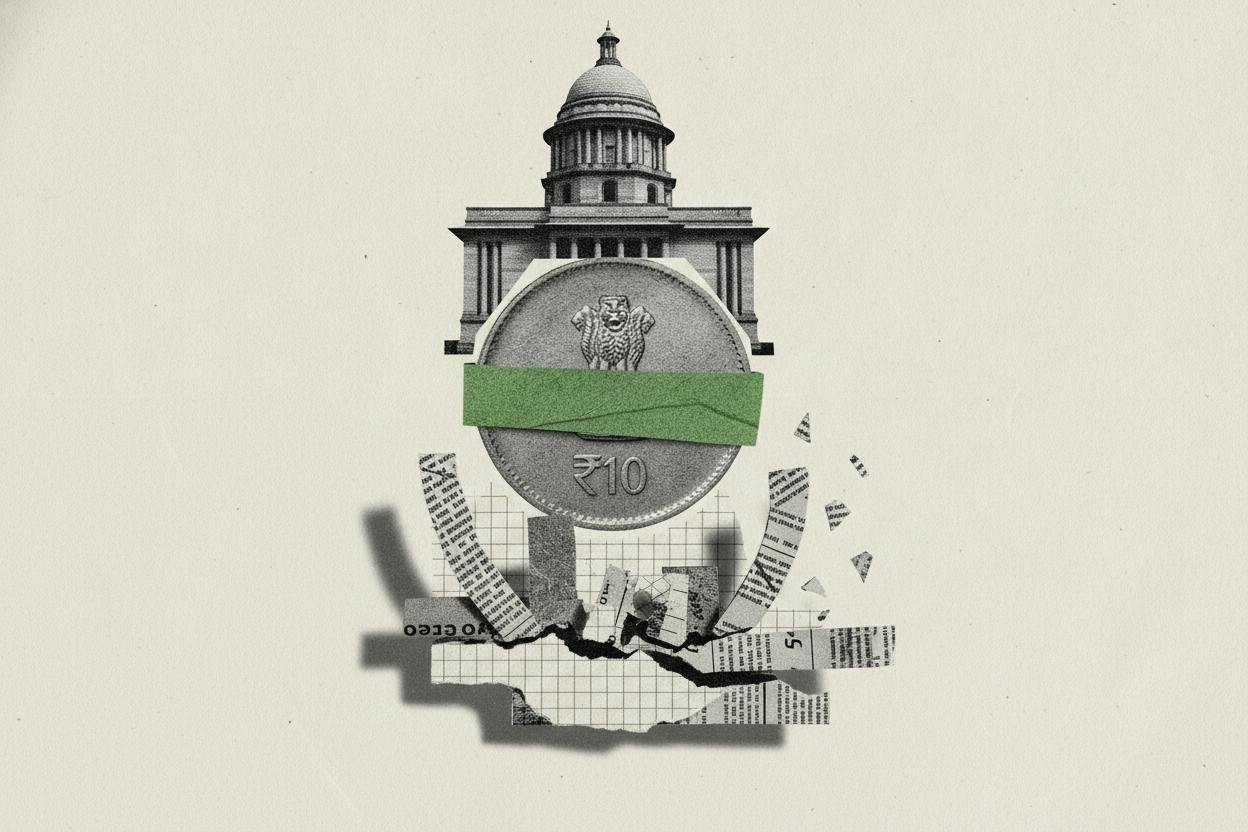
India's rupee ended Tuesday nearly unchanged at 95.1150 per US dollar, but the calm surface hides real strain. Traders say the currency is only holding up because the Reserve Bank of India (RBI) is actively intervening, as expensive oil and heavy foreign outflows weigh on the exchange rate.
Brent crude was trading near $117 a barrel in Asian hours, and India imports about 90% of the oil it uses. That means every dollar rise in crude prices increases the country's demand for dollars, putting downward pressure on the rupee. At the same time, foreign investors have net sold roughly $8.5 billion of Indian equities over the past two months, a trend that typically weakens the currency as those investors convert their rupee proceeds back into dollars.
Adding to the pressure, US Treasury yields remain elevated, with the 10-year note around 5%. High yields make dollar-denominated assets more attractive, pulling capital away from riskier markets like India. This combination—expensive oil, foreign selling, and a strong dollar—would normally send the rupee sliding. Instead, it has stayed relatively stable, and market participants credit the RBI for that.
The cost of defending a currency
Estimates suggest the RBI has spent roughly $80 billion since June to support the rupee. When a central bank sells dollars and buys its own currency, it drains local-currency liquidity from the banking system. If the RBI doesn't fully offset that drain, the pressure may shift away from the spot exchange rate and into the cost of hedging.
Traders watch USD/INR forward prices—rates for locking in an exchange rate for a future date—as a real-time gauge of how hard the central bank is working. For importers facing $117 oil, and for overseas investors managing rupee exposure, pricier forwards raise the "insurance bill" against a weaker currency. So even when the spot close looks calm, forward pricing can reveal the true cost of the RBI's intervention.
This dynamic is already visible in other parts of the market. Indian banks have paused dollar bond sales as US yields and hedging costs rise, a sign that the environment for raising foreign capital has become more expensive. The broader dollar strength, with traders awaiting decisions from the Federal Reserve, European Central Bank, and Bank of Japan, adds another layer of uncertainty.
Rajan's warning: don't fixate on a number
Former RBI governor Raghuram Rajan has weighed in on the debate, telling Reuters that policymakers shouldn't "fixate on a number" or burn through foreign-exchange reserves to defend a specific level. His comments highlight a key question for markets: how much gradual weakening will the RBI tolerate?
Rajan's view is that defending a particular exchange rate can be costly and ultimately futile if the underlying pressures persist. Instead, he suggests allowing the currency to adjust gradually, which can help the economy absorb external shocks without depleting reserves. This is a familiar debate in emerging markets, where central banks often face a trade-off between supporting the currency and preserving foreign-exchange buffers.
For India, the stakes are high. A weaker rupee makes imports more expensive, which can feed into inflation, but it also makes exports more competitive. The RBI's approach will likely depend on how long oil prices stay elevated and whether foreign investors return to Indian markets.
What it means for investors
For everyday investors, the rupee's stability is not just a macro story—it has practical implications. If you hold US dollar assets or plan to send money abroad, a weaker rupee means your dollars buy more rupees, but it also means imported goods and services become pricier. For those with exposure to Indian equities, foreign selling can weigh on stock prices, though the impact varies by sector.
The RBI's intervention also affects borrowing costs. When the central bank drains liquidity, it can push up short-term interest rates, which may influence everything from corporate loans to fixed-deposit rates. Investors should watch forward pricing and liquidity indicators for clues about the RBI's next move.
As the Fed decision looms, the dollar's direction will be a key driver for the rupee. If US yields stay high, the pressure on emerging-market currencies is likely to persist. But if the RBI signals a willingness to let the rupee weaken gradually, as Rajan suggests, the adjustment might be smoother than a sudden drop.
For now, the rupee's flat close is a reminder that central bank support can mask underlying stress. The real test will come when the RBI decides how much longer it wants to keep spending reserves to defend a level—and what it will do when that support is withdrawn.