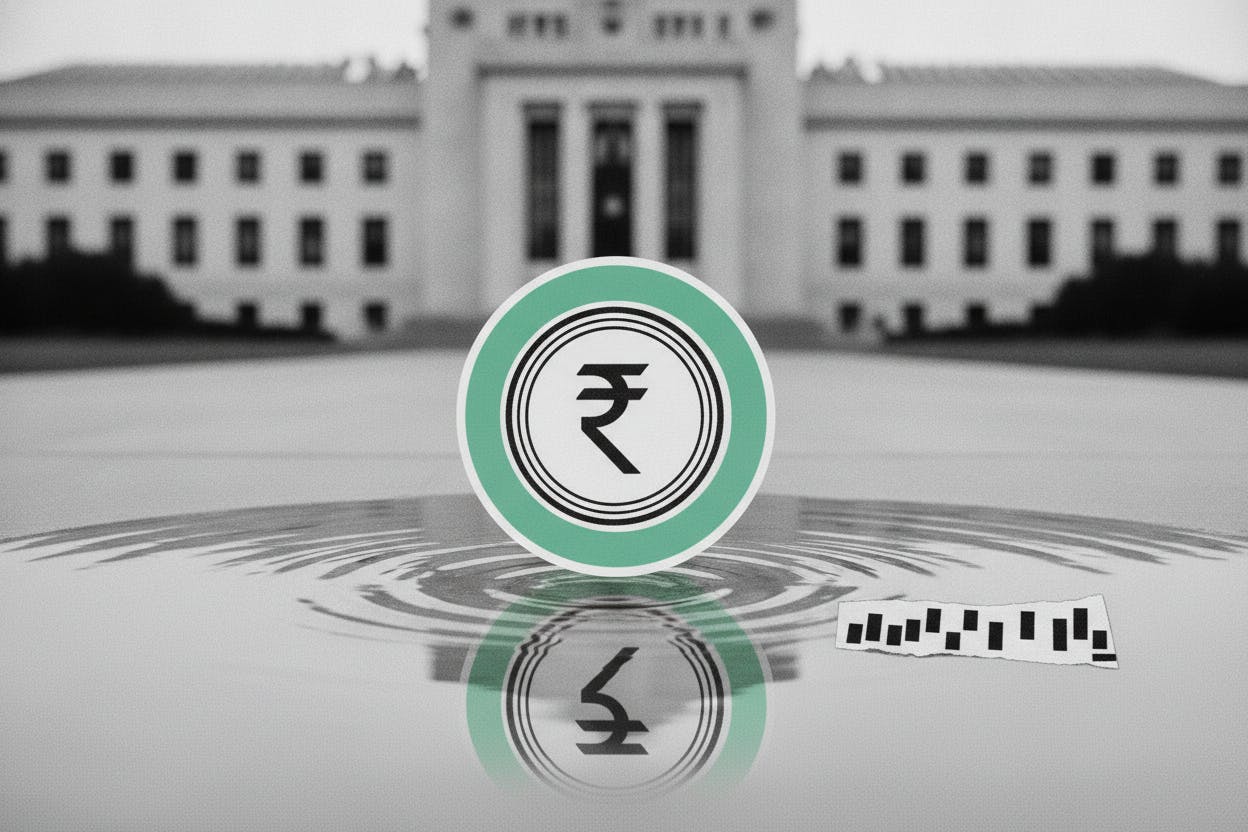
India's rupee held near 95.62 per US dollar on Thursday, as traders weighed the implications of a Federal Reserve meeting that left interest rates unchanged but offered little clarity on the path ahead. The currency's narrow range reflected a broader sense of caution in global markets, with forward premiums—a measure of expected future exchange rate movements—slipping and Brent crude oil hovering around $89.75 a barrel.
Fed's Hold, Mixed Signals
The Federal Reserve's decision to keep its benchmark interest rate steady was widely expected, but the accompanying statement and press conference left many investors scratching their heads. Policymakers reiterated their desire to see inflation move sustainably lower, yet avoided giving a clear timeline for future rate cuts or hikes. That ambiguity briefly pushed the US dollar lower against major currencies, as traders recalibrated their expectations.
Longer-term US borrowing costs, however, moved in the opposite direction. The 30-year Treasury yield climbed to its highest level since 2007, reflecting concerns that the Fed may keep rates elevated for longer than previously anticipated. Higher US yields typically make dollar-denominated assets more attractive, putting pressure on emerging market currencies like the rupee.
Oil Prices and India's Import Bill
Brent crude's stability near $89.75 a barrel added another layer of complexity for the rupee. India imports roughly 85% of its oil needs, so higher crude prices increase the country's import bill and widen its trade deficit. That dynamic often weighs on the rupee, as more dollars are needed to pay for energy purchases. The recent rally in oil prices, driven by supply cuts from OPEC+ and geopolitical tensions, has kept the rupee under pressure in recent weeks.
Forward premiums, which reflect the cost of hedging against future currency moves, slipped on Thursday. Lower premiums suggest that traders are less willing to pay for protection against rupee depreciation, possibly because they see limited near-term volatility. But that could change quickly if the Fed's next move becomes clearer or if oil prices spike further.
What It Means for Investors
For everyday Indian investors, a stable rupee near 95.62 means imported goods—from electronics to machinery—remain relatively expensive. Those with exposure to US stocks or dollar-denominated assets may see muted returns when converted back to rupees, as the currency's weakness erodes gains. Conversely, exporters, particularly in IT and pharmaceuticals, benefit from a weaker rupee, as their dollar revenues translate into more rupees.
The Fed's uncertain stance also has implications for Indian interest rates. The Reserve Bank of India (RBI) closely watches the Fed's moves, as rate differentials influence capital flows. If the Fed keeps rates high, the RBI may be less inclined to cut its own rates, keeping borrowing costs elevated for Indian consumers and businesses. That could weigh on domestic demand and corporate earnings, especially for rate-sensitive sectors like real estate and auto.
Investors should also keep an eye on upcoming Indian economic data and earnings reports, which could provide more direction for the rupee. A strong showing from Indian companies, particularly those with global exposure, could boost sentiment and support the currency.
Broader Market Context
The rupee's recent moves come against a backdrop of mixed signals from global markets. Latin American markets also treaded water as oil surged and the Fed decision loomed, highlighting the interconnected nature of emerging market currencies. Meanwhile, Japanese stocks wobbled as AI chip stocks kept traders on edge, reflecting the tech sector's sensitivity to interest rate expectations.
In India, the rupee's stability near 95.62 is a far cry from the near three-week high it hit earlier this month, when stocks rallied ahead of the Fed decision. That rally has since faded, as the lack of clear guidance from the Fed leaves traders guessing about the next catalyst.
Looking Ahead
The rupee's next move will likely depend on a combination of factors: the Fed's future communications, oil price trends, and domestic economic data. If the Fed signals a more dovish stance in coming months, the dollar could weaken, giving the rupee room to appreciate. But if oil prices continue to rise or the Fed maintains its hawkish tone, the rupee could come under renewed pressure.
For now, traders are in a wait-and-see mode, with the rupee treading water near 95.62. The lack of a clear direction underscores the uncertainty that pervades global markets, as investors try to decipher the Fed's next move and its implications for emerging market currencies.