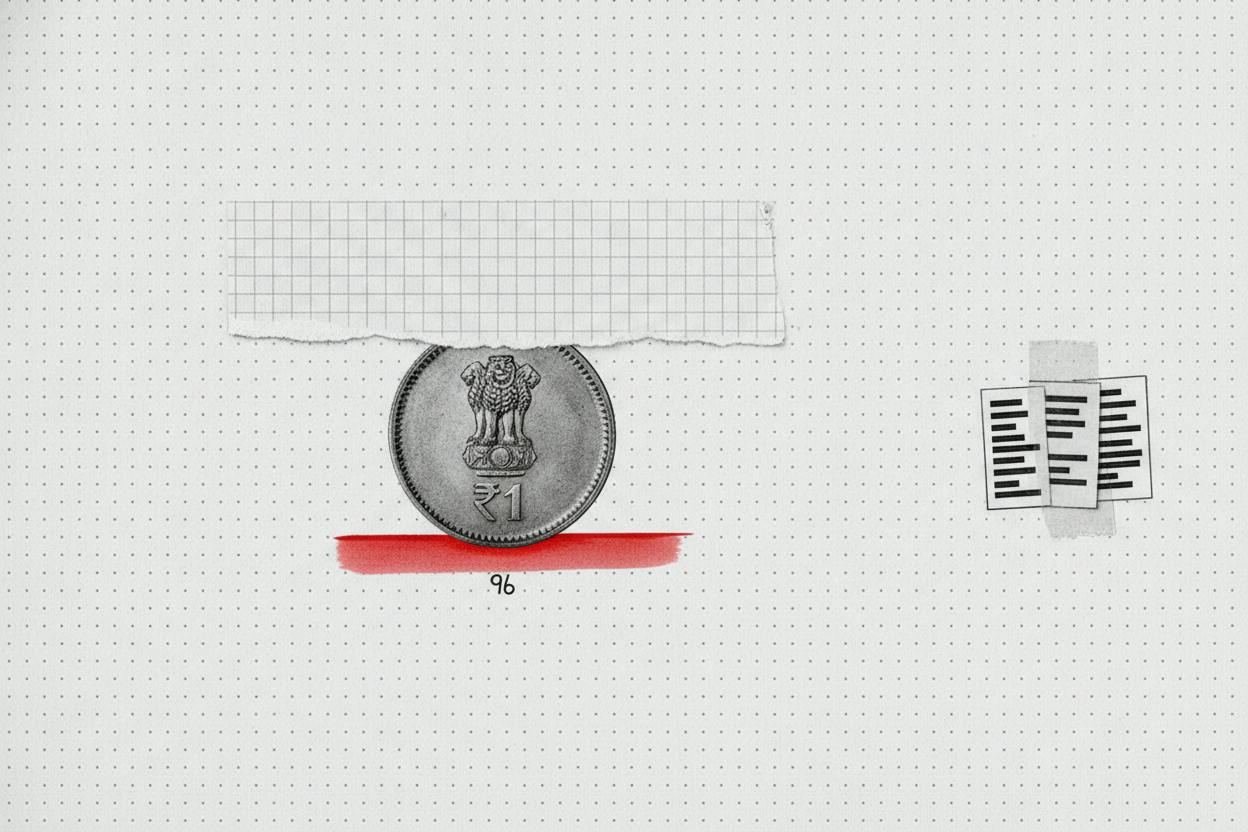
India's rupee slid 0.3% over the week to 95.8750 per US dollar, but traders say the Reserve Bank of India (RBI) is stepping in to keep the currency from weakening past 96. The move comes as global interest rates push higher, with the Federal Reserve and the Bank of Japan both raising rates this week, according to Reuters.
Why the rupee is under pressure
Higher global rates tend to pull money toward higher-yielding, lower-risk assets, often at the expense of emerging-market currencies like the rupee. When investors can earn more in US Treasuries or Japanese bonds, they may shift funds away from riskier markets, putting downward pressure on currencies like India's.
India also has two extra pressure points. First is oil: as a major importer, pricier crude tends to worsen the country's trade balance and raise inflation. Second is the central bank's intervention, which traders say has been firm near the 96 mark. The RBI has historically used its foreign exchange reserves to smooth excessive volatility in the rupee, selling dollars to support the currency when it weakens sharply.
The rupee's decline is part of a broader trend in emerging markets. Other currencies, like the South African rand, have also been under pressure as traders await inflation data and central bank decisions. In Asia, Malaysia's KLCI slipped as August inflation ran hotter than expected, showing how global rate dynamics are affecting the region.
What this means for investors
For everyday investors, a weaker rupee has mixed implications. On one hand, it can make Indian exports more competitive, which could benefit companies that sell goods abroad. On the other hand, it makes imports more expensive, which can feed into domestic inflation and squeeze companies that rely on imported raw materials.
For those with international investments, a falling rupee means that returns in foreign currencies, like US dollars, translate into fewer rupees when converted back. Conversely, Indian investors holding foreign assets may see their rupee-denominated value rise.
The RBI's intervention is a signal that the central bank is keen to avoid a disorderly slide in the currency. While it may not prevent gradual depreciation, it can help reduce volatility, which is generally positive for markets. Investors should watch for further rate decisions from global central banks, as well as oil price movements, as these are likely to drive the rupee's next moves.
Looking ahead
Traders will be closely watching the RBI's actions in the coming days. If the central bank continues to defend the 96 level, the rupee may stabilise, but if global pressures intensify, further intervention could be needed. The Fed's hawkish signal has already caused ripples in markets, with some stocks rebounding as traders question the central bank's stance. The dollar's movement against major currencies will also be a key factor.
For now, the rupee's path depends on a delicate balance between global rate differentials, oil prices, and the RBI's willingness to use its reserves. Investors should keep an eye on these factors, as they will influence not only the currency but also the broader Indian market.