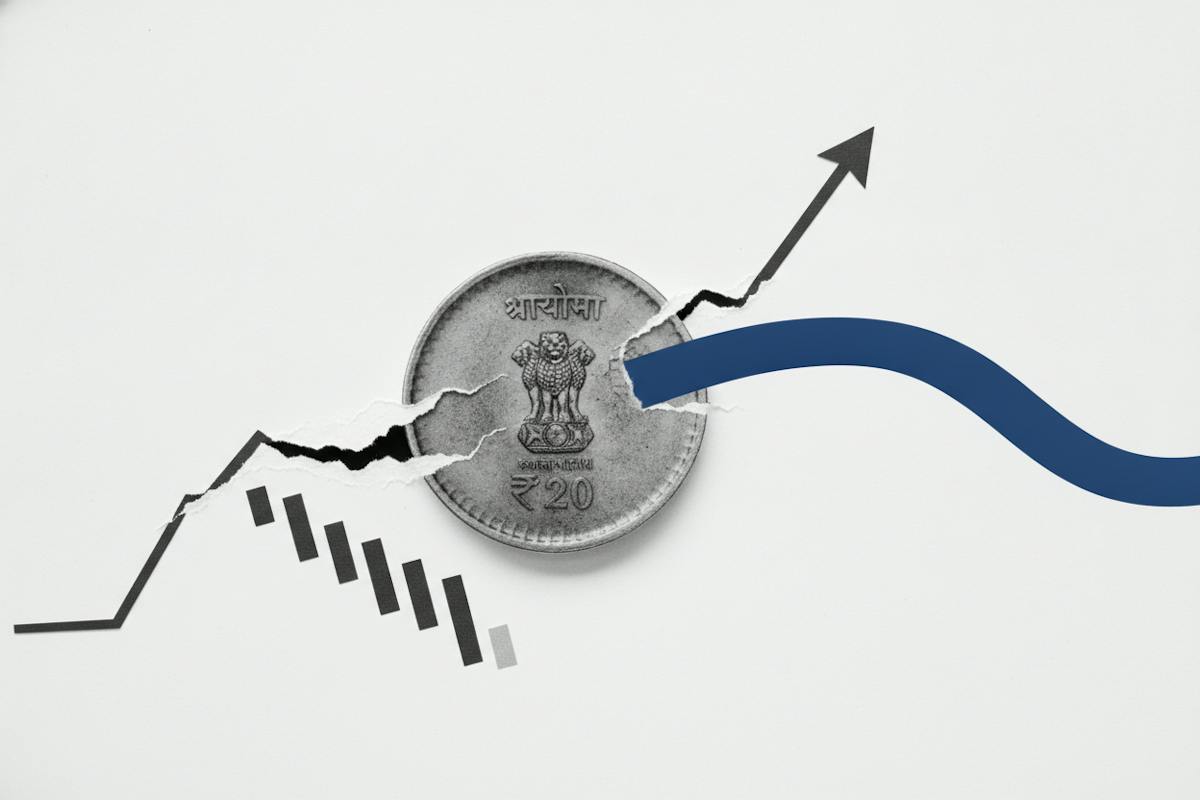
India's currency and stock market both lost ground on Friday, as a fresh wave of enthusiasm for artificial intelligence stocks in overseas markets threatened to divert foreign investment away from the country.
The rupee eased to 92.7250 per US dollar after starting the session on a stronger footing, while the Nifty 50 index fell 0.5%. The moves came as traders weighed whether the global spotlight on AI-related assets would come at India's expense.
Why AI excitement matters for India
According to Reuters, overseas markets tied to AI were firmer on the day, including South Korea's stock market and Nasdaq futures. That matters for India because global investors often direct new cash toward whichever theme is performing best at the moment. When AI stocks are rallying abroad, fund managers may choose to park fresh money there instead of in Indian equities.
India has been a major beneficiary of foreign capital in recent weeks. Foreign investors have been net buyers of roughly $16 billion of Indian stocks in November, a substantial inflow that has helped support both the rupee and the broader market. That buying has reversed a significant portion of earlier outflows, but Friday's session suggested the tide could be shifting.
The pull of AI is not new. In recent months, global markets have repeatedly swung between AI-driven optimism and caution, with investors rotating between AI and domestic stocks in different regions. When AI sentiment is strong, money tends to flow toward tech-heavy markets like the US and South Korea, sometimes at the expense of emerging markets like India.
Rupee under pressure
The rupee's decline to 92.7250 per dollar reflects this dynamic. A weaker currency can have mixed effects for Indian investors. On one hand, it makes Indian exports more competitive and can boost the earnings of companies that sell abroad. On the other, it raises the cost of imports, particularly oil, which India buys in large quantities. Higher import costs can feed into domestic inflation and put pressure on the central bank to act.
The Reserve Bank of India (RBI) has been active in managing the rupee's moves. Earlier this year, the central bank allowed the rupee to rise to squeeze out one-way bets after a period of record inflows. That intervention showed the RBI's willingness to smooth volatility, but it also means the central bank is closely watching currency levels.
Friday's slide comes as traders look ahead to the RBI's next policy decision, scheduled for December 4. The central bank is widely expected to hold its benchmark interest rate steady, but any change in tone could influence the rupee's direction. If the RBI signals a more dovish stance, the rupee could weaken further; if it sounds hawkish, the currency might find support.
What it means for investors
For everyday investors, the key takeaway is that global sentiment can quickly shift capital flows, and India is not immune. The recent foreign buying spree has been a tailwind for Indian stocks and the rupee, but it can reverse just as quickly if a hotter theme—like AI—captures global attention.
Investors with exposure to Indian equities should watch the RBI's December 4 decision closely. A rate cut could boost domestic growth but might also weaken the rupee, while a hold could keep things stable. The Nifty's recent slip also highlights that even strong markets take breathers, especially when external factors like oil prices and the dollar are in play.
The broader backdrop remains one of uncertainty. The dollar has been strong globally, which typically pressures emerging market currencies. At the same time, strong dollar and oil prices have squeezed other emerging markets, and India is not isolated from those forces.
For now, the rupee's slide and the Nifty's dip are modest, but they serve as a reminder that India's markets are increasingly tied to global investment trends. The AI rally abroad is not necessarily bad for India—it can lift sentiment for tech stocks everywhere—but it can also pull capital away from markets that are not at the center of the excitement.
As the RBI meeting approaches, traders will be watching for any hints about the central bank's view on growth, inflation, and the currency. The rupee's path in the coming days will likely depend as much on global AI sentiment as on domestic policy.