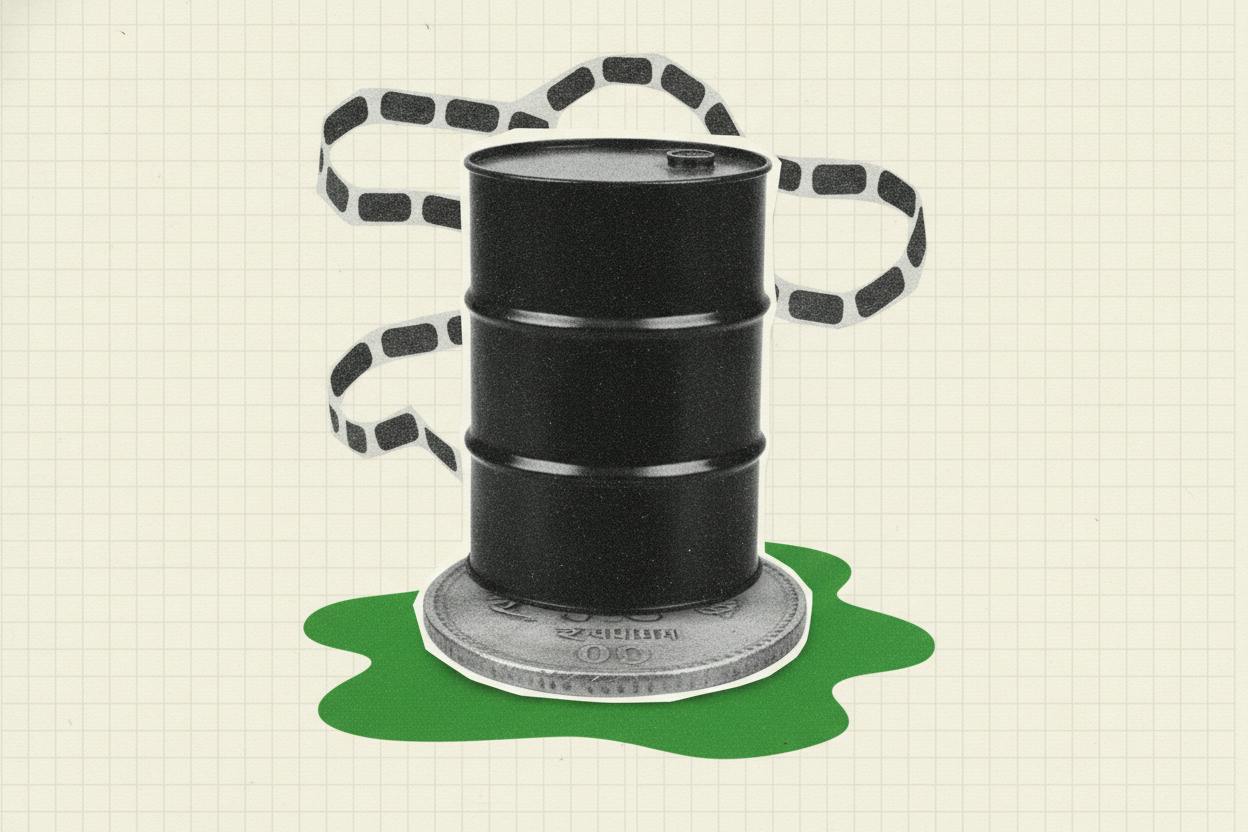
The Indian rupee weakened to 94.96 against the US dollar on Tuesday, as rising oil prices and renewed concerns about artificial intelligence spending pushed investors toward safer assets. The move came even as traders scaled back expectations for a Federal Reserve rate hike next week, with the probability now below 10%.
Brent crude, the international oil benchmark, hovered near $114 a barrel, keeping import costs elevated for India, which relies on overseas purchases for most of its energy needs. Higher oil prices typically widen India's trade deficit and put downward pressure on the rupee.
What's behind the pressure?
The rupee's decline reflects a combination of global and domestic factors. On the global side, fresh AI-related jitters have rattled equity markets, prompting investors to move money into traditional safe havens like the US dollar and government bonds. This risk-off mood has weighed on emerging-market currencies, including the rupee.
At the same time, oil's stubborn strength continues to be a drag. India imports roughly 80% of its crude oil, so every dollar increase in the price of Brent translates into higher import bills and a larger current account deficit. That dynamic often forces the rupee lower.
Interestingly, the currency's slide occurred even as markets reduced the likelihood of a Fed rate hike at next week's policy meeting to under 10%. A less hawkish Fed would normally support emerging-market currencies by narrowing interest rate differentials, but the oil and AI concerns appear to be overriding that support.
What it means for investors
For everyday investors, a weaker rupee has mixed implications. On one hand, it can boost the returns of exporters and companies that earn revenue in dollars, such as IT services firms and pharmaceutical companies. On the other hand, it makes imports more expensive, which can feed into domestic inflation and hurt companies that rely on imported raw materials.
Investors with exposure to international funds or US stocks may also feel the pinch, as a weaker rupee reduces the rupee value of foreign investments. Conversely, those holding dollar-denominated assets may see gains when converted back to rupees.
The rupee's movement is closely tied to oil prices and global risk sentiment. If Brent continues to climb, the currency could face further pressure. Conversely, any easing in AI-related fears or a more dovish Fed could provide some relief.
Broader market context
The rupee's slide comes amid a turbulent period for Indian equities. Oil at $114 has dragged Indian stocks lower for a fourth straight session, as investors worry about the impact of high energy costs on corporate margins and economic growth. The benchmark indices have been under pressure, with IT and auto stocks among the worst hit.
Earlier in the week, Indian stocks showed signs of a rebound as oil hovered near $113.5, but the renewed spike in crude has dampened those hopes. The RBI has also signaled that it may need to raise interest rates further to combat inflation, which could add to the headwinds for equities.
The AI-driven selloff is not limited to India. AI spending fears have hit the Australian and New Zealand dollars as well, as global investors reassess the profitability of big tech companies' massive investments in artificial intelligence. This risk-off sentiment has spilled over into currency markets, with the yen also strengthening as investors flee the dollar.
What to watch next
Investors will be closely monitoring the Federal Reserve's policy decision next week. While the odds of a hike have fallen below 10%, any surprise could trigger sharp moves in the dollar and, by extension, the rupee.
Oil prices remain the key variable. If Brent stays above $110, the rupee could test new lows. On the other hand, any easing in geopolitical tensions or a slowdown in global demand could bring prices down and provide relief.
Domestically, the RBI's stance on interest rates will also be in focus. With inflation still above the central bank's comfort zone, further rate hikes could support the rupee by attracting foreign capital, but they could also weigh on economic growth.
For now, the rupee's trajectory hinges on a delicate balance between oil, AI sentiment, and central bank policy. Investors should keep an eye on these factors and consider how they might affect their portfolios.



