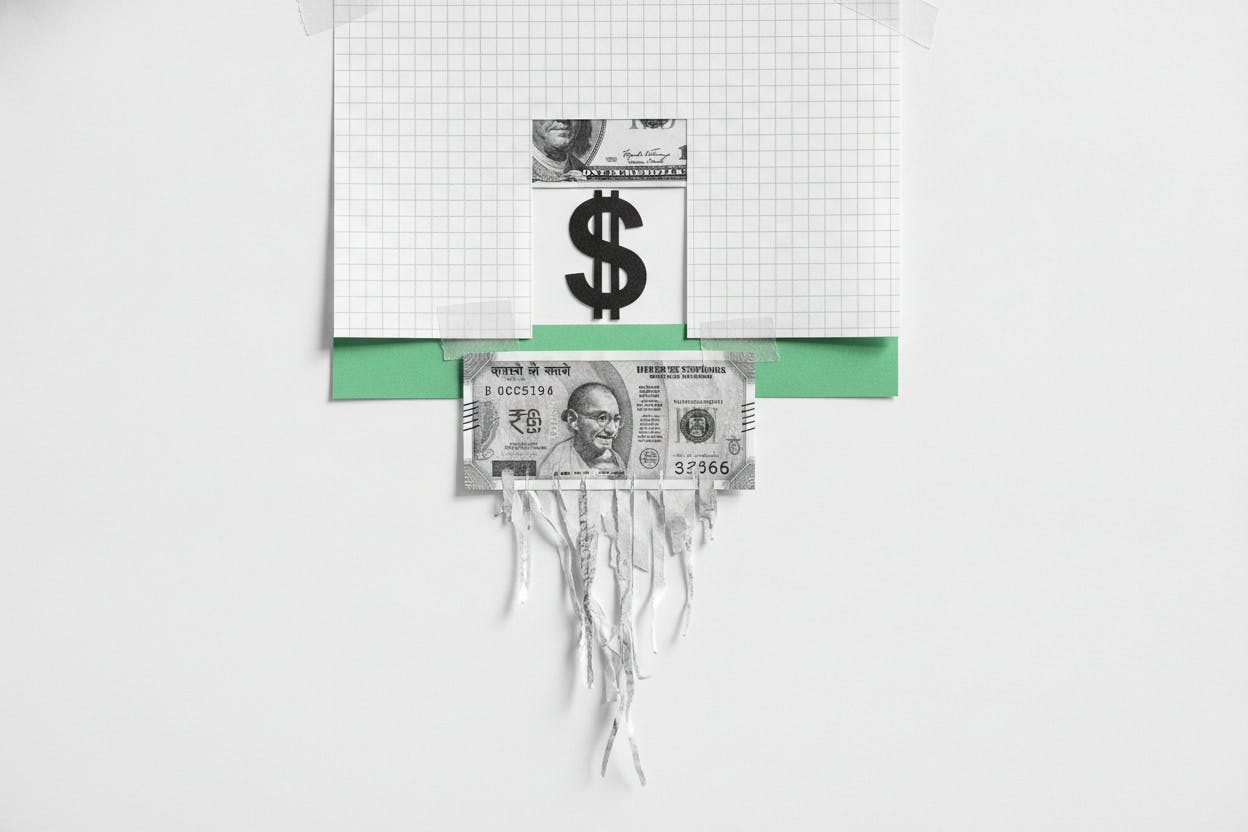
The Indian rupee weakened to 96.30 against the US dollar on Thursday, as a wave of dollar buying tied to maturing non-deliverable forwards (NDFs) hit the onshore market during the Reserve Bank of India's daily fixing window. The move extends the rupee's decline to more than 1.5% this month, a contrast to many other Asian currencies that have remained relatively rangebound.
What's Driving the Rupee Lower?
At the heart of Thursday's move is a technical factor known as "at-the-fix" demand. Non-deliverable forwards are offshore derivatives that allow investors to bet on the rupee without actually exchanging dollars. But when those contracts mature, the counterparties often need to source real dollars in the onshore market to settle or hedge their positions. That demand tends to concentrate in a narrow window around the RBI's daily reference rate fixing, creating a temporary but sharp pull on the currency.
Traders noted that the RBI's reference rate was quoted at a 0.45-0.60 paisa premium, a sign that the central bank is absorbing some of the pressure but not fully offsetting it. Meanwhile, the gap between 1-month NDF pricing and the 1-month onshore forward premium has widened, indicating that offshore investors are paying more to express bearish views on the rupee than their onshore counterparts.
Options markets have also leaned more bearish, with investors buying protection against further rupee weakness. That suggests the market is bracing for more downside, even if the immediate trigger is a plumbing issue rather than a fundamental shift.
Broader Pressures: Oil, Trade Deficit, and Capital Flows
The rupee's troubles are not just about NDF mechanics. The broader backdrop has turned less friendly for India's external balances. Brent crude oil has climbed above $85 a barrel, driven by Middle East tensions, and higher oil prices worsen India's trade deficit because the country imports most of its crude. Recent data showed a bigger trade gap and another monthly shortfall in capital flows, adding to the pressure on the currency.
India's trade deficit widened in recent months as imports outpaced exports, and portfolio flows have turned negative amid global uncertainty. That combination typically weighs on the rupee, as more dollars leave the economy than enter it.
Even so, traders believe the RBI's recently announced currency-support measures could limit the downside. Barclays estimated that those measures might pull $50-70 billion of inflows into India this fiscal year, providing a cushion against further weakness. The RBI has a range of tools at its disposal, including direct intervention in the spot and forward markets, as well as measures to encourage dollar inflows from banks and exporters.
What It Means for Investors
For everyday investors, the rupee's slide has several implications. A weaker rupee makes imported goods more expensive, from electronics to crude oil, which can feed into domestic inflation. That could influence the RBI's interest rate decisions, as the central bank balances supporting the currency with controlling price pressures.
For those with international investments or travel plans, a weaker rupee means less purchasing power abroad. But for Indian exporters, a cheaper rupee can boost competitiveness, potentially supporting sectors like IT services and pharmaceuticals that earn in dollars but pay costs in rupees.
The widening gap between NDF and onshore forward pricing is a signal worth watching. It suggests that offshore investors are betting on further rupee weakness, and that the cost of hedging against that weakness is rising. For companies with foreign currency exposure, that means higher hedging costs, which can eat into profit margins.
Investors should also keep an eye on the RBI's daily fixing rate. The 0.45-0.60 paisa premium is a clue about where the pressure is building. If that premium persists or widens, it could signal that the RBI is allowing more gradual depreciation rather than fighting the market. Conversely, a narrowing premium would suggest the central bank is stepping in more aggressively.
What to Watch Next
The immediate focus will be on whether the RBI's support measures can stem the outflow and attract the $50-70 billion in inflows that Barclays projects. If those inflows materialize, they could provide a significant buffer against further rupee weakness. But much depends on global factors, including oil prices and the Federal Reserve's interest rate path.
Higher oil prices are a double-edged sword for India. They worsen the trade deficit but also push up inflation, which could force the RBI to keep rates higher for longer. That, in turn, could attract foreign portfolio flows seeking higher yields, providing some support for the rupee. But if global risk appetite sours, those flows could reverse quickly.
The rupee's slide also comes against a backdrop of broader currency moves in Asia. The Chinese yuan has also been under pressure, as the PBOC sends subtle signals to curb currency strength. That dynamic could influence regional capital flows and add to the rupee's challenges.
For now, the rupee remains in a delicate position. The NDF-driven pressure is a reminder that currency markets are not just about fundamentals but also about plumbing and positioning. Investors should watch the forward curve and option pricing as early warning systems for where the rupee might head next.



