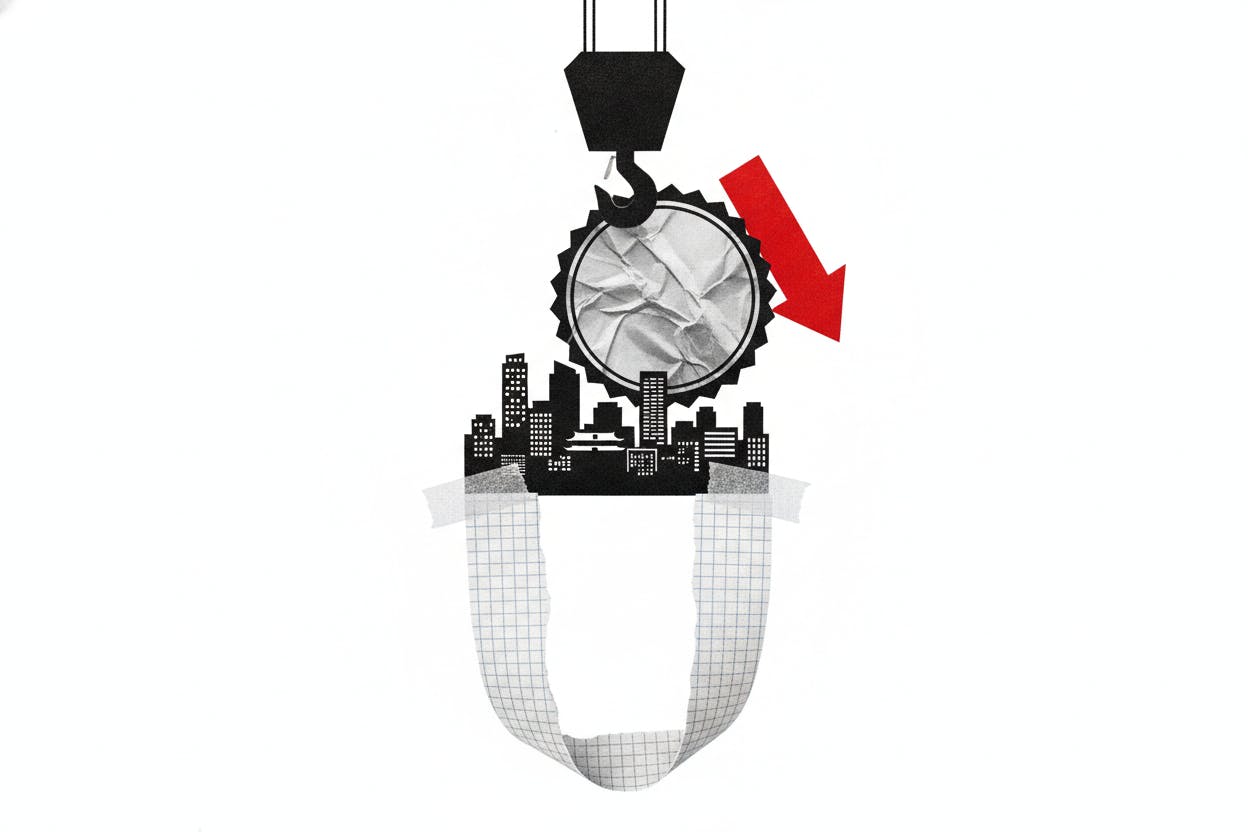
S&P Global Ratings has turned more cautious on China State Construction Engineering (CSCEC), one of the country's largest state-backed builders. The ratings agency revised its outlook on the company from stable to negative, while keeping its long-term issuer credit rating at A.
The shift reflects growing pressure on the construction giant from multiple fronts: tighter funding conditions, intensifying competition, and a prolonged slowdown in China's property market that continues to keep leverage high. For everyday investors, the move is a signal that even state-linked players in China's construction sector are not immune to the broader headwinds facing the economy.
What's Behind the Negative Outlook?
S&P cited three main factors for the downgrade in outlook. First, funding conditions have become more restrictive across China's corporate sector, making it harder for companies to access affordable credit. Second, competition in the construction industry has intensified, squeezing margins and reducing pricing power. Third, the ongoing property downturn—which has seen home sales and new starts decline sharply—has kept CSCEC's leverage elevated, as the company continues to invest in projects amid weak demand.
While the A rating itself remains intact, the negative outlook suggests that S&P sees a material risk of a downgrade within the next one to two years if conditions do not improve. The A rating is still considered investment grade, indicating a strong capacity to meet financial commitments, but the outlook change puts investors on notice.
Broader Context: China's Property and Construction Woes
CSCEC is not alone in facing headwinds. China's property sector has been in a prolonged slump since the government's crackdown on highly leveraged developers in 2020, which triggered a wave of defaults and a sharp contraction in new construction. The broader construction industry has also been hit by slowing economic growth, reduced infrastructure spending, and a shift in government priorities toward high-tech manufacturing and services.
Recent data has shown some signs of stabilization: China's factory activity edged back into growth in June, and the services sector also returned to expansion. However, the property market remains weak, and construction activity has not yet recovered. The central bank has stepped in with cash injections to ease short-term funding pressures, but the broader credit environment remains tight.
For state-owned enterprises like CSCEC, the government's support can be a double-edged sword. While they benefit from implicit backing, they are also expected to take on projects that private developers avoid, which can strain their balance sheets. The negative outlook from S&P suggests that even this implicit support may not be enough to offset the current challenges.
What It Means for Investors
For investors holding bonds or shares of CSCEC, the outlook change is a cautionary signal. Bondholders should watch for any further deterioration in the company's financial metrics, particularly its debt-to-EBITDA ratio and interest coverage. A downgrade to BBB+ or lower could trigger selling pressure and widen credit spreads.
Equity investors face a different set of risks. CSCEC's stock is already under pressure from the property downturn and broader market weakness. The negative outlook could add to selling pressure, especially if it leads to a reassessment of the company's growth prospects. However, state-owned enterprises in China have historically been resilient, and the government has tools to support them if needed.
The broader lesson for investors is that China's construction and property sectors remain in a challenging phase. While there are pockets of strength—such as affordable luxury retail and AI and chip stocks—the traditional drivers of growth are still struggling. Investors should monitor the upcoming earnings season for signs of whether CSCEC and its peers can stabilize their leverage and margins.
In the near term, the key factors to watch are China's property sales data, government infrastructure spending, and any further policy easing from the central bank. If the property market stabilizes and funding conditions ease, the negative outlook could be revised back to stable. If not, a downgrade could follow.