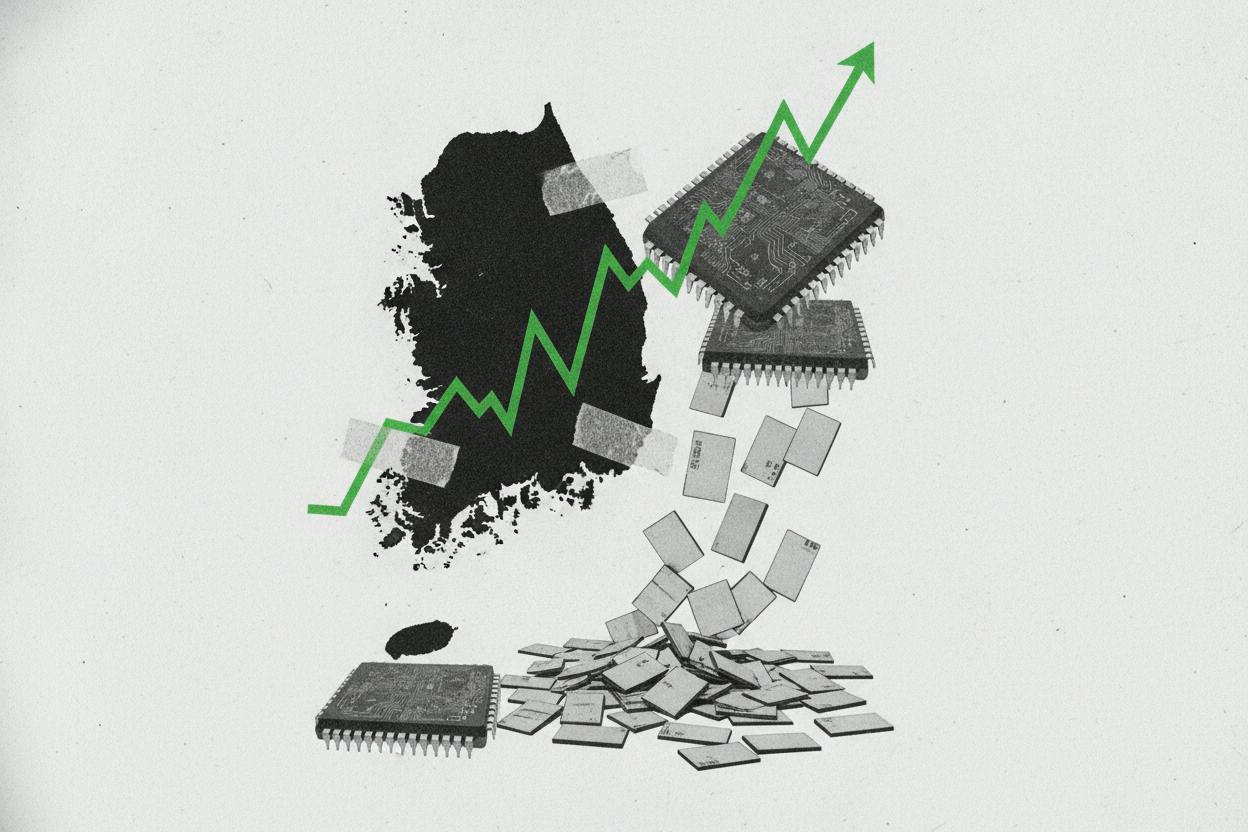
South Korea's benchmark KOSPI index jumped on Monday, powered by its two largest semiconductor makers, Samsung Electronics and SK Hynix. The rally followed a strong session for US chip stocks and fresh data showing South Korean exports hit a record in the early part of the month, driven by booming chip sales.
The move underscores how deeply South Korea's stock market is tied to the global semiconductor cycle. Samsung and SK Hynix together account for a large share of the KOSPI's market value, so their performance often dictates the direction of the entire index.
What's driving the chip rally?
The immediate catalyst was a climb in US semiconductor shares, which tend to set the tone for chipmakers worldwide. When US-listed chip companies rise, investors often expect similar strength in Asian peers, especially those that supply components to the same global supply chain.
Adding to the optimism, South Korea's early-month export data showed a record figure, with chip sales leading the way. Exports are a critical engine of the South Korean economy, and semiconductors are its single largest export category. Strong chip exports signal healthy demand from major buyers, including data-center operators, smartphone makers, and automakers that increasingly rely on advanced chips.
The record export numbers suggest that the global appetite for memory chips—used in everything from phones to servers—remains robust. This is particularly relevant as artificial intelligence workloads drive demand for high-bandwidth memory and other advanced semiconductors.
Why Samsung and SK Hynix matter
Samsung Electronics is the world's largest memory chipmaker, while SK Hynix is a leading producer of DRAM and NAND flash memory, as well as high-bandwidth memory used in AI accelerators. Both companies have seen their fortunes swing with the semiconductor cycle, which alternates between periods of shortage and oversupply.
Investors watch these stocks closely not just for their earnings but as a barometer for global tech demand. When Samsung and SK Hynix rally, it often lifts the entire KOSPI, as well as other Asian tech markets. Conversely, weakness in chip prices or demand can drag the index down.
The current rally comes amid a broader backdrop of rising interest rates and bond yields, which have pressured stock valuations globally. As Treasury yields near 5%, investors have become more selective, favoring companies with strong earnings growth and pricing power—qualities that chipmakers currently exhibit.
What it means for investors
For everyday investors, the KOSPI's jump is a reminder that semiconductor stocks are a high-beta play on global technology trends. When chip demand is strong, these stocks can rise quickly, but they can also fall just as fast if the cycle turns.
The record export data is a positive sign for the South Korean economy, which relies heavily on trade. It also suggests that the global tech supply chain is healthy, which could bode well for other chip-related companies worldwide.
However, investors should be cautious about chasing momentum. The semiconductor industry is cyclical, and current strength may already be priced in. Moreover, rising interest rates can weigh on high-valuation tech stocks, as yields above 5% have historically pressured equity multiples.
For those with exposure to South Korean equities, either through individual stocks or exchange-traded funds, the key is to watch global chip demand and export trends. If chip sales continue to set records, Samsung and SK Hynix are likely to remain strong. But if demand falters, the same stocks could lead the market lower.
The bigger picture
The rally in Korean chip stocks is part of a broader global trend where semiconductors are seen as a critical growth sector, driven by AI, cloud computing, and the electrification of vehicles. Governments worldwide are also investing heavily in domestic chip production, which could reshape supply chains over the long term.
For now, the market is focused on the immediate data: record exports and strong US chip performance. That combination is enough to lift the KOSPI, but investors should keep an eye on the longer-term drivers, including interest rates and the pace of AI adoption.
As always, diversification remains key. While chip stocks can offer significant upside, they also carry substantial risk. A balanced portfolio that includes other sectors and geographies can help mitigate the volatility that comes with semiconductor investing.