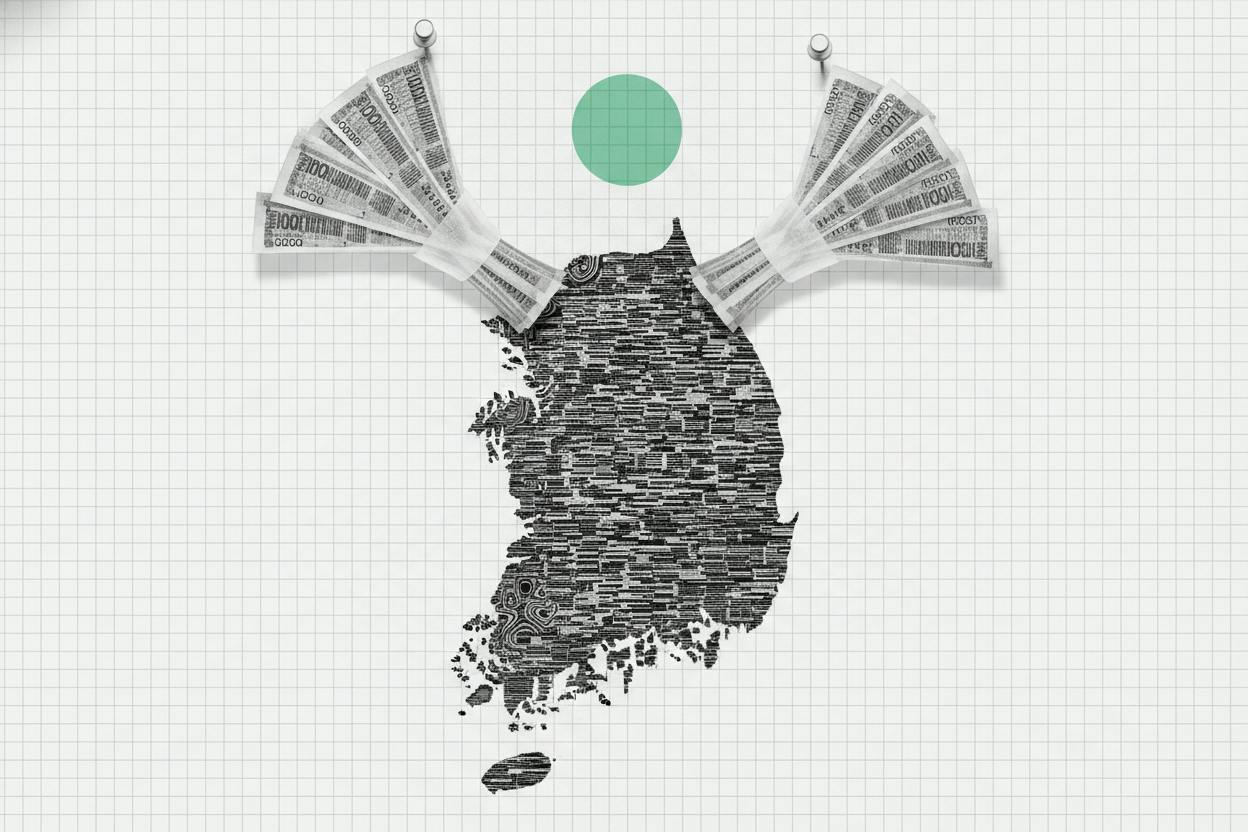
South Korea's two biggest chipmakers are putting their money where the government's mouth is. Samsung Electronics and SK Hynix have unveiled shareholder-return programs that together top 130 trillion won (about $97 billion) this year, and investors are watching closely to see whether these payouts can finally help close the so-called "Korea discount."
The "Korea discount" refers to the tendency for South Korean stocks to trade at lower valuations than comparable companies in other developed markets. For years, investors have pointed to low dividend payouts, complex corporate structures, and weak shareholder protections as reasons to demand a discount on Korean shares. The government's "Value-Up" campaign, launched last year, is an effort to address those concerns by encouraging companies to boost returns to shareholders and improve governance.
What the chipmakers are promising
Samsung Electronics, the world's largest memory chip maker, and SK Hynix, a leading supplier of high-bandwidth memory used in AI servers, have both committed to substantial returns. The combined 130 trillion won figure includes dividends and share buybacks, with a significant portion expected to be returned through buybacks, which can boost earnings per share and support stock prices.
These are not small gestures. For context, the total market capitalization of the KOSPI, South Korea's main stock index, is around 2,000 trillion won. A 130 trillion won payout is equivalent to more than 6% of the entire index's value, a level that would be notable in any market.
The announcements come as both companies benefit from a boom in artificial intelligence demand. SK Hynix has been a key supplier of HBM chips to Nvidia, while Samsung has been ramping up its own AI-related memory products. The strong earnings from this AI cycle are giving the companies the cash flow to fund these payouts.
Why this is a test for Value-Up
The Value-Up campaign has been met with skepticism since its launch. Critics note that many Korean companies have been slow to adopt the recommended reforms, and that the program lacks teeth—there are no penalties for companies that ignore it. The real test, analysts say, is whether the country's largest and most influential firms will actually follow through with meaningful shareholder returns.
Samsung and SK Hynix are the two largest stocks on the KOSPI, together accounting for a significant chunk of the index's weight. If they deliver on these payouts, it could set a powerful example for other companies and signal that the Value-Up initiative is more than just a slogan. On the other hand, if the payouts fall short or are seen as one-off moves, the discount may persist.
Investors have already shown some optimism. The KOSPI has rallied in recent sessions, fueled by the AI chip rally and hopes that the chipmakers' returns will attract foreign capital. But the real test will be whether the payouts lead to a sustained re-rating of Korean equities.
What it means for investors
For everyday investors, the key takeaway is that South Korean stocks may become more shareholder-friendly, but that doesn't mean they're a sure bet. Higher dividends and buybacks can support stock prices, but they also depend on the companies' ability to maintain earnings. The chip industry is cyclical, and a downturn in memory prices could quickly reverse the cash flow that funds these payouts.
Investors should also consider that the Value-Up campaign is still in its early stages. While Samsung and SK Hynix are leading the way, many other Korean companies have yet to announce similar plans. The recent boardroom battle at Korea Zinc highlights the ongoing governance challenges in the country.
For those looking at Korean equities, the payouts are a positive sign, but they should be weighed against the broader risks, including geopolitical tensions and the global tech cycle. As always, diversification is key.
The coming months will show whether these payouts are a one-time gesture or the start of a lasting shift in how Korean companies treat their shareholders. If the Value-Up plan succeeds, the Korea discount could narrow, benefiting investors who have stuck with the market. If it fails, the discount may persist, and the payouts will be remembered as a missed opportunity.