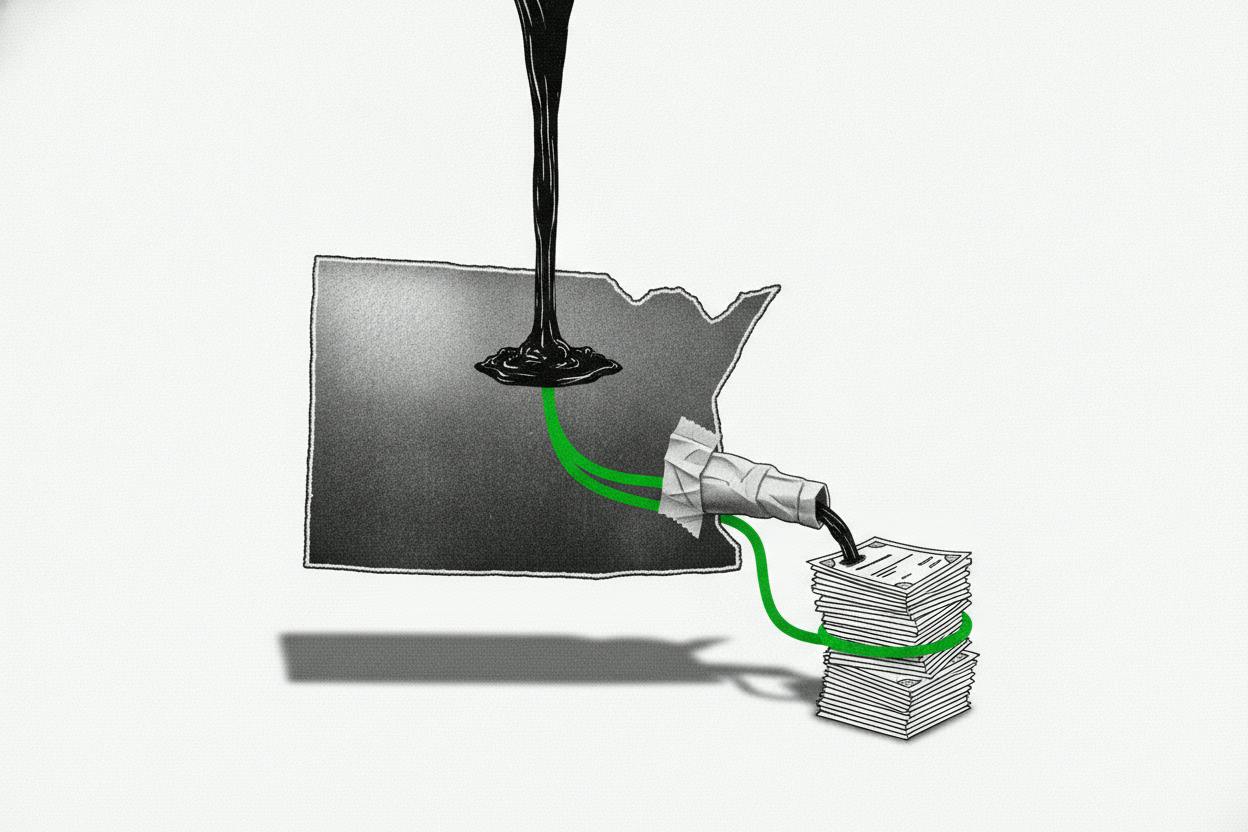
Saskatchewan is sticking with a bigger borrowing plan this year even as higher oil prices have padded its revenue, according to a new analysis from Desjardins Securities. The province's term-debt program now stands at CA$4.4 billion, CA$125 million more than what was outlined in Budget 2026.
The increase might look like a sign of a worsening budget, but Desjardins says that's not the main driver. Instead, the extra borrowing is largely tied to financing needs: about CA$329 million of additional “self-supported” borrowing at SaskPower, the province's electric utility, plus higher refinancing requirements. Those are partly offset by more short-term funding.
What's behind the bigger borrowing plan?
For everyday investors, it helps to understand what “self-supported” borrowing means. SaskPower is a Crown corporation, but it borrows on its own balance sheet to fund capital projects like power plants and grid upgrades. That debt is repaid from the utility's own revenues, not directly from the province's general budget. So when SaskPower needs more money, it shows up in the province's overall borrowing plan even if the government's day-to-day finances haven't changed much.
The bigger plan also reflects timing. Saskatchewan's borrowing program is already 82% complete, leaving only CA$776 million still to be issued for the year. That means most of the province's bond supply for this fiscal year has already been absorbed by the market.
This matters for bond investors. Early in a borrowing year, a heavy issuance calendar can push yields higher as investors demand a little extra compensation for absorbing all that new supply. With Saskatchewan already most of the way through its plan, that “supply overhang” is much smaller from here. So the pricing of Saskatchewan provincial bonds—especially the extra yield they offer versus other provinces—may now depend more on fundamentals than on fears of a late-year flood of deals.
The budget math: oil helps, but spending eats it up
On the budget side, the province still expects a CA$784 million deficit for fiscal 2027, only slightly better than the CA$819 million it forecast in the budget. Here's why the improvement is so modest: revenue is expected to rise by CA$669 million, helped by a higher oil-price assumption, but that windfall is mostly used up by CA$633 million in added spending, led by healthcare and emergency management.
Healthcare is a familiar pressure point for provinces across Canada, and Saskatchewan is no exception. Emergency management costs can also spike unpredictably, especially with wildfires and other climate-related events becoming more frequent. These are the kinds of spending items that are hard to cut once they're in the budget.
The one bright spot in the numbers is the debt picture. Faster expected nominal economic growth lowers the province's net-debt-to-economy ratio to about 15.0% by fiscal 2027. That keeps Saskatchewan among the least-indebted Canadian provinces, a position that has historically helped it borrow at relatively low rates.
What it means for investors
For bond investors, the key watch points are how realistic the province's oil-linked revenue assumptions prove to be, and whether the deficit actually shrinks as planned while spending pressures keep building. If oil prices fall, revenue could come in below expectations, and the deficit could widen. If healthcare costs keep rising, the same thing could happen.
For equity investors, the story is more indirect. Saskatchewan's economy is tied to oil, agriculture, and potash, so the province's fiscal health can be a bellwether for those sectors. But the immediate market impact is mostly in the bond market.
It's also worth noting that Saskatchewan's situation is part of a broader trend. Many governments around the world are running larger deficits and borrowing more, as JPMorgan recently warned that rich-world deficits are stuck at crisis levels. While Saskatchewan's debt ratio remains low by comparison, the province is still adding to its debt load.
For comparison, other governments have been active in the bond market too. For instance, SIDBI raised US$529 million in a two-tranche bond sale recently, and PFC raised US$596 million at sub-8.2%. These deals show that investors are still hungry for yield, but they also add to the global supply of bonds.
In Saskatchewan's case, the province's path back to balance still leans heavily on oil staying supportive. If oil prices hold up, the deficit could shrink as planned. If they don't, the province may need to borrow even more or find spending cuts. Either way, investors will be watching the oil market and the province's next budget update closely.
For now, the takeaway is that Saskatchewan's borrowing plan is bigger, but not because of a sudden budget crisis. It's mostly about financing needs at SaskPower and refinancing, and the market has already absorbed most of the supply. That could keep a lid on yield spreads, but the province's fundamentals—oil revenue and healthcare spending—remain the real story to watch.