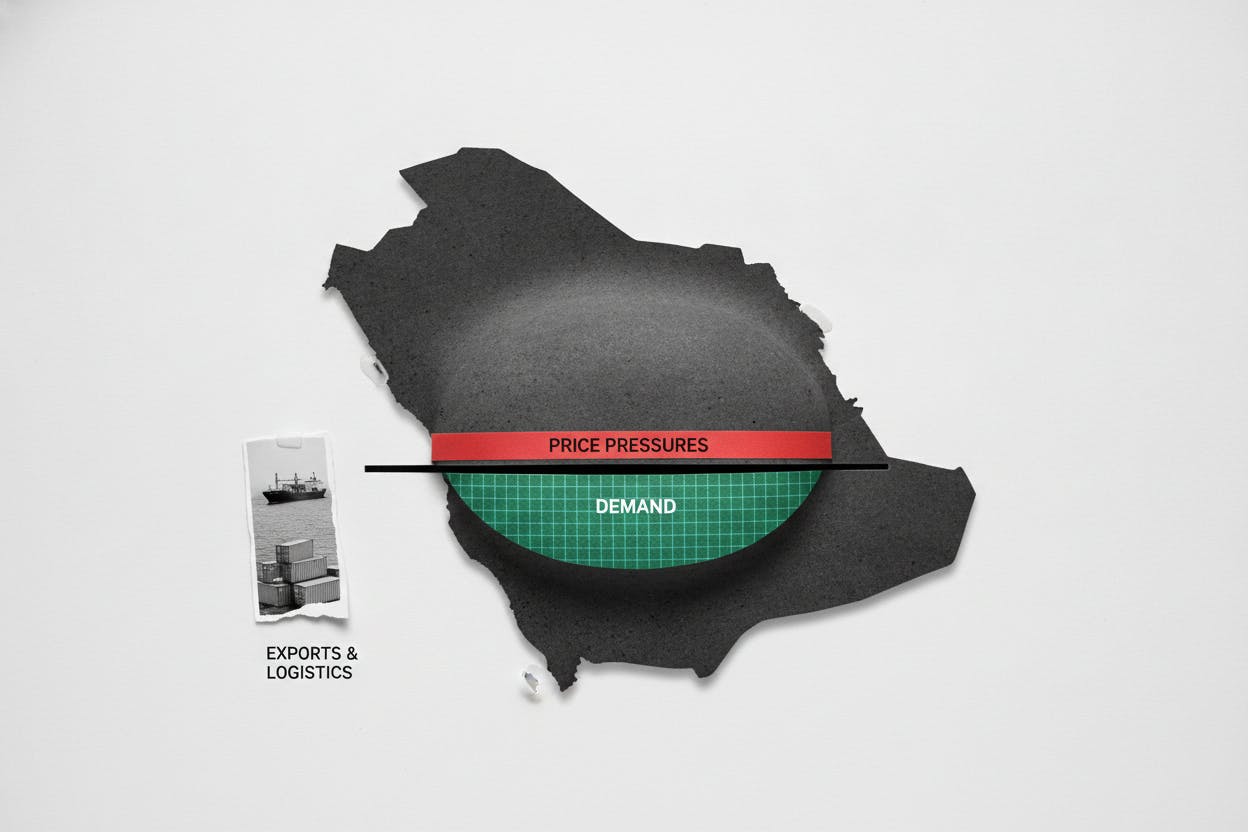
Saudi Arabia's non-oil private sector gained momentum in June, as Riyad Bank's purchasing managers' index (PMI) rose to a four-month high of 53.3, up from 52.8 in May. The reading, which signals expansion above the 50 mark, was fueled by stronger domestic orders, even as export demand remained sluggish.
What the PMI Tells Us
The PMI is a survey-based indicator that tracks business conditions across the non-oil private sector, including manufacturing, services, and construction. A reading above 50 means activity is expanding, while below 50 signals contraction. The June figure marks the fastest pace of growth since February, driven by a pickup in new business from domestic customers. Firms reported that project approvals and sales were recovering after earlier delays, helping to boost overall activity.
Operational improvements also contributed to the positive reading. Suppliers delivered faster than at any point since February, as companies leaned more on local suppliers and alternative shipping routes to bypass logistics bottlenecks. However, purchasing activity remained muted, with firms describing their inventories as "sufficient" for current needs.
Cost Pressures and Price Increases
The expansion came with a trade-off: rising costs. Surveyed firms reported higher purchase and labor costs, and many responded by lifting selling prices to protect their margins. This dynamic is common when demand picks up, as companies pass on higher input costs to customers. For everyday consumers, this could mean higher prices for locally produced goods and services in the months ahead, as contracts reset and newly priced inventory reaches shelves.
Riyad Bank noted that the headline PMI remains below its long-run trend, partly because exports are still weak. Export orders were weighed down by logistics frictions and tougher competition from foreign markets. The bank's chief economist, Naif Al-Ghaith, said business optimism hit its highest level since January, suggesting that companies expect domestic demand to continue supporting non-oil growth into the second half of the year.
Broader Context
Saudi Arabia's economy has been working to diversify away from oil, with the non-oil sector playing a key role in the Vision 2030 plan. The June PMI data aligns with a mixed global picture: while some economies like Spain and Italy have seen services sector rebounds, others like Germany and France are still struggling with contraction. In the Gulf region, the UAE recently reported its weakest private-sector growth in five years, highlighting the uneven nature of the recovery.
The resilience of domestic demand in Saudi Arabia is a positive sign, but the weakness in exports and rising costs are worth watching. For investors, the PMI reading suggests that the non-oil sector is on a stable footing, but the pace of growth may be tempered by external headwinds.
What It Means for Investors
For everyday investors, a rising PMI is generally a good sign for the economy, as it indicates that businesses are busier and the non-oil sector is expanding. However, the accompanying cost pressures mean that inflation could remain a concern. When input costs like materials, shipping, and wages rise, firms often pass some of that onto customers, which can show up in everyday bills with a lag.
Investors should also keep an eye on how Saudi Arabia's non-oil sector performs relative to other regions. For example, oil's recent slide to near four-month lows could affect government revenues and spending, which in turn influences domestic demand. Meanwhile, the UAE's weaker private-sector growth serves as a reminder that the Gulf region's recovery is not uniform.
Overall, the June PMI data points to a steady but cautious recovery in Saudi Arabia's non-oil sector. Domestic demand is holding up, but the combination of weak exports and rising costs means that the path ahead may be bumpy. For investors, the key takeaway is that the non-oil sector is growing, but the benefits may come with higher prices for consumers.