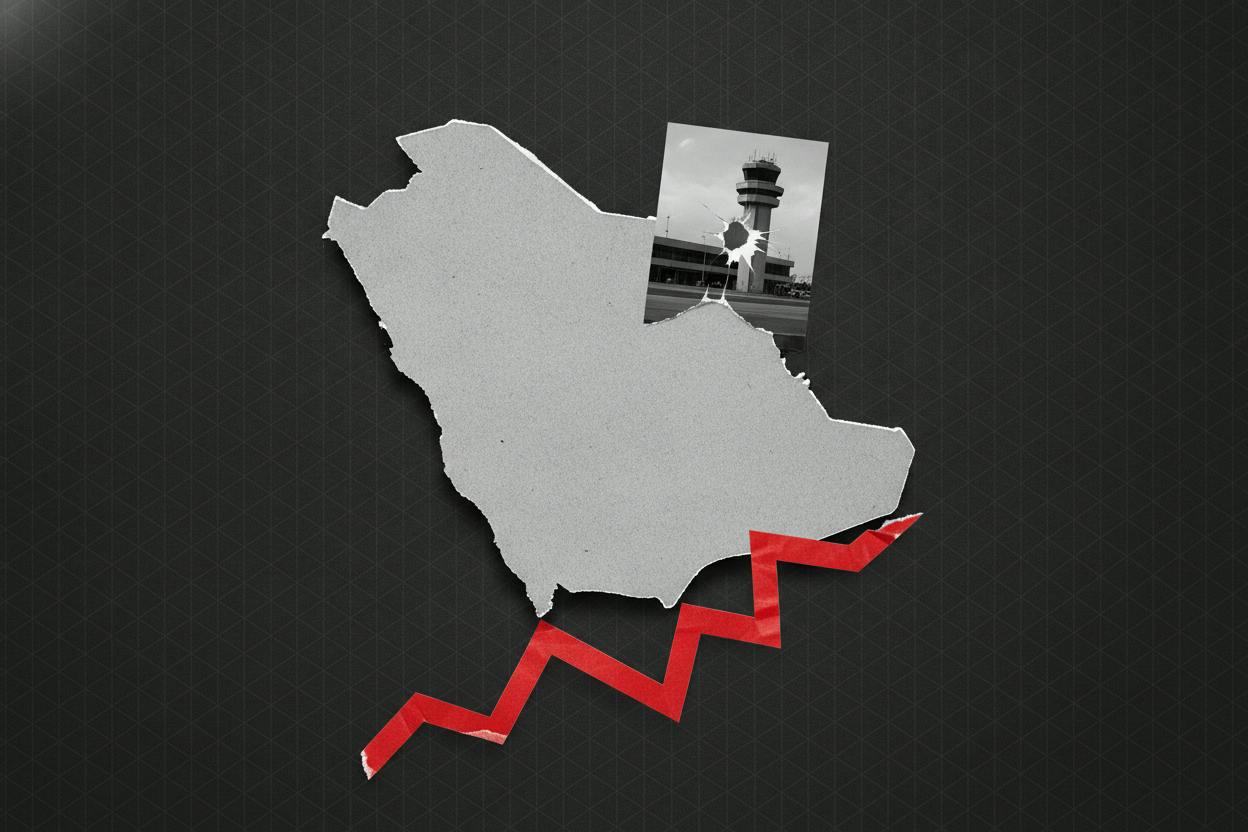
Most Gulf stock markets edged higher on Monday, but Saudi Arabia's main index, the Tadawul All Share Index (TASI), fell 0.6% after a reported attack on Riyadh's international airport added a fresh security worry to the ongoing US-Iran standoff over the Strait of Hormuz.
The attack, which Saudi authorities said killed one person and injured nearly a dozen, came at a time when investors were already on edge about the risk of a broader conflict in the region. The Strait of Hormuz is a critical chokepoint for global oil shipments, and any disruption there could have major implications for energy prices and the world economy.
Why the Strait of Hormuz matters
The Strait of Hormuz is a narrow waterway between the Persian Gulf and the Gulf of Oman. A significant portion of the world's oil passes through it, making it one of the most strategically important shipping lanes on the planet. When tensions rise between the US and Iran, markets pay close attention because any threat to that route could send oil prices soaring and unsettle global markets.
Reuters reported little progress in the US-Iran standoff, with Iranian state media quoting security chief Mohsen Rezaei calling the US response “insufficient.” That lack of progress kept investors cautious, even as other Gulf markets showed modest gains.
How the market reacted
The immediate reaction in Saudi Arabia was a quick move to reduce risk. The biggest, easiest-to-trade names led the decline: Al Rajhi Bank slipped 0.6% and Saudi Aramco dipped 0.3%, dragging the broader TASI lower. These blue-chip stocks are often the first place investors go when they want to adjust their exposure quickly, so their moves can be a barometer of sentiment.
Elsewhere in the region, the picture was steadier. Dubai and Abu Dhabi each gained 0.1%, and Qatar rose 0.5%. That divergence suggests the airport attack was seen as a Saudi-specific concern, at least for now, rather than a region-wide shock.
The unease also spilled into corporate optics. BP said its CEO would skip a major energy conference in Riyadh, even as Saudi Arabia's energy ministry said the event would go ahead. That kind of decision reflects how companies are weighing security risks against business commitments.
What it means for investors
A 0.6% drop in the TASI is what “risk premium first, details later” looks like. Security shocks and chokepoint geopolitics often hit markets through psychology before they hit the economy. Investors demand a higher “equity risk premium” — basically, extra return for taking on uncertainty — which pushes share prices down even if nothing has changed yet in sales, profits, or oil shipments.
Whether that initial drop lasts usually depends on what happens next. Does the news stay a headline, or does it start disrupting travel, trade, or energy flows through the Strait of Hormuz? If day-to-day activity keeps running, that extra risk premium has often faded as attention moves on. But in the meantime, the biggest Saudi blue chips can trade more like a barometer of escalation and de-escalation than a read on their underlying business.
For everyday investors, the key takeaway is that geopolitical events like this can create short-term volatility, but they don't necessarily change the long-term fundamentals of a company. It's important to keep perspective and not make hasty decisions based on a single day's move.
If you're watching the region, keep an eye on whether the situation escalates or de-escalates. A de-escalation could see the risk premium fade quickly, while a prolonged standoff could keep pressure on Saudi stocks and potentially on oil prices. For broader context, you might also want to see how oil prices are moving and what that means for global markets.
In the meantime, the TASI's dip is a reminder that in geopolitically sensitive regions, markets can react sharply to headlines. But as always, it's the follow-through that matters most.