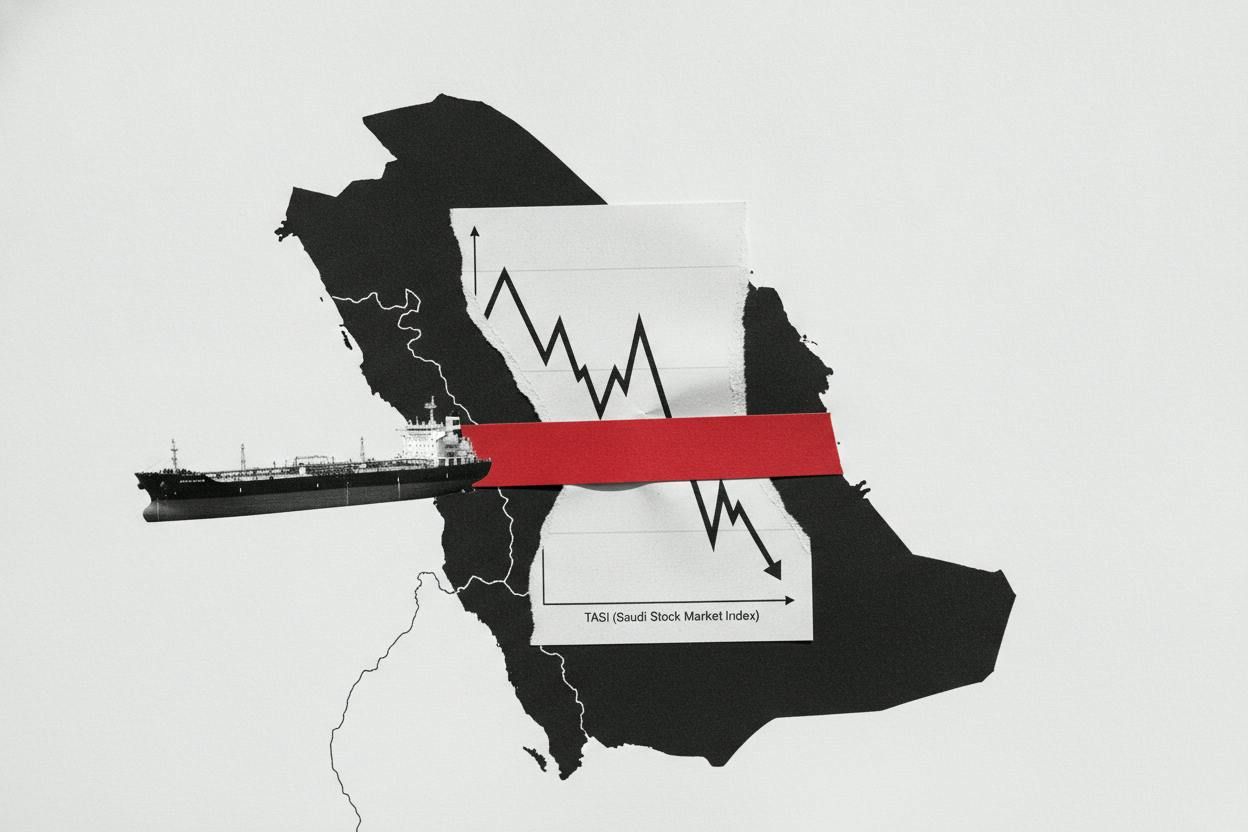
Saudi Arabia's stock market ended lower on [day], with the Tadawul All Share Index closing down 0.63%. The dip came as traders kept a close eye on the Strait of Hormuz, a vital chokepoint for global oil shipments, where vessel traffic has thinned dramatically over the past week.
Ship-tracking data showed that the number of commodity-carrying vessels passing through the strait fell to 17 from 37 a week earlier. That kind of drop is often seen as a stress signal, suggesting that shipping companies and traders are becoming more cautious about the risks of moving goods through the region.
Why the Strait of Hormuz matters
The Strait of Hormuz is a narrow waterway between Iran and Oman that connects the Persian Gulf to the Gulf of Oman and the open ocean. Roughly one-fifth of the world's oil and a significant share of liquefied natural gas pass through it, making it one of the most strategically important shipping lanes on the planet.
When traffic through the strait slows, it usually points to heightened geopolitical tension or the perception of increased risk. In recent weeks, regional tensions have been a recurring theme for markets, and any sign that shipping could be disrupted tends to put investors on edge. A thinner flow of vessels can also raise concerns about supply chain delays and higher shipping costs, which can ripple through commodity prices and inflation expectations.
For Saudi Arabia, the strait is particularly important. The kingdom is one of the world's largest oil exporters, and most of its crude leaves via the Persian Gulf. Any disruption to Hormuz traffic could directly affect its export capacity and, by extension, its government revenues and the performance of its stock market.
Oil prices ease despite supply worries
Interestingly, oil prices moved in the opposite direction to what the shipping data might suggest. Brent crude, the international benchmark, fell about 2% to below $102 a barrel, according to ING. The decline was attributed mainly to profit-taking after recent gains, rather than to any fundamental change in supply or demand.
That suggests that while traders are watching the strait closely, they are not yet pricing in a major disruption. The drop in vessel traffic could be a temporary blip, or it could reflect a cautious approach by shippers who are waiting to see how the situation develops. Either way, the market's reaction so far has been relatively muted.
Lower oil prices can be a double-edged sword for Saudi Arabia. On one hand, they ease inflationary pressures globally and can support consumer spending. On the other hand, they reduce the revenue that the kingdom earns from its oil exports, which can weigh on its budget and on the earnings of energy companies listed on the Tadawul.
What it means for investors
For everyday investors, the key takeaway is that geopolitical events can create short-term volatility in markets, but the long-term picture often depends on whether those events actually disrupt supply or demand. The fact that oil prices fell even as shipping traffic dropped suggests that the market is treating the situation as a risk to watch rather than an immediate crisis.
Investors with exposure to Saudi stocks or to oil-related assets should keep an eye on the strait and on any diplomatic developments. A prolonged reduction in shipping traffic could eventually push oil prices higher and boost energy stocks, but it could also hurt broader market sentiment if it raises fears of a wider conflict.
It's also worth remembering that markets often overreact to headlines. A single week of lower vessel counts is not necessarily a trend, and traders may be quick to reverse positions if tensions ease. As always, diversification and a long-term perspective remain important tools for navigating uncertain times.
For more on how regional tensions are affecting other markets, see our coverage of Abu Dhabi stocks slipping while Dubai holds steady and oil sliding on Iran diplomacy hopes. And for a broader view of how oil price moves are influencing global equities, check out European stocks climbing as falling oil eases inflation worries.