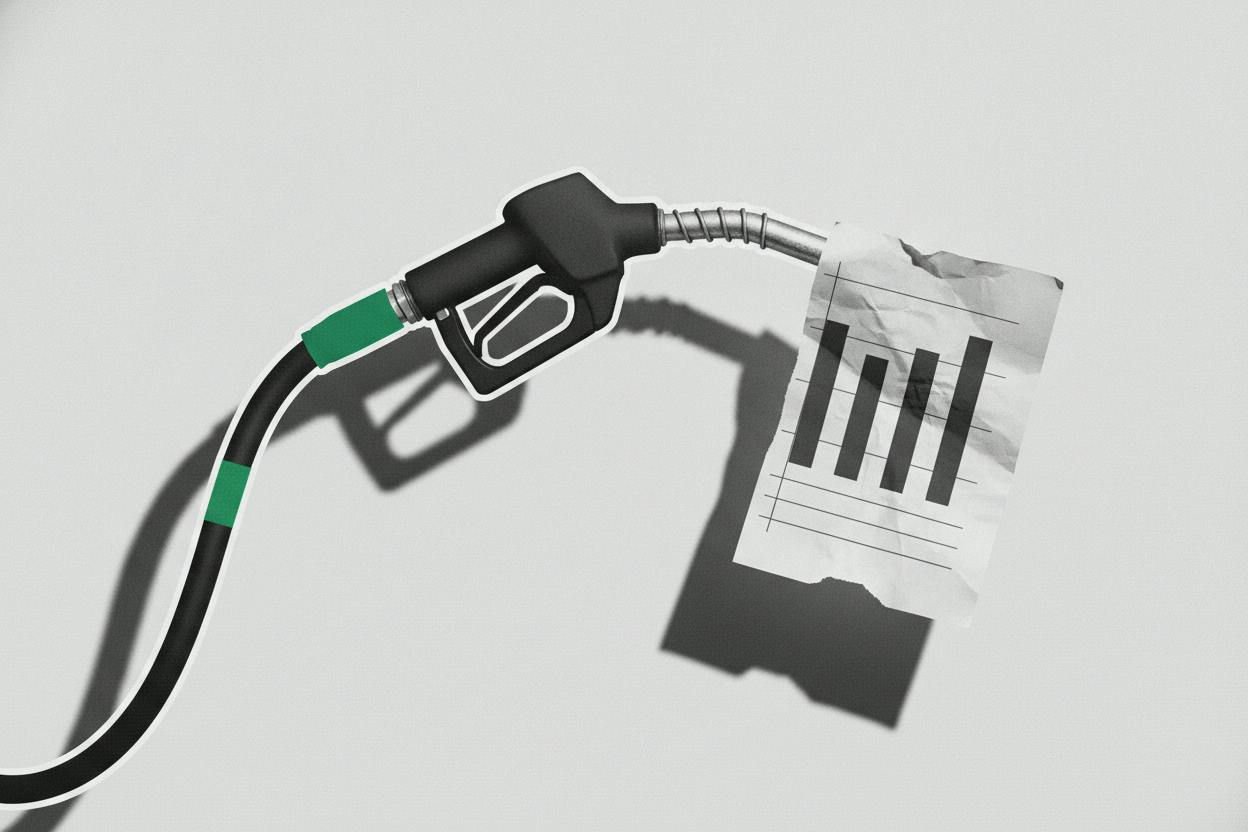
US retail sales probably rose in September, but the headline number may be flattered by something shoppers can't control: the price of gasoline. Economists surveyed by Bloomberg expect overall retail sales to increase 0.3% for the month, following a revised 1.1% gain in August. The catch is that a jump in gasoline station receipts is doing much of the work, masking softer demand across other categories.
Gasoline prices climbed 9.1% in September, according to the survey data. That matters because the retail sales report measures dollars spent, not gallons pumped. When the price per gallon rises, station sales rise automatically — even if drivers are buying the same amount of fuel, or less. Economists call this a price effect rather than a volume effect, and it's one reason the headline retail sales figure can overstate how healthy consumer demand really is.
Why the gas station line item matters so much
Retail sales is one of the most closely watched monthly indicators of US consumer health, since household spending drives roughly two-thirds of economic activity. The report breaks spending into categories — autos, furniture, electronics, restaurants, online sellers and, yes, gas stations. Because gasoline is a volatile commodity, the station category can swing the overall number in ways that have little to do with consumer confidence.
September's energy backdrop explains the distortion. Crude oil prices have been firm, with the International Energy Agency warning of a supply deficit through year-end, a dynamic that has kept upward pressure on pump prices. When energy costs rise, households often respond by trimming discretionary purchases — dining out, apparel, big-ticket electronics — to keep their overall budgets intact. That squeeze is exactly what analysts suspect is happening beneath September's headline.
The inflation picture reinforces the point. September's consumer price data showed inflation heating up again, with gasoline prices surging and the core rate — which strips out food and energy — still running hot. That combination has pushed some Wall Street economists to pencil in another Federal Reserve rate hike before year-end, a shift that has already rattled rate-sensitive corners of the market.
Autos and the rest of the consumer basket
Outside the pump, the details look cooler. Analysts expect motor vehicle and parts sales to dip, reflecting a decline in unit sales during the month. That's a meaningful signal: vehicle prices have been elevated, and when unit volumes fall even as prices stay high, it suggests buyers are balking rather than rushing to showrooms.
This is the classic tension in a late-cycle consumer economy. Households still have jobs and wages are growing, but higher borrowing costs and lingering price pressure are forcing trade-offs. Credit card rates are near multi-decade highs, auto loan rates have climbed alongside Fed policy, and savings built up during the pandemic have been steadily drawn down. In that environment, a strong headline retail sales number can coexist with weakening underlying demand — and that's precisely the risk September's report may illustrate.
What it means for investors
For ordinary investors, the key takeaway is to look past the headline. A 0.3% gain sounds reassuring, but if it's driven by gasoline receipts rather than broader spending, it tells a less upbeat story about the consumer — and consumer spending is the engine behind corporate earnings.
- Watch the core categories. The "control group" — which excludes autos, gas, building materials and food services — is the figure economists use to gauge true demand. If that comes in soft, markets may read the report as a sign of slowing momentum.
- Rate expectations are in play. A hot inflation print combined with a gas-driven retail sales beat could keep pressure on the Fed to stay restrictive. That tends to weigh on growth stocks and rate-sensitive sectors while supporting short-term bond yields.
- Consumer-facing sectors are exposed. Retailers, restaurants and automakers all depend on discretionary spending. If households are reallocating dollars toward essentials like fuel, margins and same-store sales can suffer.
- Energy cuts both ways. Higher pump prices lift revenue for oil producers and refiners, but they act like a tax on everyone else. That split shows up across sector performance.
None of this means the consumer is rolling over. August's revised 1.1% gain showed spending still has real momentum, and the labor market remains the ultimate backstop. But September's report is a reminder that not every sales increase reflects genuine demand — and that energy prices can quietly reshape the economic narrative month to month.
Investors will want to watch the category-level breakdown when the official figures land, along with any revisions to prior months. If gasoline is doing the heavy lifting and the control group is fading, the market may start pricing in a more cautious consumer — and adjust its expectations for Fed policy, earnings and growth accordingly.