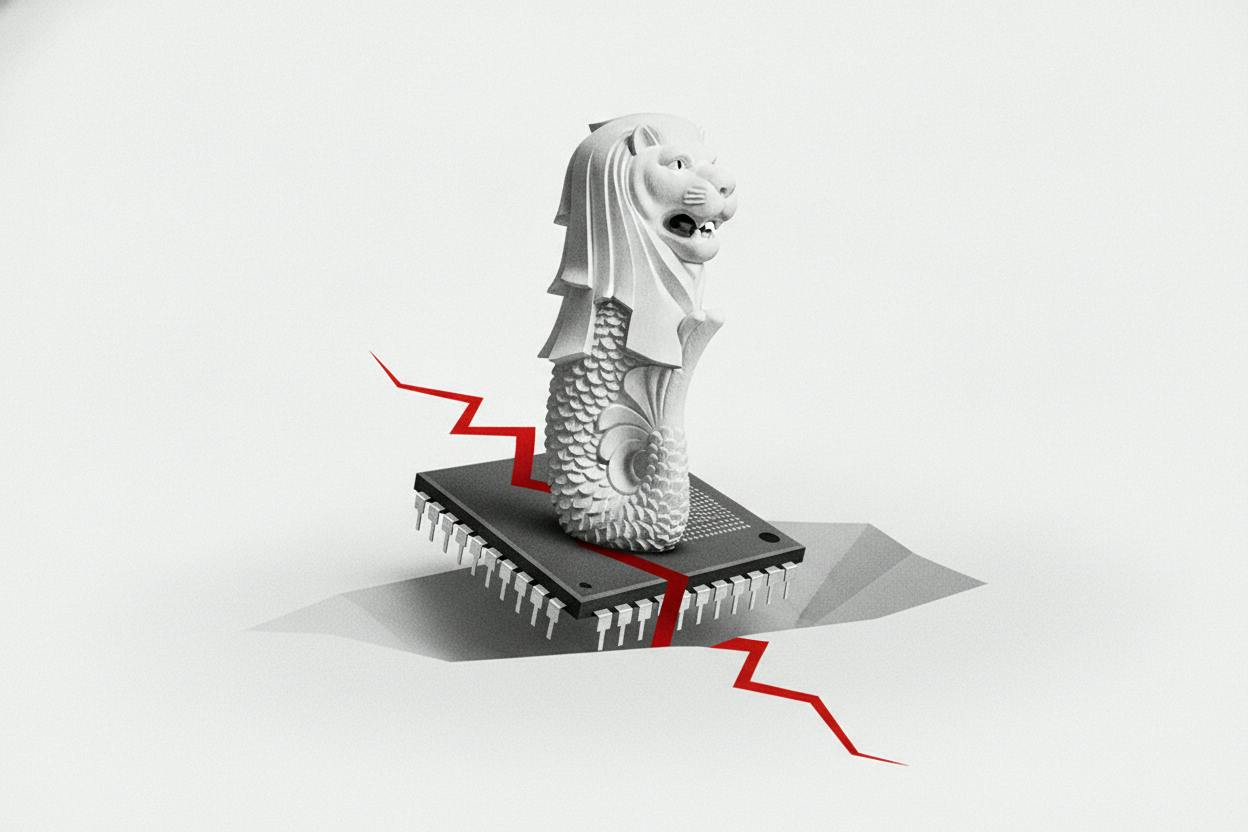
Singapore stocks closed sharply lower on Tuesday, with the Straits Times Index (STI) falling 1.4% to 5,638.64. The decline came as a sell-off in US semiconductor shares rattled investor confidence in the pace of AI-driven demand growth, sending ripples through Asian markets.
The STI, which tracks the performance of the largest companies listed in Singapore, swung between 5,632.16 and 5,720.91 during the session before settling at the lower end. The drop was broad-based, reflecting a cautious mood across the region.
Why chip stocks matter
The immediate catalyst was weakness on Wall Street, where semiconductor stocks took a hit. Chipmakers are often seen as a bellwether for the artificial intelligence trade, as they supply the hardware that powers AI data centers and applications. When their shares fall, it can signal doubts about how quickly AI-related demand will grow, and that sentiment quickly spreads to other risk assets.
For global investors, a slide in chip stocks often triggers a reassessment of tech-heavy portfolios. Because many funds treat semiconductors as a proxy for the broader AI theme, a drop can lead to selling in other tech and growth stocks across Asia, including those in Singapore.
The move also comes amid a backdrop of elevated interest rates and a strong US dollar, which have been pressuring emerging markets. As dollar strength and higher oil prices weigh on emerging Asia, investors are becoming more selective about where they put their money.
EuroSports Global bucks the trend
Despite the overall market decline, EuroSports Global stood out, jumping more than 6% after the company announced a proposed joint venture with Helios Power Systems. The deal, which is still non-binding, appears to have sparked optimism among investors about the company's growth prospects.
EuroSports Global, known for distributing luxury sports cars, is diversifying into new areas. The proposed partnership with Helios Power Systems, which specializes in power solutions, suggests a strategic pivot that could open up new revenue streams. While the details are still being finalized, the market's positive reaction highlights how company-specific news can still drive moves even in a down market.
What it means for investors
For everyday investors, Tuesday's decline is a reminder that global markets are interconnected. A sell-off in US tech can quickly affect portfolios in Singapore, even if local companies have little direct exposure to the semiconductor industry. The STI's drop reflects the reality that sentiment often travels faster than fundamentals.
Investors should also note that the STI's intraday range—from 5,632.16 to 5,720.91—shows volatility is elevated. Such swings can be unsettling, but they are not unusual when markets are reacting to external shocks. Historically, pullbacks driven by global tech weakness have often been short-lived, but they can also signal deeper concerns about valuations or growth.
For those with a long-term horizon, the key is to focus on the underlying health of the companies they own, rather than day-to-day market noise. The STI is composed of many blue-chip firms with diverse earnings streams, which can provide some cushion against sector-specific downturns.
Looking ahead, investors will be watching whether the chip sell-off continues or stabilizes. If US semiconductor stocks recover, Asian markets could bounce back quickly. But if the weakness persists, it could weigh on sentiment for weeks. Also on the radar are central bank decisions and economic data, which could influence the direction of interest rates and, in turn, market valuations.
In the meantime, the EuroSports Global rally shows that opportunities exist even in a falling market. But such moves are often speculative, and investors should do their own research before jumping in.
As always, diversification remains a prudent strategy. Spreading investments across different sectors and regions can help mitigate the impact of any single market event. For those who are unsure about how to navigate these conditions, consulting a financial advisor may be a wise step.