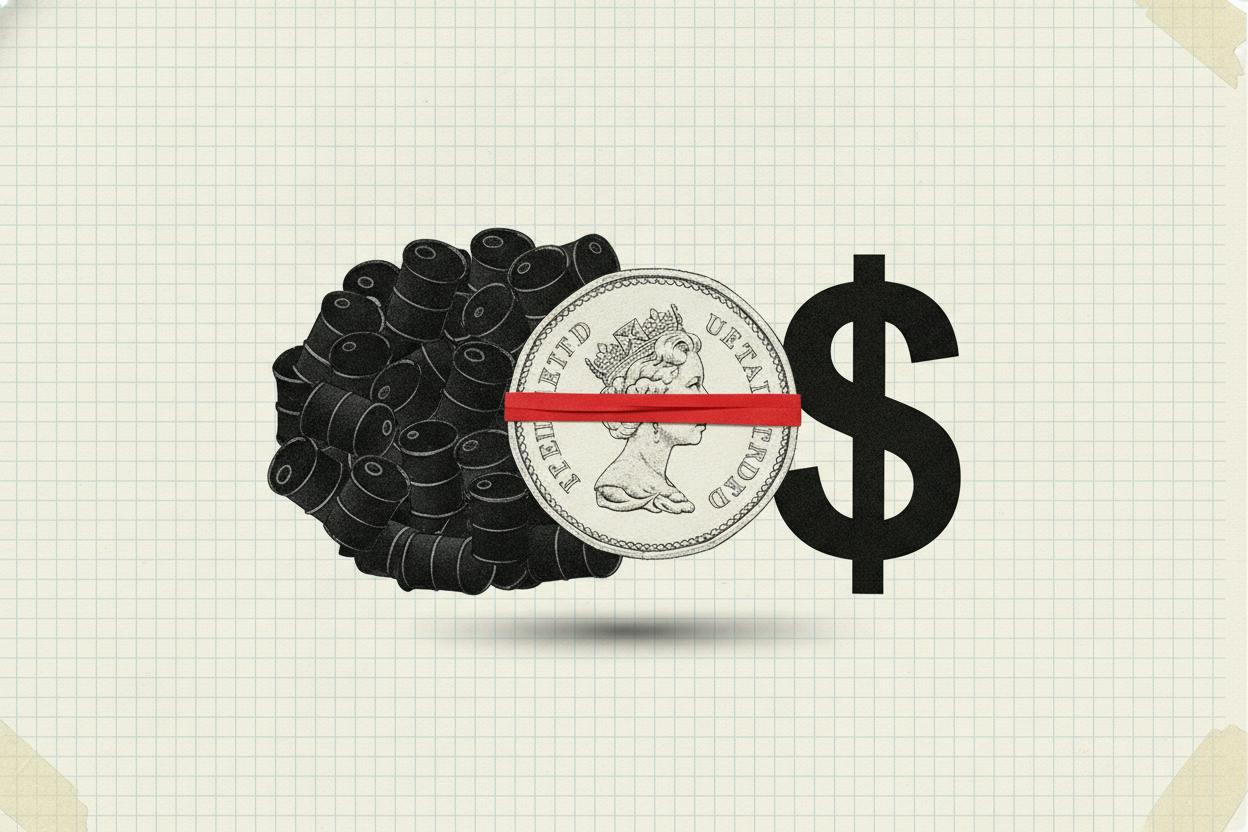
The British pound is trading near a one-month low, hovering around $1.347, as a combination of rising oil prices and diverging central bank expectations weigh on the currency. Crude oil has climbed above $108 a barrel, while traders are bracing for a Federal Reserve rate hike and a likely hold from the Bank of England (BoE) on Thursday.
Sterling's weakness reflects a familiar squeeze: a stronger US dollar, supported by expectations of tighter Fed policy, and domestic concerns about inflation, which higher energy costs only amplify. For everyday investors, currency moves like this can affect the cost of imported goods, the value of overseas investments, and the returns on foreign assets.
Why oil is pressuring the pound
Oil prices jumped more than 2% to around $108.2 per barrel after new attacks linked to Iran-backed Houthi forces raised concerns about Middle East supply and infrastructure disruptions, according to Reuters. Energy is a major input for businesses and a key driver of consumer prices, so when crude spikes, inflation expectations tend to rise.
For the UK, which is a net importer of oil, higher crude prices can worsen the trade balance and put upward pressure on inflation. That complicates the BoE's job: it must balance the need to contain price growth against the risk of slowing an already fragile economy. As a result, traders are betting the central bank will keep interest rates unchanged this week, even as the Fed is expected to raise its benchmark rate.
This divergence in policy outlooks is a classic driver of currency moves. When the Fed hikes and the BoE holds, the interest rate gap between the US and the UK widens, making dollar-denominated assets more attractive relative to sterling. That tends to push the pound lower.
What a weaker pound means for investors
For UK investors, a falling pound has mixed implications. On one hand, it boosts the value of overseas earnings when converted back into sterling, which can benefit companies with significant international revenue. On the other hand, it makes imports more expensive, feeding into higher prices at the pump and in shops, which can erode consumer spending power.
For those with exposure to US assets, a weaker pound means their dollar-based investments are worth more in sterling terms. But it also raises the cost of hedging currency risk, and it can signal broader market anxiety about the UK's economic outlook.
The pound's slide to $1.3474 comes as the dollar firms ahead of the Fed decision, a pattern that has also weighed on other currencies and emerging markets. Dollar strength and high oil prices have been a recurring theme in global markets this year, and they are likely to remain in focus as central banks meet.
Central bank decisions in the spotlight
The Fed is widely expected to raise its benchmark rate by a quarter of a percentage point, a move that would mark another step in its campaign to cool inflation. The BoE, by contrast, is expected to hold rates at 3.75%, according to recent market expectations, as it weighs the impact of higher borrowing costs on the UK economy.
This policy split is not unique to the UK and US. Central banks around the world are grappling with similar trade-offs, as energy costs persist and inflation remains above targets. The BoE's decision on Thursday will be closely watched for any hints about future moves, especially if oil prices stay elevated.
What to watch next
Investors will be listening for the tone of the Fed's statement and press conference for clues about the pace of future hikes. For the BoE, the focus will be on whether any policymakers vote for a hike and what the bank signals about its bond-buying programme.
Oil prices will also be a key variable. If geopolitical tensions escalate further, crude could push higher, adding to inflation pressures and keeping sterling under pressure. Conversely, any de-escalation could relieve some of that pressure and help the pound recover.
For now, the pound's fate seems tied to the interplay between energy markets and central bank policy. As always, currency moves are a reminder that global events can ripple through portfolios in unexpected ways, and staying informed is the best defence.