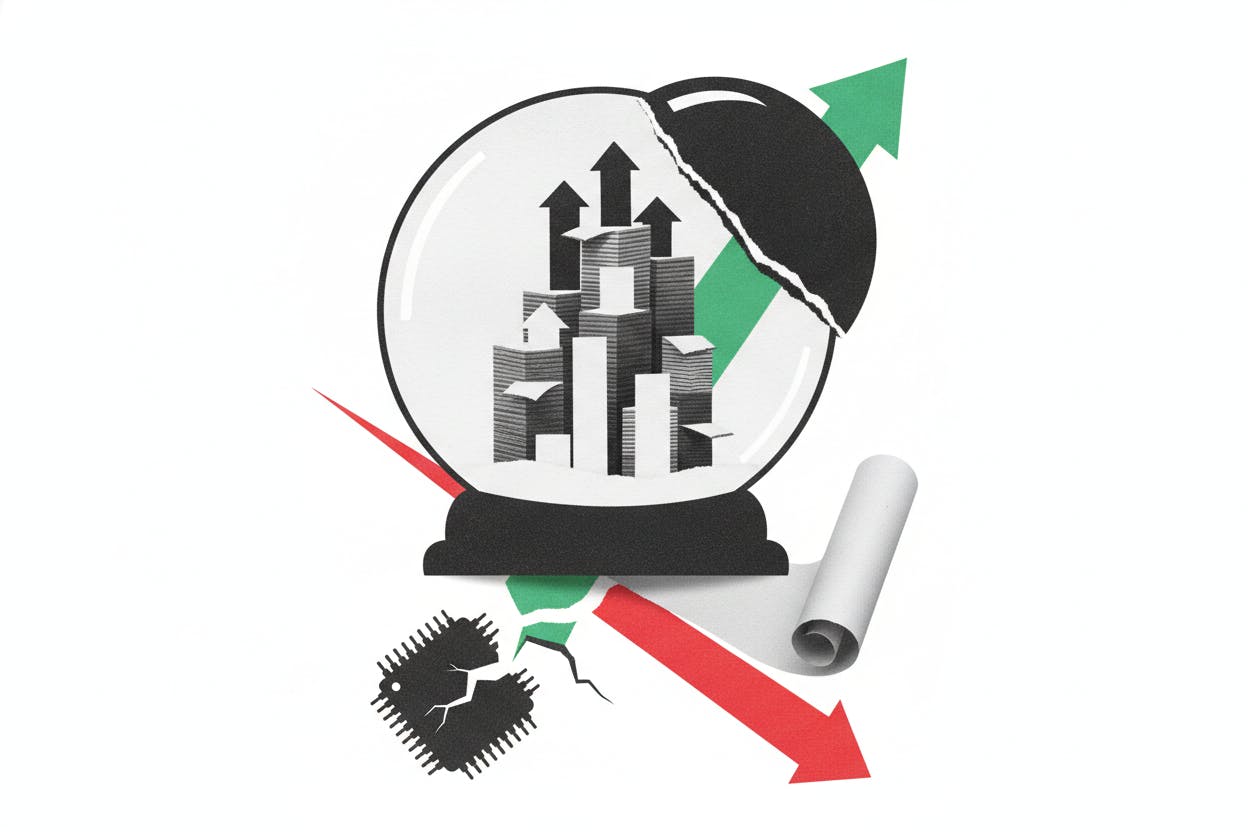
Snowflake shares surged 23.6% in premarket trading Thursday after the cloud data company raised its fiscal 2027 product revenue outlook, a move that overshadowed a broader split among the most-discussed stocks on WallStreetBets. While Snowflake rallied, chip and hardware names like Broadcom and HPE fell more than 3%, highlighting a divergence in investor sentiment across the tech sector.
What drove Snowflake's jump?
The sharp premarket gain followed a weak prior session and came after Snowflake reported higher fiscal second-quarter adjusted profit and revenue. But the real catalyst was the company's decision to raise its fiscal 2027 product revenue outlook. That guidance extends well beyond the usual quarterly or annual targets, giving investors a clearer picture of the company's expected growth trajectory over the next few years.
For a company like Snowflake, which sells cloud-based data storage and analytics tools, product revenue is a key metric because it reflects the core subscription business. Raising that outlook signals that management sees sustained demand, likely tied to ongoing investments in artificial intelligence and data infrastructure. As AI demand holds steady, companies that provide the underlying data platforms are increasingly seen as beneficiaries.
Why chip stocks fell
In contrast, Broadcom and HPE both dropped more than 3% premarket. Broadcom, a major supplier of networking and custom chip solutions, has been a bellwether for the semiconductor industry. Its weakness often ripples through the sector, as seen in Asian chip stocks wavering after Broadcom's forecast disappointed investors. HPE, which sells servers and storage systems, is also sensitive to data center spending trends.
The decline in these names suggests that while some parts of the tech stack are thriving, others face headwinds. Investors may be reassessing the pace of enterprise hardware upgrades or worrying about inventory levels in the chip supply chain. The split between Snowflake and the chipmakers underscores that the AI trade is not uniform—software platforms that monetize data are being rewarded, while hardware makers face more scrutiny.
What it means for investors
For everyday investors, the contrasting moves highlight the importance of looking beyond broad sector labels. Tech is not a monolith. A company's specific business model, customer base, and guidance can drive very different outcomes, even on the same day.
Snowflake's jump shows how a single guidance update can dramatically change market perception. When a company raises a multi-year outlook, it suggests confidence in long-term growth, which can justify a higher valuation. However, such moves can also be volatile—stocks that gap up on guidance can give back gains if future results disappoint.
On the other hand, the drop in Broadcom and HPE serves as a reminder that even large, established tech firms can face sudden selloffs. For investors holding these stocks, it's worth monitoring not just earnings but also forward guidance and commentary about demand from key customers.
Broader market context
The divergent moves come against a backdrop of mixed global markets. Oil prices have been climbing, with Brent crude recently above $90 a barrel, which can pressure corporate margins and consumer spending. European stocks have steadied as a bond selloff cools, while Asian stocks stalled as crude approached $97. These macro factors can influence how investors value growth stocks, especially those with longer-duration cash flows like Snowflake.
Rising oil prices and bond yields can make future earnings less valuable in today's terms, which tends to hit high-valuation tech stocks harder. Yet Snowflake's surge suggests that strong company-specific news can override macro headwinds, at least in the short term.
What to watch next
Investors will likely keep an eye on how Snowflake's stock performs after the initial pop, and whether the chip selloff deepens or stabilizes. Earnings season continues, and any further guidance from major tech companies could shift sentiment. For those following the WallStreetBets chatter, the divergence is a reminder that retail enthusiasm can be fickle—today's favorite can quickly fall out of favor.
Ultimately, the key takeaway is to focus on fundamentals. A company that raises long-term guidance is signaling strength, while one that disappoints on forecast may face a longer recovery. As always, diversification across sectors and asset classes remains a prudent strategy for most investors.