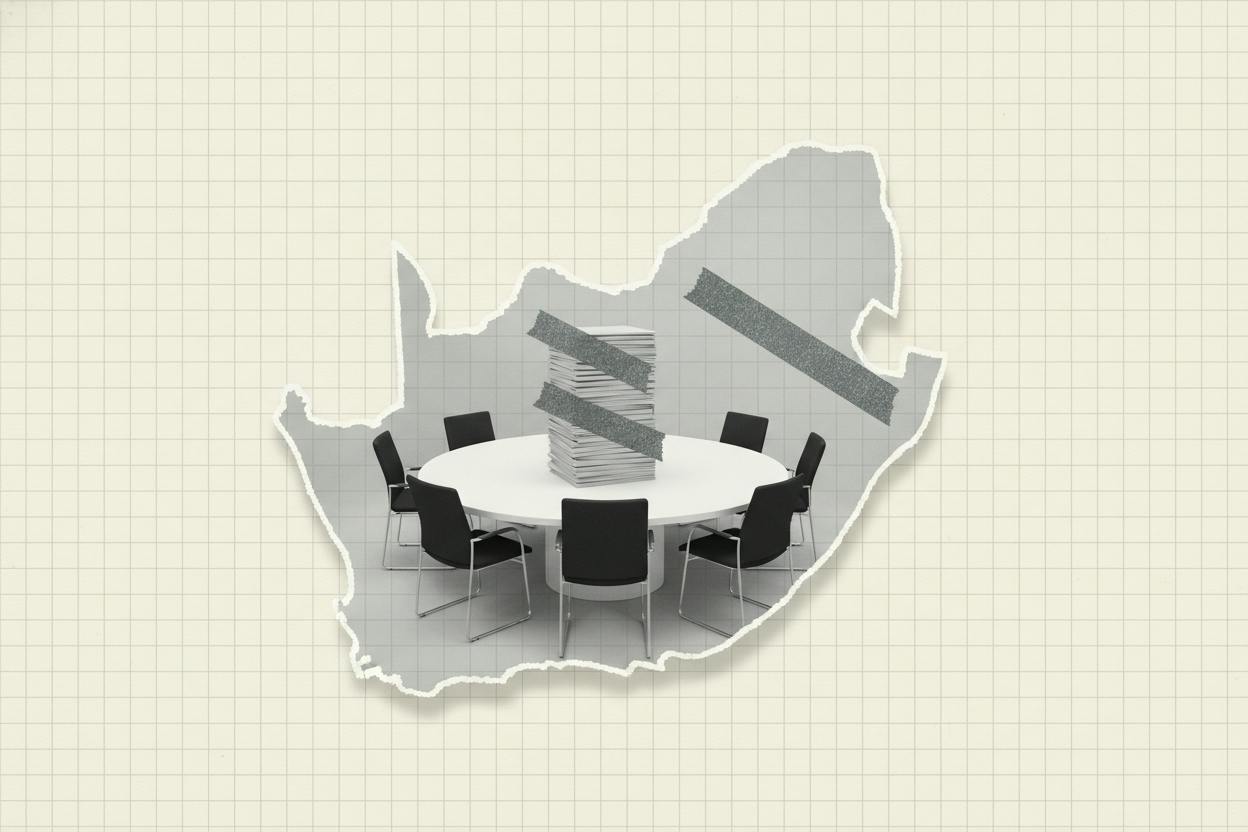
South Africa's central bank has finally filled its rate-setting committee to full strength, a move that could give investors a clearer picture of where interest rates are headed. The South African Reserve Bank (SARB) announced that World Bank economist Franz Ruch has joined its Monetary Policy Committee (MPC) as the seventh member, restoring the panel to its maximum size for the first time since 2018.
Ruch started on October 1 as an adviser to the governors and an MPC member. He returns to the SARB after working as a senior economist at the World Bank. Earlier in his career, he worked in the central bank's research unit, where he helped build forecasting models and contributed to its Monetary Policy Review.
The timing is significant. The MPC just delivered its second interest rate hike of the year, citing the Iran war as a source of “large and sustained” price shocks that could keep inflation elevated. With the committee now back at full strength, the next rate decision in mid-November will be the first since September 2018 to be made with all seven seats filled.
Why a full committee matters
The MPC meets roughly every two months to set South Africa's benchmark interest rate. The committee can have up to seven members, but it has been short-handed for years after senior officials left. When a rate-setting panel runs thin, each individual's vote carries more weight, and the overall signal from the decision can be harder to read.
With a full bench, any split between members who are more focused on controlling inflation and those who are more concerned about economic growth becomes easier to interpret. A broader group of decision-makers provides a more representative picture of the central bank's thinking, rather than a narrow roster where one or two voices can dominate.
For investors, this clarity matters. The SARB's “reaction function” — how it tends to respond to new inflation and growth data — becomes more predictable when the committee is fully staffed. That, in turn, helps markets price the future path of interest rates more accurately.
What it means for the rand and bonds
The clearer signal from a full MPC is most directly felt in South Africa's interest-rate expectations, which often show up quickly in the value of the rand and in yields on South African government bonds. Around the mid-November announcement, investors will be watching closely to see how united the committee is on keeping policy tight.
The recent rate hike was driven by concerns that the Iran war could push up energy and commodity prices, keeping inflation above the central bank's target range. If the new full committee shows a strong consensus on fighting inflation, that could support the rand and keep bond yields elevated. If there are visible divisions, markets may read that as a sign that future hikes could be less certain.
South Africa's economy has been under pressure, with sluggish growth and high unemployment. The central bank has to balance the need to contain inflation against the risk that higher rates could choke off economic activity. A full committee doesn't change that balancing act, but it does make the bank's decisions more transparent.
What investors should watch next
The mid-November rate decision will be the first test of the restored committee. Investors will be looking not just at the rate move itself, but at the accompanying statement and any dissenting votes. A unanimous decision would signal strong internal agreement; a split vote would reveal the range of views within the bank.
Beyond the rate call, markets will also be watching for any hints about the SARB's longer-term outlook. The bank has been cautious about inflation, and the recent hike suggests it is willing to act to keep price pressures in check. With the committee back at full strength, its messaging may carry more weight.
For everyday investors, the key takeaway is that a fully staffed rate-setting committee should make the central bank's decisions more predictable. That can reduce uncertainty in financial markets, which is generally a positive for investors. But it doesn't change the fundamental challenge: South Africa is dealing with sticky inflation and a fragile economy, and interest rates are likely to stay elevated for some time.
As the mid-November meeting approaches, keep an eye on the rand and bond yields — they will be the first to react to any signals from the newly completed MPC.