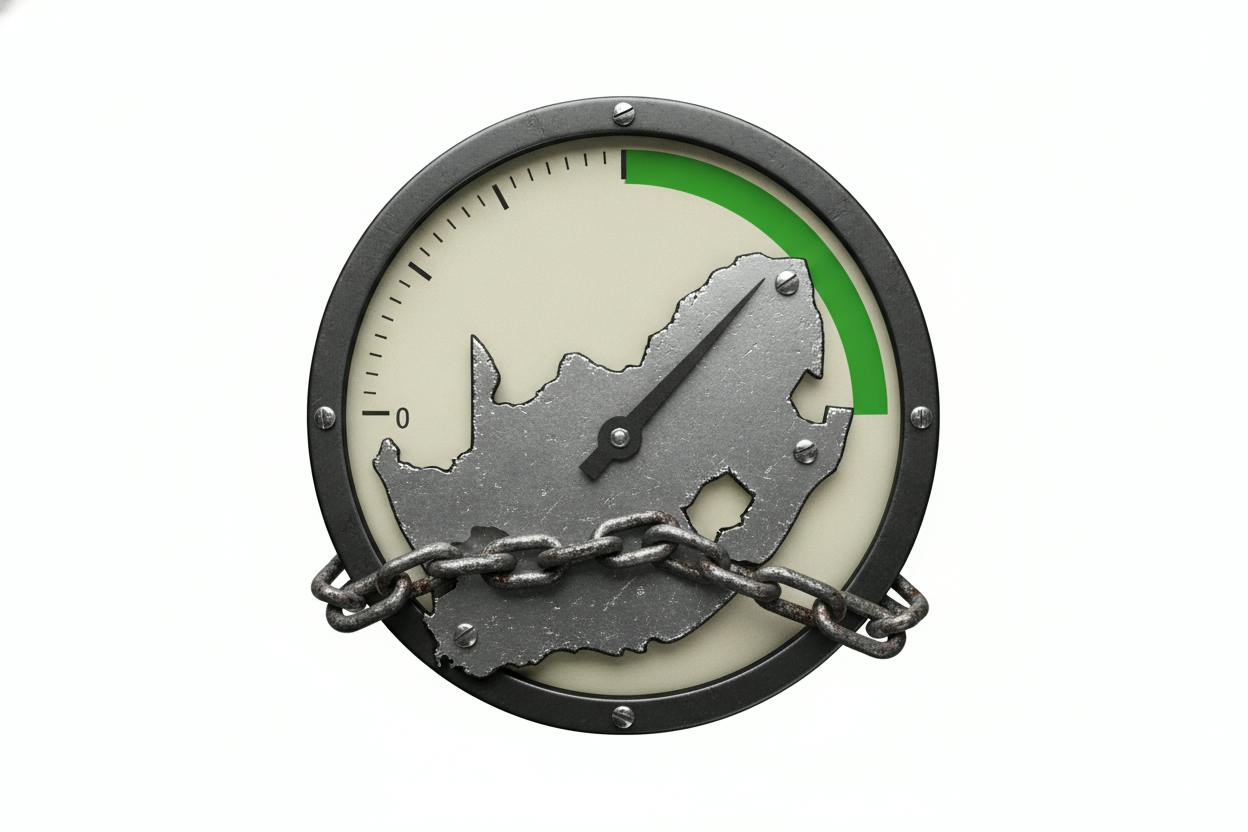
South Africa's manufacturers are feeling more optimistic again. Absa, one of the country's biggest banks, reported that its purchasing managers' index (PMI) rose to 50.7 in September from 45.8 in August. The reading marks a return to expansion territory, as any score above 50 signals that business conditions are improving, while a score below 50 indicates contraction.
The headline improvement was driven by a sharp rebound in new orders, which jumped to 50.8 from 40.3 in the previous month. That suggests demand picked up after a sluggish winter period, offering some relief to a sector that has been grappling with weak consumer spending and high borrowing costs.
What is the PMI and why does it matter?
The PMI is a monthly survey of purchasing managers at manufacturing companies. It asks them about key business conditions such as new orders, production, employment, and supplier delivery times. Because it is released early in the month, it is often seen as a timely indicator of economic health.
For everyday investors, the PMI is a useful gauge of how the broader economy is faring. Manufacturing is a significant part of South Africa's economy, and its performance can influence everything from corporate earnings to the value of the rand. A sustained move above 50 could signal stronger economic growth ahead, which might support company profits and, in turn, stock prices.
However, the details of the September report were not uniformly positive. The business activity index improved to 49.3 from 40.2, but it remained below the 50 mark, indicating that output was still contracting, albeit at a slower pace. Absa also noted that employment weakened and order backlogs stayed soft, suggesting that the recovery is still fragile.
Cost pressures and logistics remain a challenge
While the rebound in new orders is encouraging, manufacturers continue to face headwinds. Absa highlighted that input costs remained elevated and logistics issues persisted. These are familiar problems for South African businesses, which have dealt with port congestion, power shortages, and rising fuel and raw material costs in recent years.
Higher costs can squeeze profit margins, forcing companies to either absorb the increase or pass it on to customers. If they pass it on, that can feed into consumer inflation, which the central bank is trying to keep under control. The South African Reserve Bank has been cautious about cutting interest rates, and any sign of persistent cost pressures could delay rate relief.
For investors, this means the manufacturing recovery may not translate directly into strong earnings growth. Companies that can manage costs effectively or have pricing power may fare better, but those that are more exposed to logistics bottlenecks could struggle.
What it means for investors
The PMI's move back above 50 is a positive signal, but it is just one data point. Investors should watch whether the improvement is sustained in the coming months. A continued rise in new orders would be a good sign, while a drop back below 50 would suggest the recovery is stalling.
The report also comes as investors are keeping an eye on the rand, which has been firming ahead of the PMI release. A stronger currency can help reduce import costs, but it can also make South African exports less competitive. The interplay between the PMI, the rand, and global demand will be key.
Globally, other countries are also reporting mixed factory data. For instance, UK factory costs are rising again even as output growth slows, and France's factory growth is cooling as new orders slide. These trends suggest that the global manufacturing environment remains uneven, which could affect South African exporters.
For now, the September PMI offers a glimmer of hope. But as Absa's own data shows, the recovery is not yet broad-based. Employment is still weak, and backlogs are thin. Investors should treat the headline number with cautious optimism, keeping an eye on the underlying details in the months ahead.