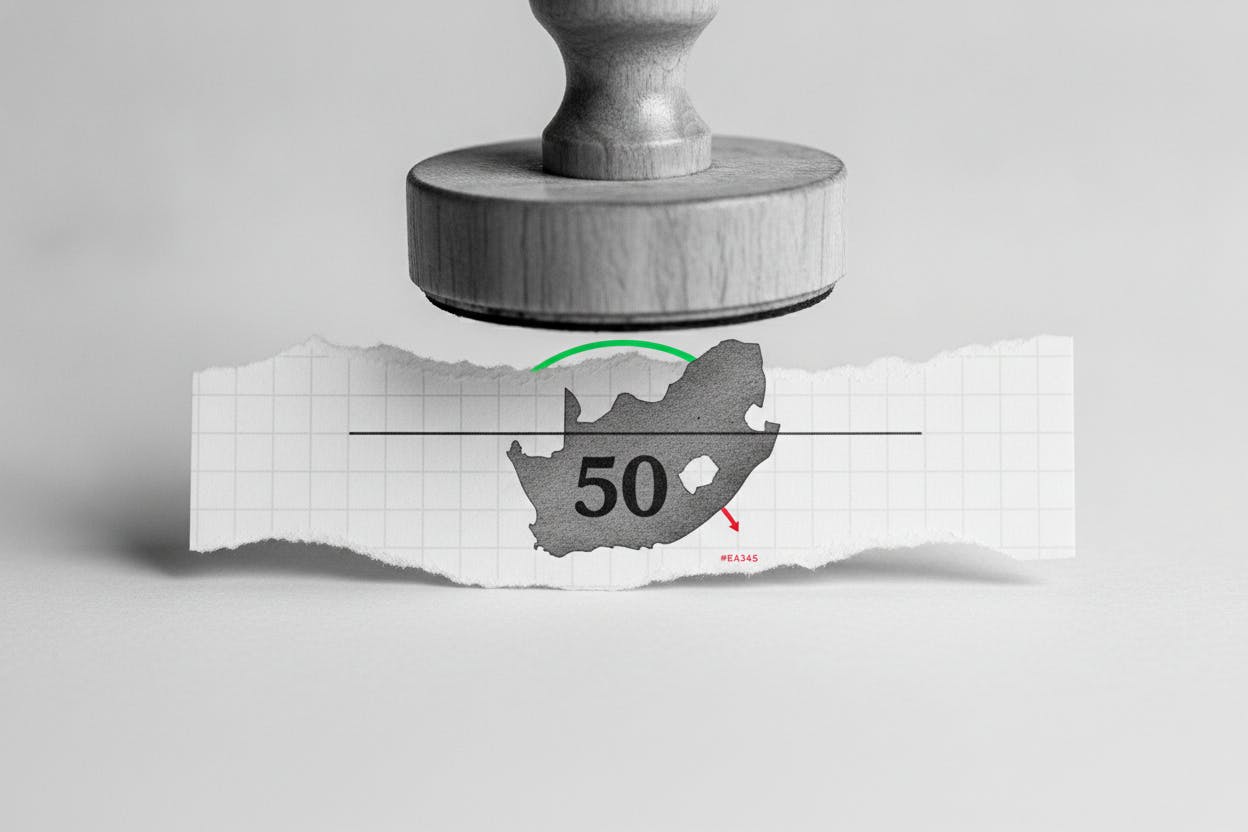
South Africa's private sector barely stayed in growth territory in July, according to a closely watched survey released this week. S&P Global's purchasing managers' index (PMI) eased to 50.3, down from the previous month's reading, signaling that the economy is essentially treading water.
A PMI reading above 50 indicates expansion, while below 50 signals contraction. At 50.3, the index is only marginally above the neutral mark, meaning that businesses are seeing little change in overall activity. The slight easing from June suggests that the momentum seen earlier in the year has faded.
What's behind the numbers
The headline figure masks a mixed picture. Output rose for the first time in three months, but only modestly, according to S&P Global. That uptick was not enough to offset persistent weakness in demand. New orders declined for a third consecutive month, a sign that customers remain cautious about spending.
S&P Global attributed the soft demand to several factors, including cautious consumer spending, protests in some areas, and a shift by customers toward cheaper imported goods. These headwinds have weighed on domestic orders, even as export orders improved for a second straight month. However, the pace of export growth slowed compared with June, suggesting that overseas demand is providing some support but not enough to drive a robust recovery.
Hiring also lost momentum. The survey showed that employment growth slowed in July, reflecting businesses' reluctance to add staff amid uncertain demand. This is a worrying sign for the labor market, which has been under pressure in South Africa for years.
Context: A fragile recovery
South Africa's economy has struggled to gain traction in recent years, hampered by power shortages, logistical bottlenecks, and high unemployment. The PMI reading is consistent with an economy that is growing, but at a pace that is too slow to make a meaningful dent in poverty or joblessness.
The latest data echoes trends seen elsewhere in the region and beyond. For instance, Indonesia's second-quarter growth beat forecasts despite cooling consumer spending, while Japan's private sector growth cooled in July as services softened. These examples highlight a common theme: many economies are facing subdued demand even as they avoid outright contraction.
In South Africa, the persistent weakness in new orders is particularly concerning because it suggests that the slowdown is not just a temporary blip. Consumers are feeling the pinch from high inflation and elevated interest rates, which have eroded purchasing power. The central bank has kept rates high to combat inflation, but that has also dampened borrowing and spending.
What it means for investors
For everyday investors, the PMI is a useful barometer of economic health. A reading near 50 means that companies are not seeing strong growth, which can translate into subdued corporate earnings and limited stock market gains. Sectors tied to domestic demand, such as retail and consumer goods, are likely to remain under pressure.
On the other hand, exporters may find some relief from the weaker rand, which makes South African goods cheaper for foreign buyers. The improvement in export orders, albeit slower, suggests that global demand is still there, even if it is not booming.
Investors should also watch the labor market. The slowdown in hiring could weigh on consumer confidence and spending in the coming months, creating a feedback loop that keeps growth sluggish. If new orders continue to fall, the PMI could dip below 50 in the near future, signaling contraction.
For those with exposure to South African assets, the key takeaway is that the economy is not collapsing, but it is also not gaining much ground. Patience and a focus on quality companies with strong balance sheets may be prudent in this environment.
As always, it's important to remember that a single month's PMI reading is not a definitive trend. Investors should look at the broader picture, including upcoming data on inflation, employment, and GDP, to gauge the direction of the economy.