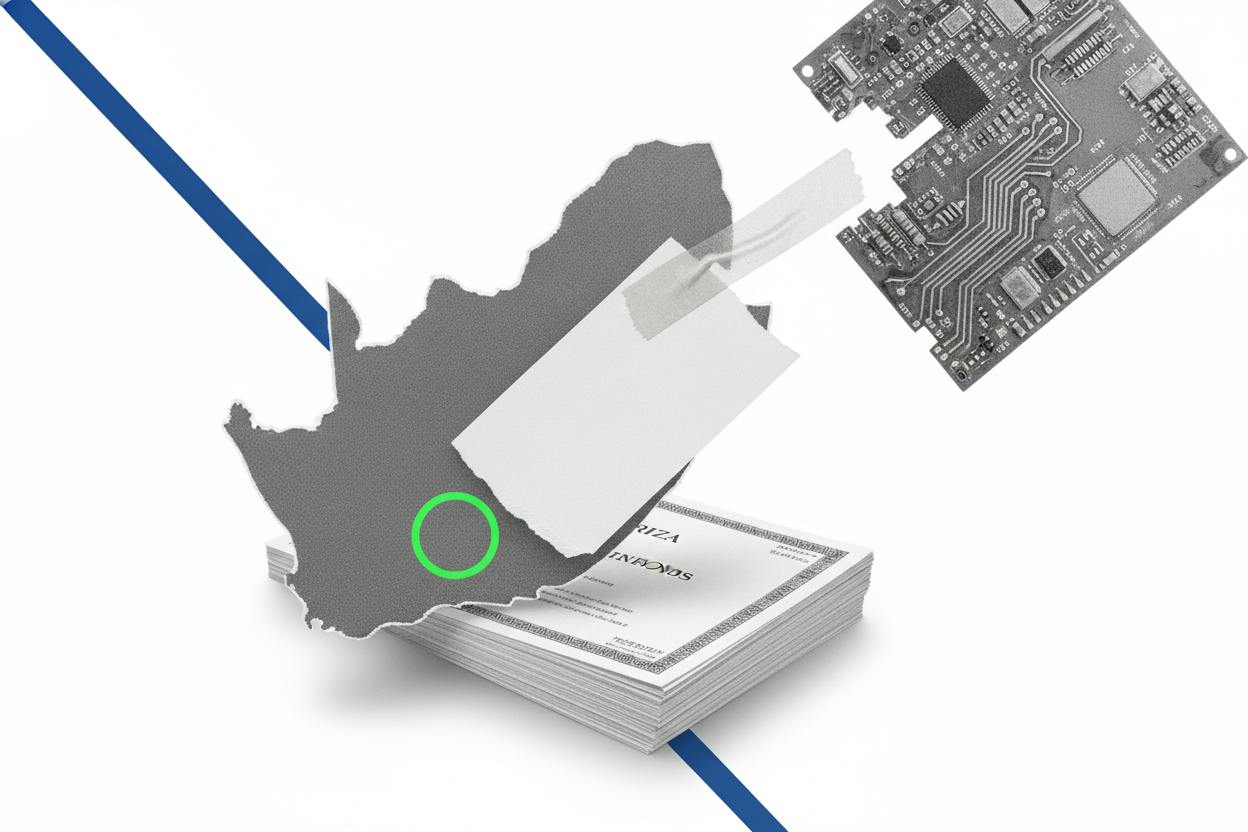
South Africa enters Friday with several market-moving events on its calendar: the final counts from municipal elections, an auction of inflation-linked government bonds, and a half-year trading update from retail group TFG. At the same time, a global selloff in technology stocks is making investors more cautious, which could spill over into emerging-market assets like the rand.
Election counts and the rand
The rand strengthened on Thursday after early municipal results appeared to favor the pro-business Democratic Alliance. For investors, the composition of local governments matters because it can signal the direction of policy and the ease of doing business in the country's major cities. A result that markets read as business-friendly tends to support the currency, as it raises hopes for steadier economic management.
But the global backdrop has turned less supportive. Tech stocks slid again in Asia and the United States, extending a recent wobble in one of the market's biggest growth sectors. When investors get nervous about high-flying sectors, they often trim riskier positions across the board, and that can weigh on emerging-market currencies and bonds, including South Africa's.
What to watch: the inflation-linked bond auction
Friday's auction of inflation-linked bonds (ILBs) is more than routine government funding. ILBs pay a return that is adjusted for inflation, so the yield investors demand is a "real" yield—the return above inflation. By comparing that real yield with the yield on a standard (nominal) government bond, you can get a rough sense of how much inflation compensation the market is pricing in.
The auction lands at a delicate moment. Traders are focused on "higher-for-longer" global interest rate expectations ahead of US payrolls data, which could influence how attractive South African bonds look to foreign buyers. If global yields stay elevated, South Africa needs to keep its bond market appealing to draw international capital. The ILB result offers a timely snapshot of that demand.
Why it matters for your money
For everyday investors, the ILB auction is a window into how the market views South Africa's inflation outlook and its fiscal credibility. If the auction has to clear at a higher real yield to attract buyers, it suggests investors want more compensation for holding inflation-linked debt. That can pull up real yields across the curve and weigh on nominal bond prices. It can also make the rand more sensitive to global swings: higher real yields may tempt carry-focused investors, but a weak auction can be read as fading confidence in inflation protection.
On the other hand, if demand is strong and the auction clears at a lower real yield, it signals that investors are comfortable with inflation-linked assets at current pricing. That can support local bonds and help steady the rand, especially on a day when global markets are also taking cues from US data.
For those with exposure to South African assets—whether through local bonds, the rand, or retail stocks like TFG—the interplay between domestic politics and global risk sentiment will be key. A business-friendly election outcome and a solid bond auction could reinforce confidence, while a weak auction or continued tech-led risk-off could add pressure.
Investors may also want to keep an eye on how the global tech slide affects broader emerging-market sentiment. As India's stock rally cools and Asian markets diverge, the mood for riskier assets is clearly fragile. South Africa's own private sector has been stuck in contraction, so any positive signals from the election or the bond market could be especially welcome.
Ultimately, Friday's events will give investors a clearer read on two things: whether South Africa's political landscape is shifting in a market-friendly direction, and whether global investors still see enough value in the country's inflation-linked debt to look past the broader risk-off tone.