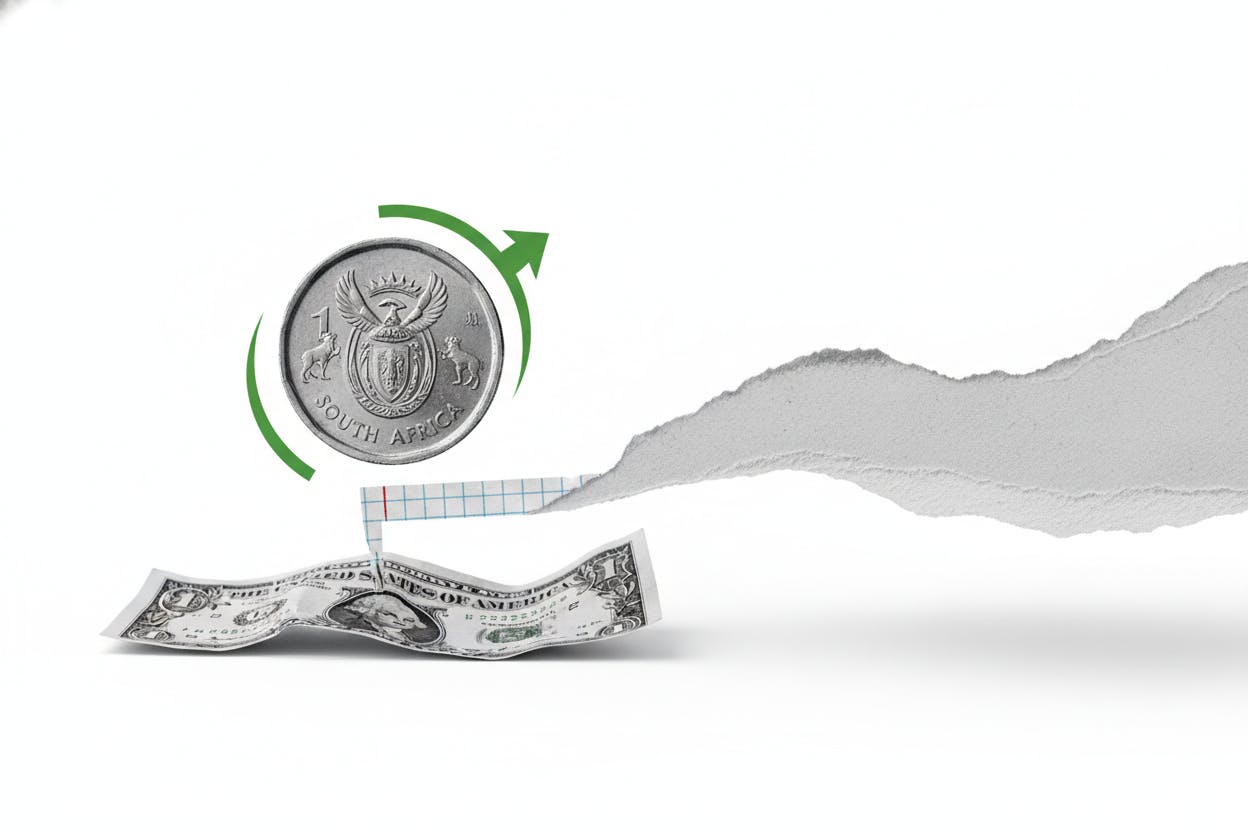
The South African rand ticked higher in early Friday trading, rising about 0.3% against the US dollar as the greenback softened. By 6:40 GMT, the rand was trading at 16.2875 per dollar, according to Reuters data, giving the currency a modest boost after recent volatility.
The move comes as the US dollar index edged down about 0.1%, reflecting shifting expectations for Federal Reserve interest rate policy. Traders have been dialing back bets on further rate hikes, which tends to weaken the dollar and support emerging-market currencies like the rand.
Global Drivers, Not Local News
The rand has been moving largely on global risk appetite rather than domestic South African developments. Analysts at ETM Analytics noted that direction in the near term will depend on headlines from the Middle East, where geopolitical tensions continue to influence investor sentiment. When risk appetite is high, investors tend to favor currencies like the rand; when it sours, they flee to safe havens like the dollar.
This pattern has been evident in recent weeks, with the rand swinging alongside oil prices and news from the region. The currency remains sensitive to any escalation or de-escalation, as seen in other risk-sensitive assets like copper, which also rose on dollar weakness and easing Iran tensions.
What It Means for Investors
For everyday investors, the rand's move is a reminder of how global forces can affect local currencies. A stronger rand can be a double-edged sword: it makes imports cheaper, which can help lower inflation, but it also hurts exporters by making their goods more expensive abroad.
The broader context is that the rand remains highly volatile, driven by external factors rather than South Africa's own economic fundamentals. Recent data showed a 4.3% drop in factory output, but the currency still found support from gold prices, which often lift the rand given South Africa's status as a major gold producer.
Dollar Weakness and Fed Expectations
The dollar's slight decline reflects a shift in market expectations for US interest rates. After a series of aggressive hikes, traders are now betting the Fed may pause or slow its tightening cycle. This has taken some steam out of the dollar rally, giving breathing room to currencies like the rand.
However, the dollar remains strong by historical standards, and any surprise in US economic data could reverse the trend. Investors are watching upcoming jobs reports and Fed speeches for clues, similar to how the Canadian dollar is also awaiting jobs data.
Looking Ahead
In the near term, the rand's direction will likely hinge on Middle East developments and any shifts in global risk appetite. If tensions ease, the rand could extend gains; if they escalate, it could quickly give back Friday's advance.
For investors with exposure to South African assets, the key takeaway is to expect continued volatility. Diversification and a long-term perspective remain important, as currency swings can quickly impact returns on local stocks or bonds.



