South Korean President Lee Jae Myung traveled to San Francisco this week to pitch his country's artificial intelligence ambitions directly to the leaders of the world's most influential tech companies. The summit drew top executives from Nvidia, OpenAI, Anthropic, and Broadcom, signaling that South Korea is serious about becoming a major player in the global AI race.
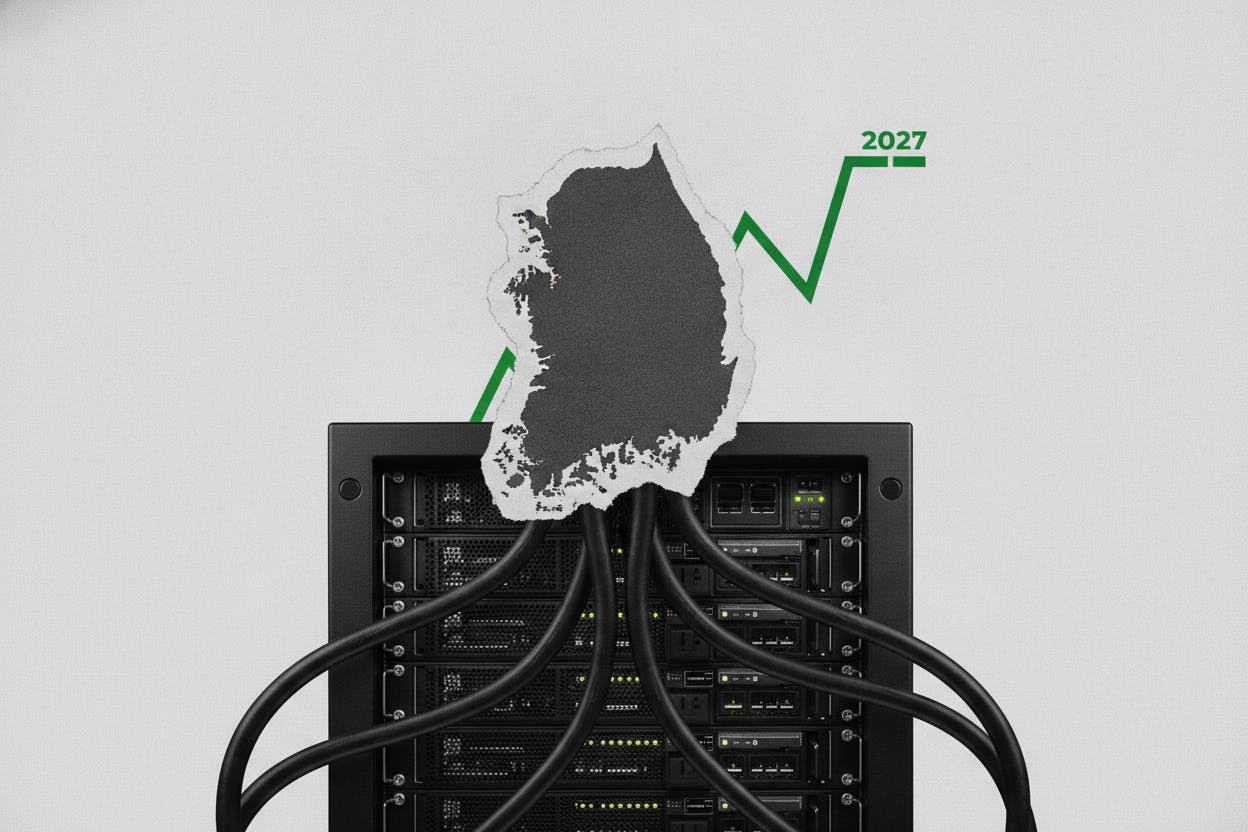
During the event, Nvidia and South Korea's SK Group jointly outlined plans for a massive data center and memory project valued at over $500 billion, with operations expected to come online in 2027. The announcement underscores the scale of investment needed to power the next generation of AI models and applications.
Why South Korea is making this push
South Korea is already home to some of the world's largest semiconductor and memory chip manufacturers, including Samsung and SK Hynix. But the country has been looking to move beyond hardware and into the higher-value AI ecosystem, where companies like OpenAI and Anthropic are developing cutting-edge models.
President Lee's visit to Silicon Valley is part of a broader strategy to attract foreign investment and partnerships that can help South Korean firms compete with the U.S. and China in AI. The country has also been working to stabilize its own markets after recent volatility — the KOSPI index plunged 5% earlier this year amid AI spending fears and rising oil prices.
The summit comes at a time when South Korea's economy is showing mixed signals. While Q2 GDP beat forecasts at 3.7% growth, momentum is slowing, and factory-gate inflation remains hot at 8.6%, with the central bank signaling more rate hikes. These headwinds make it even more critical for South Korea to secure long-term growth drivers like AI.
The $500 billion-plus plan: what we know
The joint Nvidia-SK Group project is one of the largest single AI infrastructure investments ever announced. It will combine Nvidia's expertise in graphics processing units (GPUs) — the chips that power most AI training and inference — with SK Group's memory chip capabilities. Data centers of this scale are essential for training large language models and running AI applications at scale.
While details remain sparse, the 2027 target date suggests a multi-year construction and development timeline. Such projects typically involve building new facilities, installing thousands of specialized servers, and securing long-term power supply agreements. The $500 billion-plus price tag reflects the enormous capital requirements of modern AI infrastructure.
For context, the world's largest data center campuses today cost tens of billions of dollars. A $500 billion project would be on an entirely different scale, potentially making it one of the largest industrial investments in history.
What it means for investors
For everyday investors, this news highlights the massive capital flows pouring into AI infrastructure. Companies like Nvidia, which already dominates the AI chip market, stand to benefit from continued demand for its GPUs. SK Group, through its semiconductor arm SK Hynix, is a key supplier of high-bandwidth memory (HBM) used in AI systems.
The involvement of OpenAI and Anthropic — two of the leading AI model developers — suggests they see South Korea as a potential hub for future AI development and deployment. Broadcom's presence indicates that networking and custom chip design will also play a role.
Investors should watch for more details on how this project will be financed and structured. Large-scale infrastructure deals often involve consortia of investors, including sovereign wealth funds, pension funds, and technology companies. South Korea's government may also offer incentives to attract such investment.
It's also worth noting that South Korea's AI push comes amid broader market dynamics. Asia stocks have tumbled on AI spending fears, and South Korean stocks rallied 4.4% recently on tech surges. The AI sector remains volatile, but long-term trends point to continued investment.
The bigger picture
South Korea is not the only country trying to carve out a piece of the AI economy. The U.S., China, Japan, and several European nations are all competing for talent, investment, and market share. What sets South Korea apart is its existing strength in semiconductor manufacturing and memory chips, which are critical inputs for AI hardware.
President Lee's summit in San Francisco is a diplomatic and economic gambit to position South Korea as a trusted partner for Western AI companies, especially as geopolitical tensions with China complicate supply chains. By hosting Nvidia, OpenAI, and others, South Korea is signaling that it wants to be part of the solution, not just a supplier of components.
For investors, the key takeaway is that AI infrastructure spending is likely to remain a dominant theme for years to come. Companies with exposure to data centers, chips, and memory — like Nvidia and SK Group — are at the center of this trend. But the scale of investment also carries risks: if AI adoption slows or if competing technologies emerge, some of these projects could face delays or cost overruns.
As always, diversification remains important. No single company or country will capture all the value from AI, and the landscape is evolving rapidly.