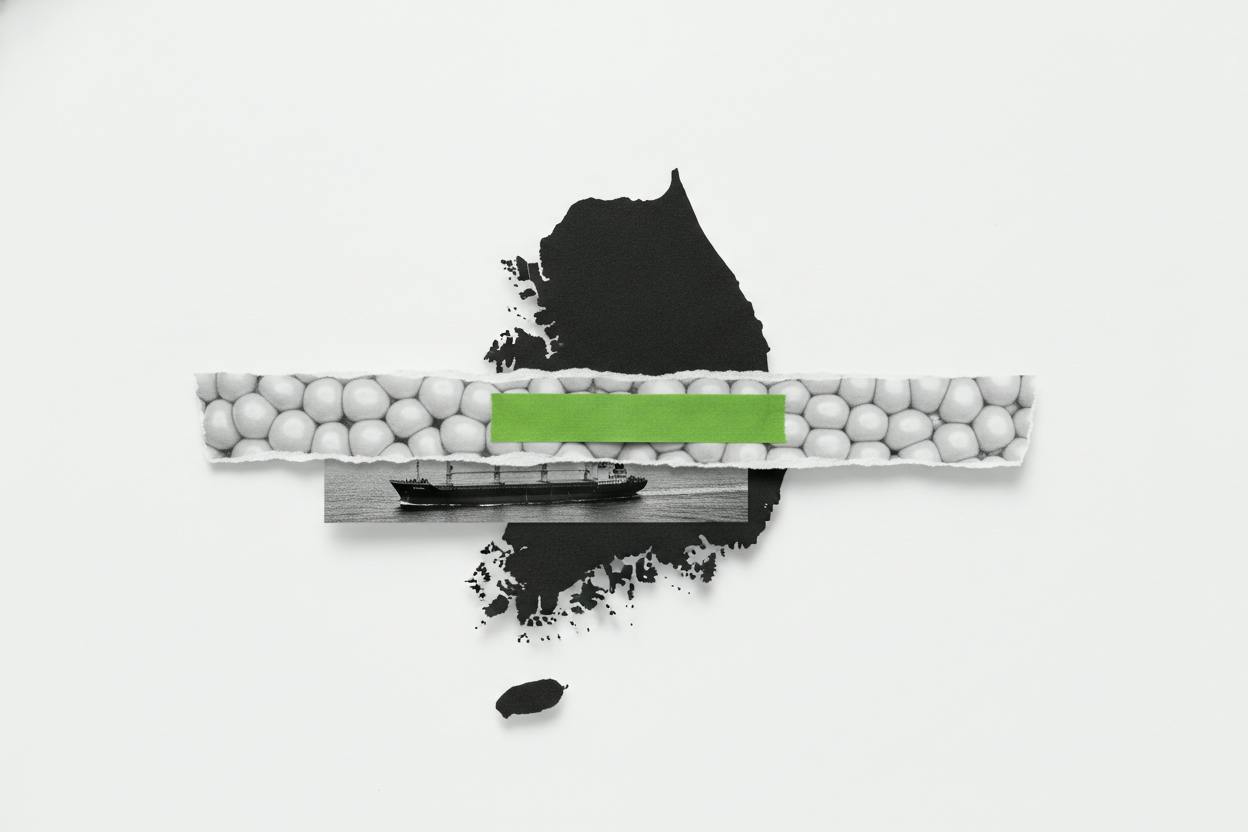
South Korea's Nonghyup Feed Inc. (NOFI), one of the country's largest buyers of animal feed, has secured roughly 131,000 metric tons of corn for delivery in early 2027. The purchase, confirmed by European traders, comes as the cooperative seeks to lock in feed costs well ahead of time, a strategy that has become increasingly common among major importers.
NOFI's NH Feed arm bought two cargoes through a tender, with one shipment of 68,000 tons sold by Bunge at about $278.49 per ton on a cost-and-freight basis, plus a $1.50-per-ton unloading surcharge. A second cargo of at least 63,000 tons was sold by Olam at around $278.90 per ton on similar terms. Notably, 20,000 tons of that second cargo were priced as a 215 US-cent premium over the Chicago Board of Trade (CBOT) March 2027 corn futures contract, rather than at a fixed cash price.
This mix of fixed and futures-linked pricing is a deliberate risk-management tool. By tying a portion of the purchase to a widely traded benchmark, NOFI can hedge against price swings using standard futures contracts. The rest, priced at a fixed rate, provides certainty for a portion of its needs. The figures are trader estimates, so exact prices and volumes could still be revised.
Why buy corn so far in advance?
Booking corn almost two years ahead is less about predicting where prices will go and more about stabilizing feed costs. For a major buyer like NOFI, which supplies feed to thousands of livestock farmers, sudden jumps in corn prices can quickly translate into higher costs for meat, dairy, and egg production. By locking in prices now, NOFI shields itself from potential volatility in the spot market closer to delivery.
The futures-linked tranche adds flexibility. If corn prices fall, NOFI can potentially adjust its hedge or take advantage of lower prices on the open market. If prices rise, the fixed-price cargoes cap the cost. This approach shifts most of the risk from day-of-shipment surprises to basis and logistics—factors that are usually narrower and easier to budget for.
For everyday consumers, this kind of forward buying can help dampen sudden feed-cost spikes, reducing the odds that meat and egg prices swing sharply just because corn markets get messy. It's a behind-the-scenes move that helps keep grocery bills more predictable.
What it means for investors
For investors, NOFI's purchase is a signal about how major agricultural buyers are thinking about the future. The decision to lock in 2027 supply suggests that large importers see value in securing feed ingredients well ahead of time, possibly reflecting concerns about supply disruptions or price volatility in the years ahead.
It also highlights the ongoing importance of corn as a global commodity. Corn is used not only for animal feed but also for ethanol production and a wide range of food products. Movements in corn prices can ripple through the broader agricultural sector, affecting everything from fertilizer companies to meat processors.
Investors in agricultural commodities or related ETFs may watch for similar moves by other major buyers, as a wave of forward purchasing could influence near-term price dynamics. However, it's worth noting that NOFI's purchase is just one data point in a vast global market, and prices can still move significantly based on weather, trade policy, and demand from other regions.
Broader context
South Korea is one of the world's largest corn importers, relying heavily on overseas supplies to feed its livestock industry. The country's feed buyers often use tenders to secure large volumes, and their purchasing patterns are closely watched by traders and analysts.
The use of futures-linked pricing is not new, but it underscores the sophistication of large agricultural buyers. By blending fixed and floating prices, NOFI can manage its exposure to both price levels and basis risk—the difference between futures prices and local cash prices.
For those following South Korea's corn buying activity, this tender is a reminder that major importers are planning far ahead. It also comes amid broader market uncertainty, with traders awaiting US inflation data for clues on interest rates, which can influence commodity prices through currency movements.
While this specific purchase is unlikely to move global corn prices on its own, it reflects a broader trend of risk management in agricultural supply chains. As geopolitical tensions and climate-related disruptions continue to pose threats to food security, more buyers may follow NOFI's lead in locking in supplies years in advance.
For investors, the takeaway is that agricultural markets are increasingly driven by strategic planning rather than just spot supply and demand. Understanding how major players manage risk can provide insight into future price trends and the resilience of food supply chains.