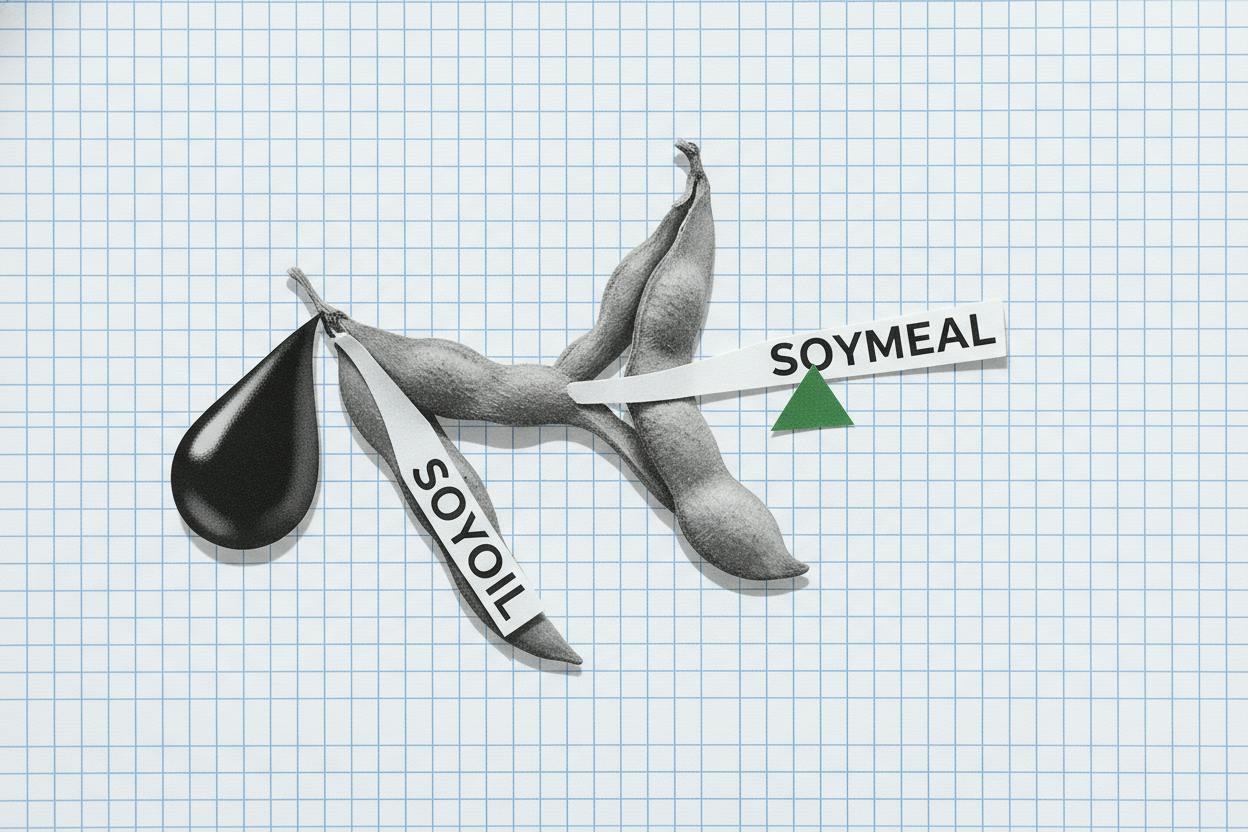
Soybean futures on the Chicago Board of Trade (CBOT) slipped on Tuesday, even as the National Oilseed Processors Association (NOPA) reported a record October crush. The decline came as crude oil fell about 3%, prompting commodity funds to liquidate long positions and pulling the entire soybean complex lower.
The disconnect between strong processing demand and falling futures prices underscores a key dynamic in agricultural markets: soybeans don't trade in isolation. They are part of a "complex" that includes the raw bean, soymeal (used in animal feed), and soyoil (a key ingredient in biodiesel). When crude oil slides, soyoil often follows because cheaper fossil fuels can make biodiesel blending less economical. That can drag the whole complex down, even when crushers are running at full tilt.
Record crush, but oil weighs
NOPA's report showed US processors crushed a record volume of soybeans in October, a sign of robust demand for both meal and oil. Typically, such strong processing numbers would support prices. But on the day, December soyoil futures sank 2.48% to 62.19 cents per pound, while December soymeal rose 1.46% to $334.60 per short ton. That split tells the story: soyoil, the biodiesel-linked product, led the decline, while soymeal, which is less tied to energy markets, held up better.
The drop in crude oil—down roughly 3%—was the main catalyst. Oil prices have been volatile recently, and a sharp move lower can ripple through vegetable oil markets. Commodity funds, which often hold large speculative positions in futures, responded by trimming bullish bets, a process known as long liquidation. That selling pressure can amplify price moves, even when the underlying fundamentals look solid.
Why soybeans follow oil
For everyday investors, the connection between soybeans and crude oil might seem odd, but it's a well-established relationship. Soybean oil is one of the primary feedstocks for biodiesel in the United States. When crude prices fall, the cost of conventional diesel drops, making biodiesel less competitive without government subsidies. That can reduce expected demand for soyoil, which in turn pressures prices.
This dynamic means soybean futures can sometimes move in tandem with energy markets, rather than purely on supply and demand for the crop itself. It's a reminder that agricultural commodities are increasingly intertwined with the broader energy complex, especially as biofuel mandates and renewable diesel capacity expand.
What it means for investors
For investors holding soybean futures or ETFs that track agricultural commodities, the key takeaway is that energy prices matter. A sustained drop in crude oil could keep a lid on soybean prices, even if crush demand remains strong. Conversely, a rebound in oil could provide support.
The record crush also highlights the strength of domestic processing demand, which is a positive signal for the broader agricultural economy. But the market's reaction shows that sentiment and fund flows can override fundamentals in the short term.
Investors should also watch for upcoming supply and demand reports from the US Department of Agriculture, as well as any shifts in biofuel policy, which can have an outsized impact on soyoil prices. For now, the soybean market is caught between solid physical demand and the gravitational pull of cheaper crude.
As always, it's important to remember that commodity futures are volatile and can be affected by factors far beyond the crop itself. Understanding the links between energy and agriculture can help investors make more informed decisions, but no single factor tells the whole story.