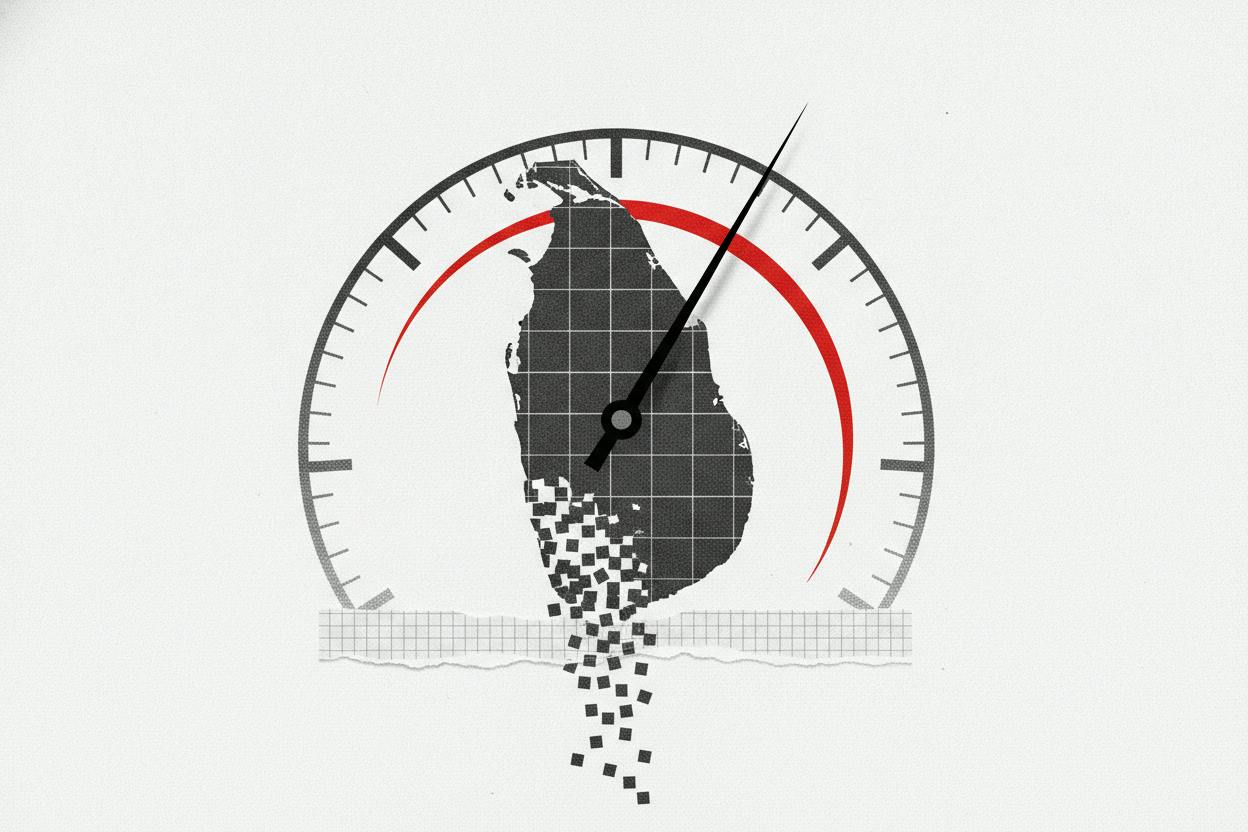
Sri Lankan shares extended their decline on Tuesday, with the CSE All Share index slipping 0.6% to close at 21,242.52. The drop follows last week's surprise interest rate hike by the central bank and fresh data showing inflation accelerated in October, adding to investor caution.
What's behind the slide?
The benchmark index had already fallen on Friday, and Tuesday's move deepened the pullback. Healthcare and real estate stocks were among the biggest drags, reflecting the sectors most sensitive to higher borrowing costs.
Inflation data released on Tuesday showed consumer prices rose 8.5% year-on-year in October, up from 8.1% in September. That uptick helps explain why the central bank tightened policy unexpectedly — and why investors are now recalibrating their expectations for growth and risk.
Trading activity also cooled noticeably. Turnover fell to 1.05 billion Sri Lankan rupees from 2.33 billion rupees, while the number of shares traded dropped to 46.5 million from 121.8 million. That's a sharp slowdown in liquidity, which can make price swings more pronounced.
Who's buying and selling?
Foreign investors were modest net buyers, purchasing 63.6 million rupees worth of shares. But domestic investors sold a net 1.02 billion rupees, a lopsided split that can move prices quickly in a relatively thin market.
When local investors are selling heavily and foreign buying is small, the imbalance can push the index down even without major headlines. The drop in turnover suggests many participants are stepping to the sidelines, waiting for clarity on the central bank's next move.
What does this mean for investors?
For everyday investors, the key takeaway is that higher interest rates and rising inflation are a challenging combination for stocks. A rate hike raises the discount rate used to value future profits, making stocks less attractive relative to safer assets like bonds. It also increases borrowing costs for companies and households, which can dampen spending and earnings growth.
Rate-sensitive sectors, such as real estate, tend to feel the pinch most because their cash flows are expected further into the future and they often rely on debt. That's why those stocks were among the day's weakest performers.
The thinning trading volume is another signal to watch. When turnover drops sharply, even modest selling can have an outsized impact on prices. Investors should be prepared for more volatility in the near term, especially if inflation continues to climb or the central bank signals further tightening.
For context, the rupee's recent strength has been a bright spot, but the stock market's slide shows that currency gains don't always translate into equity gains. Meanwhile, other Asian markets are also reacting to inflation data, highlighting the regional focus on price pressures.
What to watch next
Investors will be watching for any further comments from the central bank about its policy path, as well as upcoming inflation readings. If October's uptick proves to be a trend, more rate hikes could be on the table, which would likely keep pressure on stocks.
On the other hand, if inflation stabilizes or falls, the central bank might pause, giving equities room to recover. The sharp drop in turnover suggests many investors are waiting for that clarity before committing more capital.
For now, the message is caution. Higher rates and rising prices are a tough mix for stocks, and thinner trading means moves can be sharper than usual. Keeping an eye on inflation data and central bank signals will be key for anyone with exposure to Sri Lankan equities.



