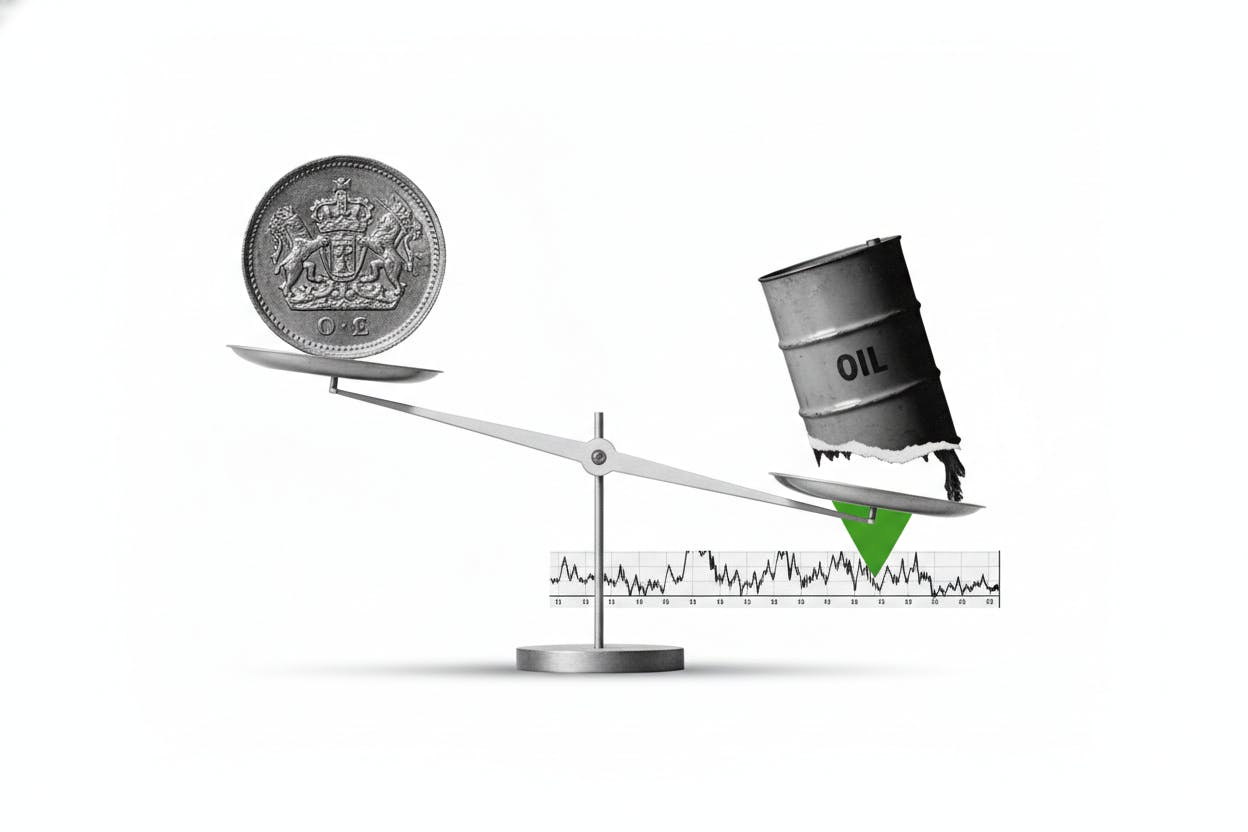
The British pound ticked higher on Thursday as a sharp drop in oil prices cooled expectations that the Bank of England would need to keep raising interest rates. Sterling climbed to $1.3330, while Brent crude, the global oil benchmark, fell 9% to $87.84 a barrel.
The move comes as markets reassess the outlook for UK monetary policy after the BoE held its key rate at 3.75% at its latest meeting. Lower energy costs reduce one of the main drivers of inflation, making it less likely that the central bank will feel compelled to hike again soon.
Why oil matters for UK inflation
Crude oil prices have a broad impact on the economy because they feed into everything from household heating bills to the cost of transporting goods. When oil is expensive, it pushes up inflation across many sectors, making it harder for central banks to bring price growth under control.
The recent slide in Brent crude — which has fallen sharply from earlier highs — has taken some of the heat out of the "rates higher for longer" narrative that had dominated bond markets. Traders now see less urgency for the BoE to tighten policy further, which has boosted demand for UK government bonds.
Short-dated UK government bonds, known as gilts, saw the biggest moves. The yield on the 2-year gilt — a good proxy for where investors think the BoE is headed next — fell 6 basis points to 4.362%. That was a larger shift than in similar US and German bonds, suggesting the UK market was particularly sensitive to the oil price news.
What it means for investors
For everyday investors, the combination of a stronger pound and falling bond yields has several implications. A rising sterling makes UK assets more attractive to foreign buyers, but it can also weigh on the earnings of multinational companies that report in pounds. Meanwhile, lower gilt yields mean lower borrowing costs for the government and, eventually, for businesses and homeowners.
The bond market's reaction also signals that investors are betting the BoE will keep rates on hold for longer, rather than being forced into further hikes. That could be positive for UK stocks, particularly those in sectors like housing and consumer goods that are sensitive to interest rates.
However, the situation remains fluid. Oil prices could rebound if geopolitical tensions flare up again, and UK inflation data in the coming months will be closely watched. The dollar's recent steadiness as markets await the Federal Reserve's next move also adds a layer of uncertainty for currency traders.
Broader market context
The oil price slide has been a global theme, with Asian stocks rising on hopes of a Gulf cease-fire that could ease supply concerns. In India, markets rallied as lower crude prices reduced import costs for the oil-dependent economy.
For the UK, the drop in oil prices is a welcome relief after a period of stubborn inflation that had forced the BoE to raise rates aggressively. But the central bank is not out of the woods yet. Services inflation remains elevated, and wage growth is still strong, which could keep pressure on prices.
Investors will now focus on upcoming UK economic data, including inflation and GDP figures, to gauge whether the BoE's pause is justified. The bond market's reaction suggests that, for now, traders are betting on a period of stability — but that could change quickly if oil prices reverse course or if domestic inflation proves stickier than expected.