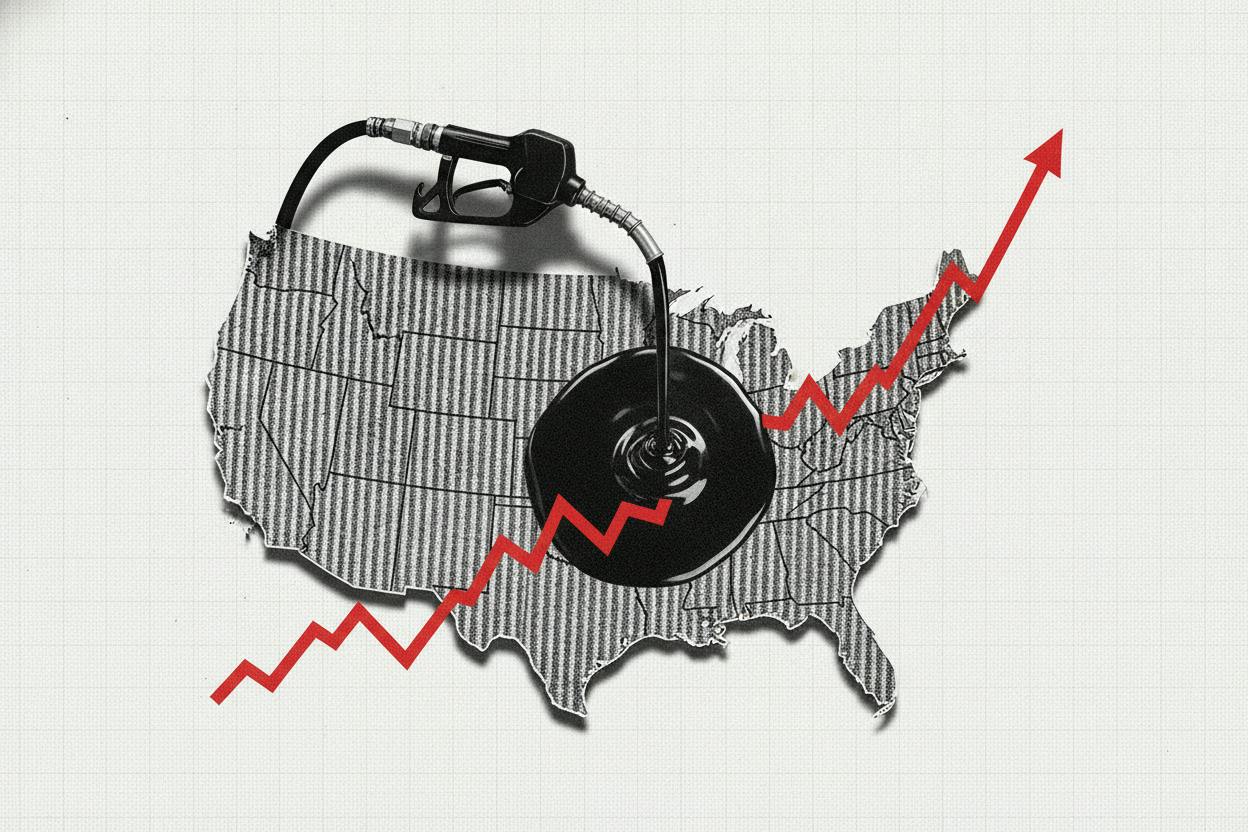
US stock futures were mixed in pre-market trading Tuesday, as investors digested a new government aid package for farmers and another jump in global oil prices. President Donald Trump announced an $8 billion “harvest fuel relief program” aimed at helping agricultural producers cope with soaring diesel costs, while Brent crude, the international benchmark, rose to $111.66 a barrel.
The pre-bell moves were split: Dow futures edged up 0.1%, while S&P 500 and Nasdaq futures pointed lower, reflecting the competing forces of higher energy prices and a fresh wave of corporate earnings.
Oil's ripple effect
The rise in Brent matters well beyond the pump. Diesel is a key input for farming, shipping, and manufacturing, so when its price climbs, those costs tend to filter through the broader economy. That can keep inflation pressures alive, even as the Federal Reserve has been trying to cool price growth with higher interest rates.
For investors, the concern is that persistently high oil prices could force the Fed to keep monetary policy tight for longer than markets hope. That scenario tends to push bond yields up and weigh on stocks, particularly growth-oriented tech shares that are sensitive to higher borrowing costs. The recent slide in Japanese tech stocks on rising yields is a reminder of how quickly that dynamic can spread across global markets.
At the same time, higher fuel costs are a direct hit to farmers' bottom lines, which is why the White House stepped in. The $8 billion program is designed to ease that burden, but it also underscores how much energy prices are squeezing the real economy.
Earnings in focus
Tuesday also brought a busy day for corporate results. GE Aerospace, RTX (the parent of Raytheon), and Netflix all reported, giving investors a read on different corners of the economy—from aviation and defense to consumer streaming.
Netflix's report is particularly closely watched, as it is one of the first major tech companies to report this season. Its results can set the tone for other tech and AI-related stocks, which have been volatile recently as investors weigh high valuations against the potential for AI-driven growth.
GE Aerospace and RTX offer insight into industrial demand and supply chains, both of which are sensitive to fuel costs and broader economic conditions.
What it means for investors
For everyday investors, the key takeaway is that oil prices are once again a central driver of market sentiment. When crude climbs, it raises the odds that inflation stays sticky, which can lead to higher interest rates and more volatility in stocks and bonds.
The mixed futures suggest that investors are not yet sure which way to lean. On one hand, strong earnings could reassure markets that corporate profits are holding up. On the other, rising energy costs could squeeze margins and consumer spending.
It's also worth noting that government aid programs, like the one for farmers, can provide a temporary cushion for specific sectors, but they don't change the underlying supply-demand picture for oil. Diesel prices are ultimately set by global markets, and any relief is likely to be partial.
Investors should keep an eye on how oil prices evolve in the coming weeks, as well as on the Fed's signals about its next policy moves. The recent inflation-driven rate hike bets in Canada show that central banks around the world are still grappling with price pressures.
In the meantime, the earnings season will continue to provide clues about how companies are navigating higher input costs. If more firms report strong results despite the oil headwind, that could help stocks shake off the energy drag. But if guidance turns cautious, the market's mood could sour quickly.
As always, diversification and a long-term perspective remain sensible strategies, especially when markets are pulled in different directions by oil and earnings.