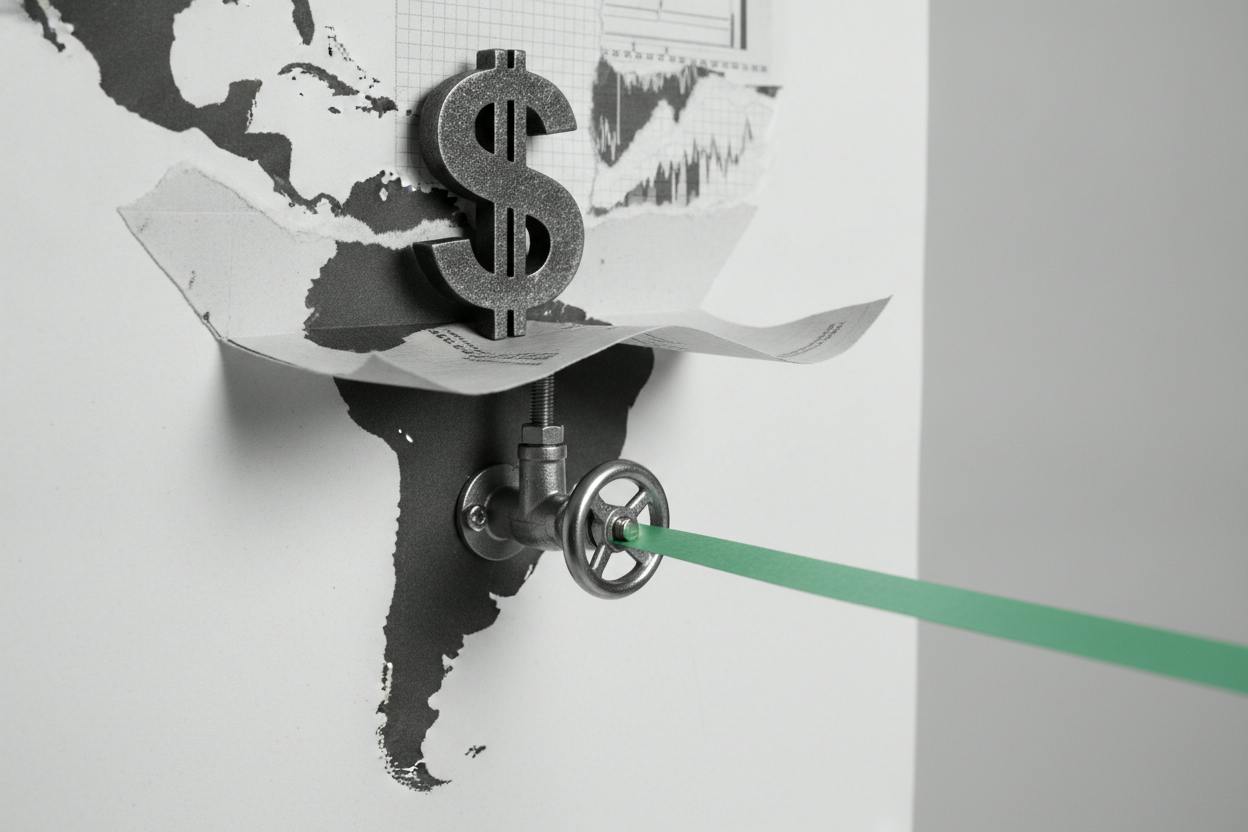
Latin American markets took a hit on Tuesday as a firmer US dollar, fueled by hawkish comments from a Federal Reserve official, weighed on regional currencies and equities. Brazil's real and Mexico's peso were among the hardest hit, while investors also kept an eye on political developments in Brazil and a ratings action in Panama.
What happened
The slide followed remarks from Fed Governor Christopher Waller, who argued that inflation might require a tougher stance, including the possibility of faster rate increases. Even if investors aren't fully pricing in a bigger near-term hike, the idea of US rates staying high for longer tends to pull money toward US assets and away from riskier emerging markets, where returns have to compete with higher US yields.
That dynamic showed up quickly. Mexico's peso gave back recent gains, while Brazil's real fell 0.63% to around its weakest level since April 2025. The Brazilian central bank tried to smooth conditions by selling $1 billion in spot dollars with an agreement to repurchase them later—a tool that adds short-term dollar liquidity without permanently shrinking reserves.
Political and commodity pressures
Local politics added to the nerves. Investors tracked a Brazilian Senate vote on changes to President Luiz Inacio Lula da Silva's fiscal bill and watched for signals on Lula's finance minister pick, which can shape expectations for spending and borrowing. Meanwhile, softer commodity prices weighed on regional equities, with big miners and energy names dragging major indexes.
The dollar's strength has been a recurring theme in global markets, as traders adjust to the possibility of a more aggressive Fed. This has also put pressure on other emerging market currencies, as seen in recent moves in the Indian rupee and the Chinese yuan. The dollar's recent strength has been a key driver for many of these moves.
What it means for investors
For markets, Brazil's $1 billion dollar auction looked more like a pressure valve than a pivot. A sell-now, buy-back-later dollar operation is basically a short-term loan of dollars to the local market. It can relieve near-term stress in funding and currency hedging, but it doesn't change the bigger backdrop of a firmer dollar and higher global rate expectations.
So the key signal isn't whether the real steadied for a day. It's whether the strain shows up in the cost of short-dated FX hedges and onshore dollar funding, and whether the currency stays sensitive each time markets reprice the Fed's path.
For everyday investors, this means that Latin American assets—whether currencies, stocks, or bonds—are likely to remain volatile as long as the Fed signals a higher-for-longer stance. A stronger dollar makes it more expensive for emerging market countries to service dollar-denominated debt and can reduce the appeal of their local assets.
Investors should also watch for any signs that the Fed's hawkishness is spreading to other central banks or affecting global commodity prices. Copper, for instance, has already been hit by a strong dollar and concerns about demand, as noted in recent market moves.
In the near term, the focus will be on upcoming US economic data and Fed minutes, which could provide more clarity on the pace of rate hikes. As traders brace for a data deluge, any surprises could trigger further swings in emerging market currencies.
For now, the message from Latin American markets is clear: the dollar's strength is a headwind that won't easily fade, and investors should be prepared for continued turbulence.



