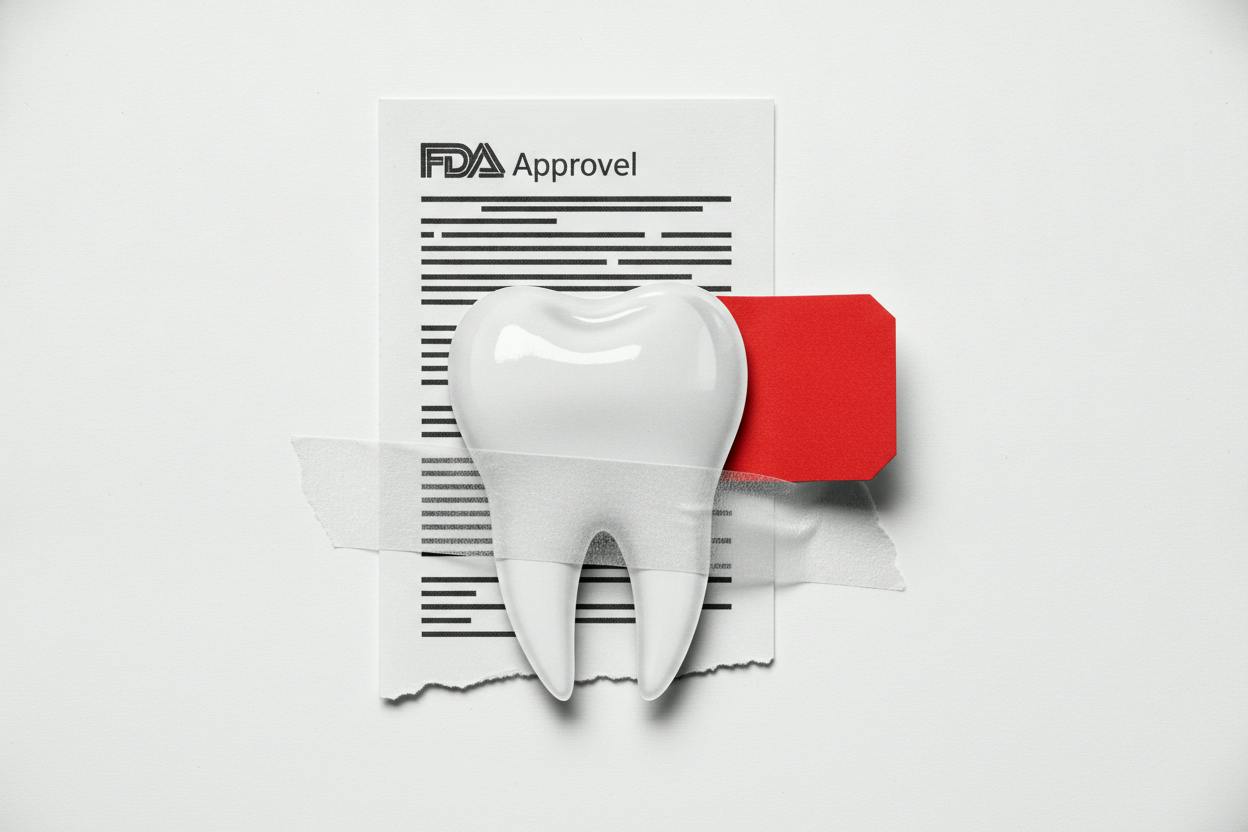
Swiss dental startup vVardis has priced its US initial public offering at $18 per share, below the previously marketed range of $21 to $24, raising $175 million. The company sold 9.72 million shares and is set to begin trading on the New York Stock Exchange under the ticker “VVVV.”
The pricing decision reflects a cautious tone among investors, even as the IPO market shows signs of reopening. While a company can successfully bring a deal to market, buyers are still demanding a discount for uncertainty, particularly for younger, unprofitable firms. This is a reminder that the window for new listings is not fully open — it’s more like a crack that requires careful navigation.
What is vVardis?
Founded in 2020, vVardis is a dental technology company focused on minimally invasive treatments. Its flagship product, Curodont, is designed to help repair early-stage tooth decay without the need for drilling or injections. The treatment is aimed at patients who want to avoid traditional fillings and the anxiety that often comes with dental procedures.
The company is betting on growing adoption in the US market. According to the offering documents, sales of its Curodont Repair Fluoride Plus product rose 112% for the nine months ended September 30th, and its products have reached more than 20,000 US dental practices. That kind of traction is a key selling point for investors, as it suggests the company is gaining a foothold in a large and established healthcare market.
Why the below-range pricing?
Pricing an IPO below the marketed range is not uncommon, especially for companies with limited operating history or those in capital-intensive sectors. It often signals that institutional investors were hesitant to pay the higher price, either because of concerns about valuation, competition, or the broader economic environment. For vVardis, the decision to accept a lower price likely reflects a desire to complete the offering rather than risk a failed listing.
For investors, a below-range IPO can be a double-edged sword. On one hand, it means they are getting shares at a cheaper price than initially proposed. On the other, it can be a red flag that demand was weaker than expected, which might weigh on the stock’s performance in the early days of trading. However, many companies that price below range still go on to perform well if their fundamentals are strong.
What it means for investors
For everyday investors, the key takeaway is that IPO pricing is not a direct indicator of a company’s long-term value. It’s a negotiation between the company and institutional investors, and the final price reflects the level of demand at that moment. A below-range price doesn’t automatically mean the company is a bad investment, but it does suggest that the market is being cautious.
Investors should also consider the broader context. The IPO market has been volatile, with some high-profile listings struggling after their debut. This has made investors more selective, favoring companies with clear paths to profitability or strong revenue growth. vVardis’s revenue growth is impressive, but the company is still young and faces competition from established dental product manufacturers.
Another factor to watch is the company’s use of proceeds. Typically, funds raised in an IPO are used for expansion, research and development, or paying down debt. In vVardis’s case, the capital will likely support its US expansion and further clinical development of its products. Investors will be looking for signs that the company can scale its sales while maintaining margins.
Market backdrop
The IPO comes at a time when equity markets are navigating mixed signals. While some sectors, like energy, have seen gains, others have struggled with valuation concerns. For instance, stock prices have fallen while earnings forecasts hold, squeezing valuations across the board. This environment makes it harder for new issuers to command premium prices.
Additionally, currency and trade dynamics are in flux. South Korea's export prices have risen while import costs fall, easing trade pressure, but other regions face different challenges. For a Swiss company listing in the US, currency fluctuations between the Swiss franc and the US dollar could also affect its financial results.
Investors should also keep an eye on the broader healthcare sector, which has been a mixed bag. While demand for innovative medical devices remains strong, regulatory hurdles and reimbursement issues can pose risks. vVardis’s non-invasive approach could appeal to patients and insurers alike, but it’s too early to tell how the market will receive it.
What to watch next
After the listing, attention will turn to the stock’s performance in its first few days of trading. A strong debut could signal that the below-range pricing was a strategic move to generate buzz, while a weak one might confirm investor skepticism. Long-term investors will be more focused on the company’s ability to grow sales, expand its customer base, and eventually turn a profit.
For those considering an investment, it’s important to do thorough research beyond the IPO price. Look at the company’s financials, competitive landscape, and management team. Remember, IPOs are inherently risky, and past performance is not indicative of future results. As always, diversification is key to managing risk in any portfolio.
In summary, vVardis’s IPO is a notable event in the dental tech space, but it’s also a reflection of the current market mood. The below-range pricing is a signal that investors are cautious, but it doesn’t necessarily doom the company. For now, the focus is on how the stock trades and whether the company can deliver on its growth promises.