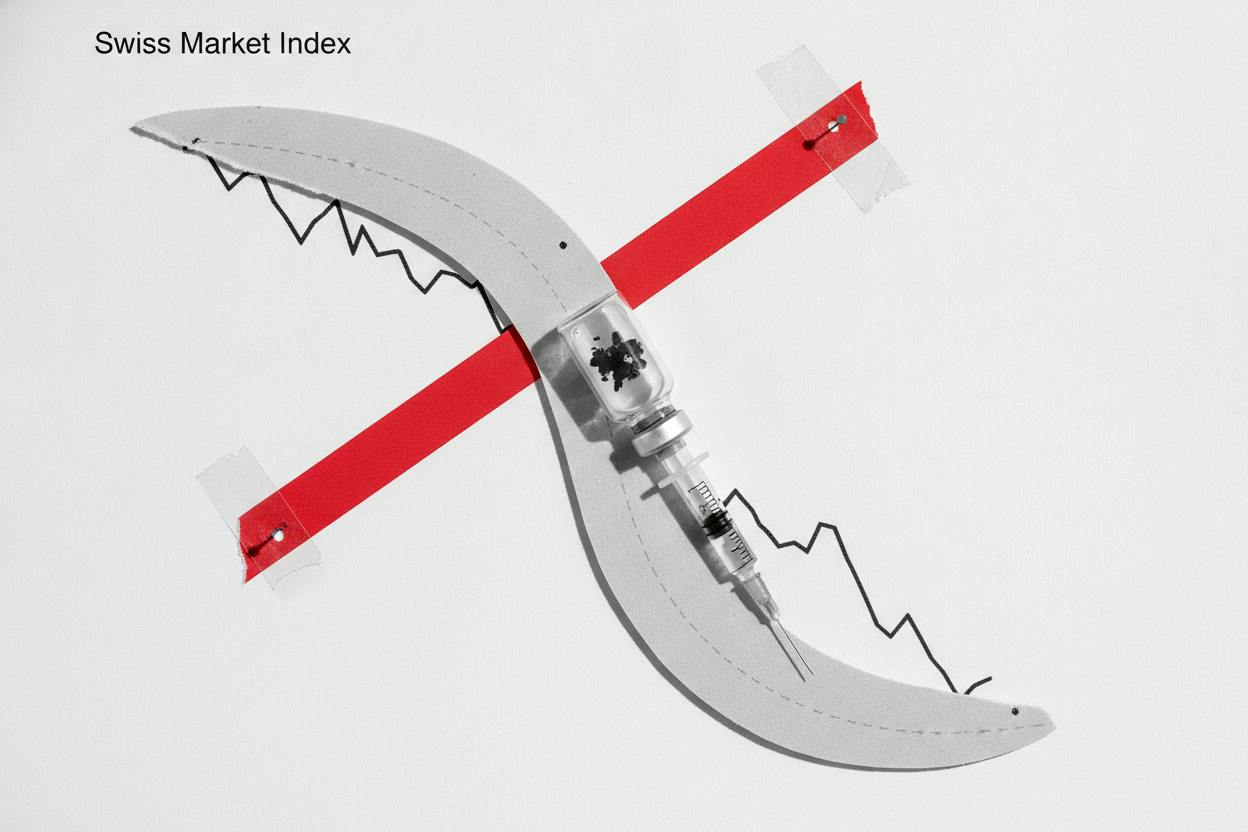
Swiss stocks took a hit on [day], with the Swiss Market Index (SMI) dropping 1.15% as a mix of souring consumer sentiment and fresh concerns over a key drug weighed on the country's largest companies. The decline was led by Novartis, which disclosed nine reports of tumors in patients treated with its gene therapy Zolgensma, and by UBS, which was caught up in a broader selloff of AI-related stocks.
The SMI, which tracks the 20 most significant companies listed on the Swiss exchange, is heavily weighted toward healthcare, financials, and consumer goods. That makes it sensitive to both company-specific news and global market trends. Today's move reflects both: a domestic confidence dip and a global rotation away from technology and AI-linked names.
Novartis faces new questions over Zolgensma
Novartis, one of the SMI's largest constituents, saw its shares slide after the company disclosed that nine cases of tumors had been reported in patients who received Zolgensma, its one-time gene therapy for spinal muscular atrophy (SMA). The drug, which costs over $2 million per treatment, is one of the most expensive in the world and a key growth driver for Novartis's gene therapy portfolio.
The disclosure is not a formal safety recall, but it raises fresh regulatory and reputational questions. Zolgensma has been on the market since 2019 and has been used in thousands of patients. While the company has previously noted potential cancer risks in animal studies, these new human reports could prompt closer scrutiny from regulators like the FDA and the European Medicines Agency.
For investors, the news is a reminder that gene therapies carry unique risks. Unlike traditional drugs that are taken repeatedly, these are one-time treatments with long-term unknowns. Any sign of delayed side effects can hit the stock hard, as it did today. Novartis's share price movement is a direct reflection of that uncertainty.
AI selloff drags UBS and the broader market
UBS, Switzerland's largest bank, also contributed to the index's decline. The stock fell as part of a global selloff in AI-related equities. While UBS is not a pure-play AI company, it has significant exposure to technology and growth sectors through its wealth management and investment banking arms. When investors dump tech stocks, banks that serve those sectors often feel the ripple effect.
The AI selloff is not confined to Switzerland. Across Europe and the US, investors have been reassessing valuations in the AI space after a massive run-up. Concerns about overvaluation, regulatory pressure, and the sustainability of AI-driven earnings growth have triggered profit-taking. This has hit not just chipmakers and software firms, but also financial institutions with heavy tech exposure.
For context, similar dynamics have played out elsewhere. German stocks slid on AI regulation fears earlier this week, and the AI selloff has also shaken rate-cut expectations for major central banks. The pattern is global: when AI sentiment turns, it ripples through markets far beyond the tech sector.
Consumer sentiment adds to the gloom
Compounding the pressure was a deterioration in Swiss consumer sentiment. While the brief does not specify the exact figures, a worsening mood among households typically signals weaker spending ahead. Consumer confidence is a leading indicator for retail sales, housing demand, and overall economic growth. When sentiment falls, companies that rely on domestic consumption—like retailers, food producers, and insurers—tend to underperform.
Switzerland's economy has been relatively resilient, but high inflation and elevated interest rates have squeezed household budgets. The Swiss National Bank has raised rates in recent years to combat inflation, which has made borrowing more expensive and cooled consumer spending. A drop in sentiment suggests that these pressures are still being felt.
This is not an isolated trend. US consumer mood has improved, but AI bubble worries persist, and US sentiment edged up in November as inflation expectations cooled. In Switzerland, the opposite appears to be happening, which could weigh on the domestic economy in the coming months.
What it means for investors
For everyday investors, today's move is a reminder that markets are driven by a mix of company-specific news and broader macro trends. A single drug safety disclosure can knock a pharmaceutical giant, while a global tech selloff can drag down banks and other seemingly unrelated sectors.
If you hold Swiss stocks or funds that track the SMI, it's worth watching two things. First, how regulators respond to the Zolgensma reports. Any formal action could have a lasting impact on Novartis's earnings and its stock price. Second, whether the AI selloff continues or fades. If it deepens, it could keep pressuring UBS and other financials with tech exposure.
Diversification remains key. The SMI is concentrated in a handful of large companies, so a single event—like today's Novartis news—can move the entire index. Investors with broader global exposure may be less affected by Swiss-specific shocks.
As always, this is not a recommendation to buy or sell any stock. But understanding the forces behind market moves can help you make more informed decisions about your own portfolio.