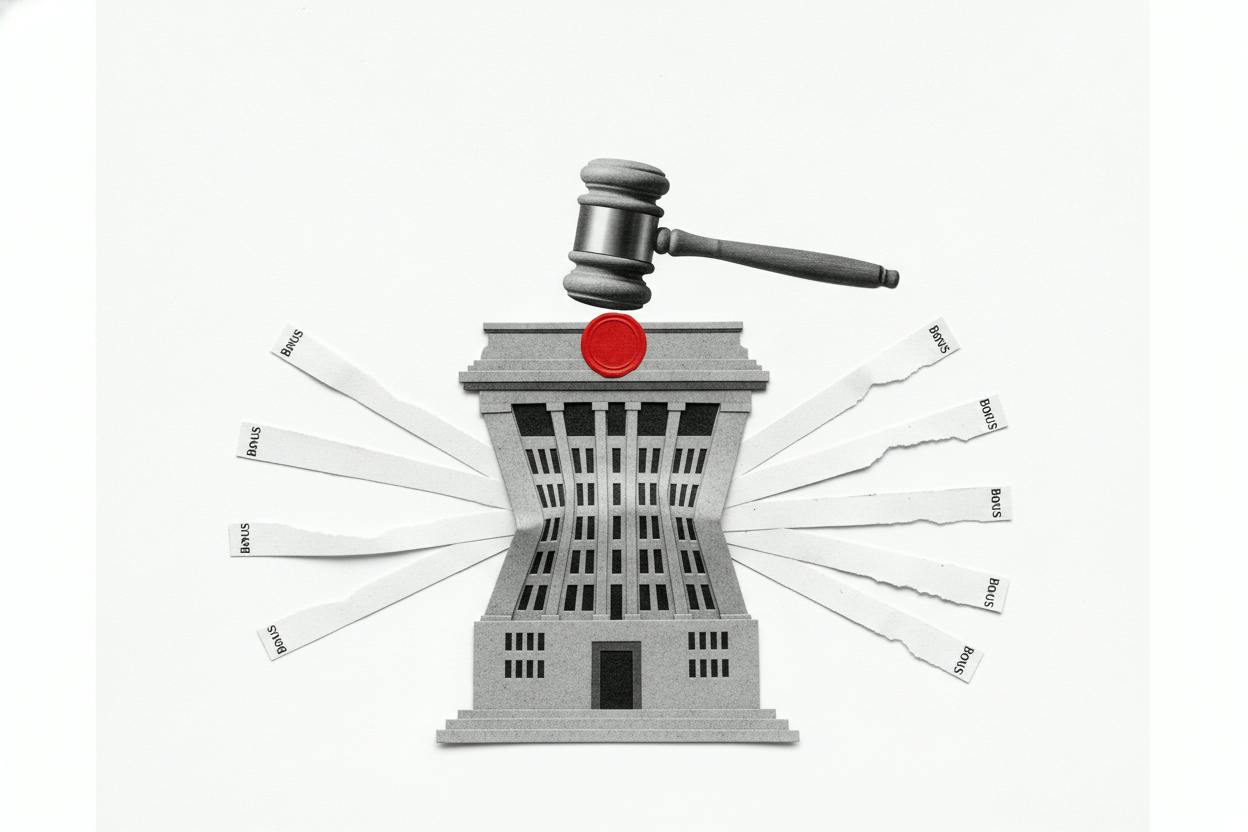
Switzerland's Supreme Court has dealt a decisive blow to former Credit Suisse executives, ruling that the government's decision to slash their bonuses after the bank's emergency rescue was lawful. The ruling, which overturns a 2025 Federal Administrative Court decision, clears the way for the finance ministry to claw back compensation from roughly 1,000 senior staff members.
The case stems from the dramatic collapse of Credit Suisse in March 2023, when the 167-year-old bank was folded into rival UBS in a state-brokered deal. As part of the rescue, Switzerland's finance ministry ordered the full or partial cancellation of accrued and future bonuses for the bank's top three management layers. Former managers challenged the move in court, and in 2025 the Federal Administrative Court sided with them, calling the bonus cuts unlawful. Now the Supreme Court has reversed that ruling, saying Swiss banking law provides a clear legal basis for the reductions.
Why the court reversed course
The Supreme Court's decision hinges on a specific provision in Swiss banking law that allows authorities to take measures to protect financial stability. In the wake of the Credit Suisse rescue, the government argued that clawing back bonuses was necessary to uphold public trust and ensure that senior executives bore some responsibility for the bank's near-collapse. The court agreed, finding that the finance ministry had acted within its legal authority.
This is a significant legal victory for the Swiss government, which had faced criticism for what some saw as a bailout that let executives off the hook. It also sends a message to bank executives across Switzerland: in times of crisis, compensation can be adjusted to reflect accountability.
The ruling is part of a broader pattern of courts weighing in on bank compensation and capital rules. For instance, India's top court recently overturned a write-off of AT1 bonds at Yes Bank, another case where investors and executives clashed over who bears losses in a banking crisis. And UBS itself has been in the spotlight over Swiss capital rules, with the bank considering moving its headquarters if regulators impose stricter requirements.
What this means for Credit Suisse's former executives
For the roughly 1,000 senior staff affected, the ruling means they will likely see their bonuses reduced or eliminated. The exact amounts are not specified in the court's decision, but the original order covered accrued bonuses and future pay for the bank's top three management layers. Many of these executives had already left the bank or moved to other roles, but the clawback could still affect their compensation.
The decision also has implications for how banks structure executive pay. In Switzerland, as in many other countries, bonuses are often tied to performance and risk-taking. This ruling reinforces the idea that when a bank fails and requires state intervention, those bonuses can be revoked, even if the executives were not personally at fault.
What it means for investors
For everyday investors, this ruling is a reminder that executive compensation is not just a corporate governance issue—it can have real financial consequences. When a bank like Credit Suisse collapses, the costs are borne by shareholders, bondholders, and ultimately taxpayers. Clawing back bonuses is one way to recoup some of those losses and deter excessive risk-taking.
Investors in UBS, which acquired Credit Suisse, may also watch this case closely. The bank has been navigating the integration of its former rival, and any legal or regulatory fallout could affect its bottom line. UBS has already faced questions about its capital requirements, and this ruling could influence how Swiss regulators approach compensation in the future.
More broadly, the decision could set a precedent for how other countries handle executive pay in banking crises. While each jurisdiction has its own laws, the principle that bonuses can be clawed back when a bank fails is gaining traction globally. For investors, this means that executive compensation is not a fixed cost—it can be adjusted in times of stress, which may reduce the risk of excessive payouts at the expense of shareholders.
The bigger picture
The Credit Suisse rescue was one of the most dramatic events in recent banking history. The bank's collapse was triggered by a loss of confidence, and the emergency merger with UBS was orchestrated by Swiss authorities to prevent a global financial crisis. The bonus clawback was a key part of the government's response, aimed at showing that executives would not walk away with huge paychecks after the bank's failure.
This ruling is likely to be welcomed by those who argued that the original 2025 decision was too lenient. It also aligns with a broader trend of regulators and courts taking a harder line on executive pay in the financial sector. For instance, some companies are now tying bonuses to non-financial metrics, as seen in Ralph Lauren's decision to link bonuses to AI metrics, though that is a different context.
For Swiss banking, the ruling could have lasting effects. It may embolden regulators to take similar actions in future crises, and it could make executives think twice before taking excessive risks. For investors, it's a reminder that the banking sector is heavily regulated, and that compensation structures can change in response to events.
As the dust settles, the focus will shift to how the finance ministry implements the clawbacks and whether any former executives appeal further. But for now, the Supreme Court has spoken, and the bonus cuts are back on the table.