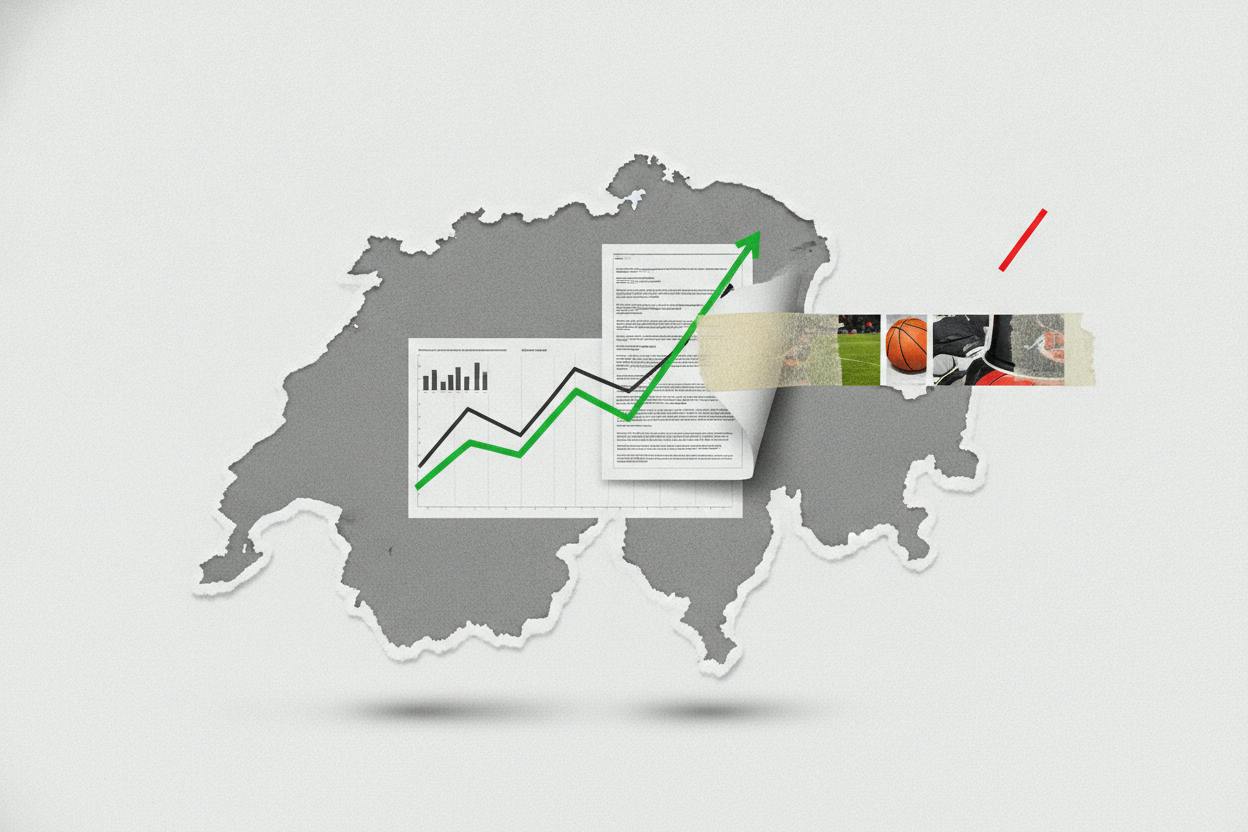
Switzerland's economics secretariat (SECO) has raised its growth forecast for 2026, citing an "exceptionally strong" second quarter that has given the economy a firmer footing. The agency now expects gross domestic product (GDP) to expand by 1.7% in 2026, up from its earlier projection. The upgrade reflects a more optimistic view of domestic demand and business investment, though officials caution that energy costs and global trade tensions could still derail the recovery.
What's behind the upgrade?
The second quarter of this year proved to be a standout period for the Swiss economy, with output growing at a pace that surprised many analysts. While SECO did not provide a detailed breakdown in its latest statement, the strength appears broad-based, spanning manufacturing, services, and consumer spending. This momentum has given policymakers more confidence that the economy can sustain growth into 2026.
Switzerland, known for its precision manufacturing, pharmaceuticals, and financial services, has been navigating a tricky global environment. The country's export-oriented economy is sensitive to demand from Europe, its largest trading partner, as well as from the United States and Asia. A resilient domestic market, supported by low unemployment and steady wage growth, has helped cushion the impact of weaker external demand.
The upgrade aligns with a broader trend of upward revisions in some developed economies, though the picture remains mixed. For instance, New Zealand also reported better-than-expected growth in its June quarter, suggesting that some economies are finding their footing despite global headwinds.
Risks remain: energy and trade
Despite the brighter outlook, SECO was quick to flag two major risks that could weigh on growth: energy costs and trade uncertainty. Energy prices, particularly for natural gas and electricity, have been volatile across Europe, and Switzerland is not immune. Higher energy costs can squeeze household budgets and raise production costs for businesses, dampening consumption and investment.
Trade uncertainty is another persistent concern. The global trading system has faced disruptions from geopolitical tensions, tariff disputes, and supply chain shifts. As a small, open economy, Switzerland is especially vulnerable to changes in trade policy and demand from key partners. Any escalation in trade restrictions could hit Swiss exporters hard, from machinery and chemicals to watches and food products.
These risks are not unique to Switzerland. Many economies are grappling with similar challenges, as seen in the cautious tone from other forecasters. For example, Next lifted its profit outlook on strong first-half results but warned on UK sales growth, highlighting how even companies with solid performance are wary of consumer and trade headwinds.
What it means for investors
For everyday investors, the upgrade is a modest positive signal. A stronger Swiss economy can support corporate earnings, particularly for domestic-focused companies and those with pricing power. It may also reduce the likelihood of aggressive monetary easing by the Swiss National Bank (SNB), which could influence the value of the Swiss franc and returns on Swiss assets.
However, the risks SECO highlighted are worth watching. Energy costs can affect inflation, which in turn influences interest rates. If energy prices spike, the SNB might need to keep policy tighter for longer, potentially slowing growth. Trade uncertainty, meanwhile, can create volatility in export-oriented sectors, such as industrials and luxury goods.
Investors should also consider the broader context. Switzerland's economy is closely tied to the eurozone, and any slowdown there could spill over. The recent strong US retail sales suggest some resilience in the world's largest economy, which is a positive for global trade. But the path ahead is far from smooth.
For those with exposure to Swiss equities or the franc, the key takeaway is to stay diversified and keep an eye on energy prices and trade policy developments. While the 2026 forecast is encouraging, the risks are real, and the economy could still face setbacks.
Looking ahead
SECO's updated forecast will be closely watched by policymakers, businesses, and investors. The agency typically releases detailed economic projections several times a year, and its next update will show whether the second-quarter strength is sustained or fades. In the meantime, the Swiss government is likely to continue monitoring energy markets and trade negotiations closely.
For now, the message is cautiously optimistic. Switzerland's economy has shown resilience, but the road to 2026 is not without obstacles. As always, investors should focus on long-term fundamentals rather than short-term forecasts, and be prepared for volatility in energy and trade-related sectors.