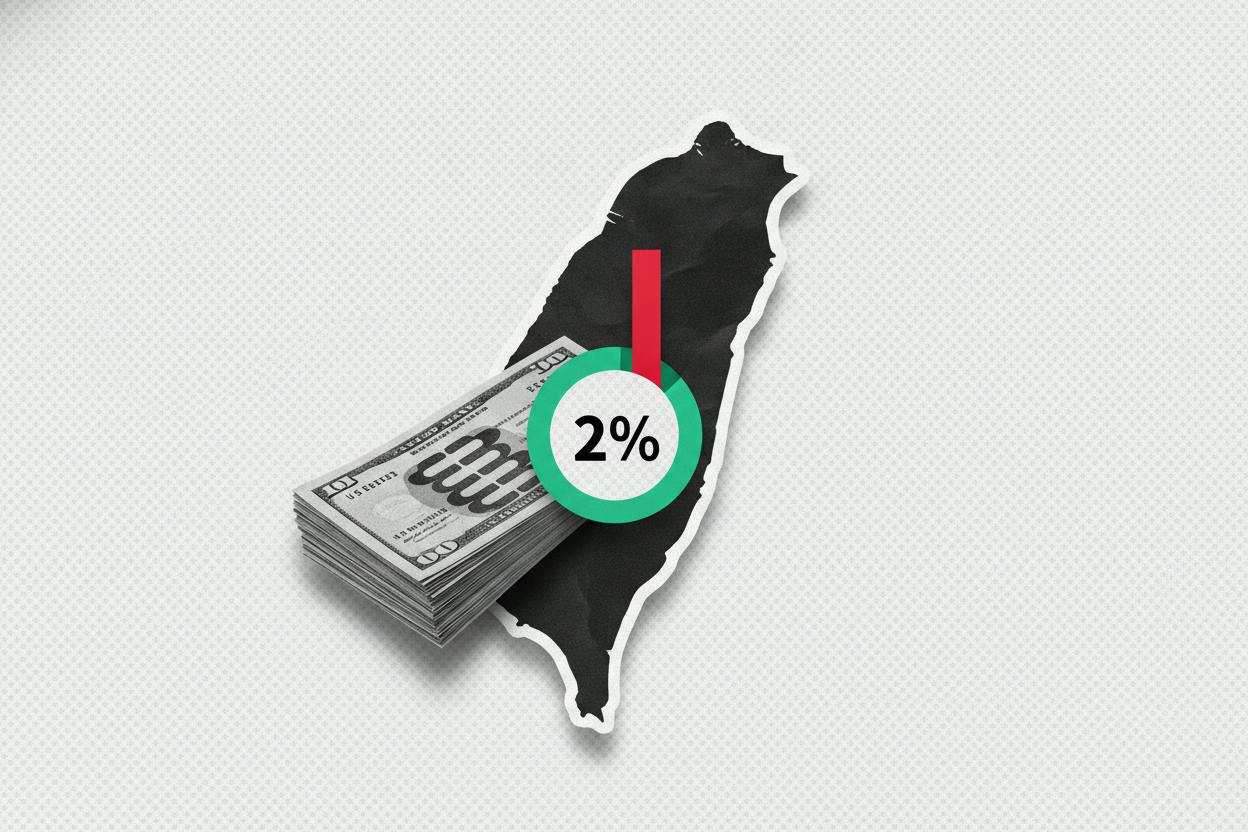
Taiwan's central bank is drawing a clearer line on when it would raise interest rates, signaling that a modest overshoot of its inflation target won't be enough to trigger action. Governor Yang Chin-long told lawmakers that rates could rise next year only if consumer prices move "well above" 2%, not merely because the US Federal Reserve tightens its own policy.
Yang described 2% consumer price inflation (CPI) as a "reference point," suggesting that next year's reading is likely to hover around that level and remain "acceptable" to policymakers. But he said the bank would hike if inflation overshoots by a significant margin. The comments come after the central bank recently kept its policy rate unchanged, even though it had earlier signaled a lean toward tighter policy.
Why Taiwan won't automatically follow the Fed
The governor pushed back on the idea that Taiwan automatically tracks the Federal Reserve, arguing that the US faces different inflation pressures and that Taiwan "has its own situation." That stance echoes a broader debate among smaller economies: how much independence can a central bank really have when global capital flows and exchange rates are so tightly linked to US monetary policy?
For Taiwan, the link is particularly strong. Yang noted that about 80% of Taiwan's foreign exchange reserves are held in US bonds. That means the value and liquidity of the island's reserves are heavily influenced by US interest rates and the dollar's strength. If the Fed keeps rates higher while Taiwan holds steady, the yield gap between the two currencies widens, which tends to push money toward the higher-yielding market and put downward pressure on the Taiwan dollar.
Taiwan can use its reserves to lean against sharp currency moves, but when most of those reserves are in US bonds, defending the currency often means mobilizing dollar assets or adjusting hedges whose returns are tied to US rates. In practice, even if Taipei sets policy based on local inflation, Fed-driven yield differences feed quickly into the exchange rate.
What it means for investors
For investors, the key takeaway is that Taiwan's policy path is not fully independent. The Taiwan dollar is likely to remain one of the fastest market tests of how far the island can diverge from the Fed without eventually having to tighten. If the Fed raises rates again while Taiwan stays put, the currency could weaken, which would raise import costs and potentially feed inflation—creating a dilemma for the central bank.
Yang also noted that the Taiwan dollar has been soft partly because overseas investors have taken profits in local stocks. That highlights another channel through which US policy affects Taiwan: capital flows. When global investors shift money toward US assets, they often sell holdings in smaller markets, putting additional pressure on local currencies.
The central bank's stance is consistent with a broader trend among Asian central banks that are trying to balance domestic inflation with external pressures. For example, New Zealand's central bank recently held rates despite a split vote, and Chile also held rates as inflation lingers and growth slows. Meanwhile, markets are watching the Fed closely, with traders expecting the Fed to hold rates steady at its next meeting while looking for signals about December.
For everyday investors, the practical implication is that Taiwan's interest rates—and by extension, the value of the Taiwan dollar—will be influenced by both local inflation and US policy. If you hold Taiwanese assets or have exposure to the currency, it's worth watching the gap between Taiwan's CPI and the Fed's actions. A wide gap could mean more currency volatility, which can affect returns on foreign investments.
The central bank's message is also a reminder that "independent" monetary policy is rarely absolute. Even when a central bank says it sets rates based on domestic conditions, the global financial system creates powerful links. For Taiwan, with its large US bond holdings, those links are especially strong.
As the year progresses, investors will likely focus on two things: whether Taiwan's inflation actually moves well above 2%, and whether the Fed follows through on any further hikes. If both happen, Taiwan may find it harder to stay on the sidelines.