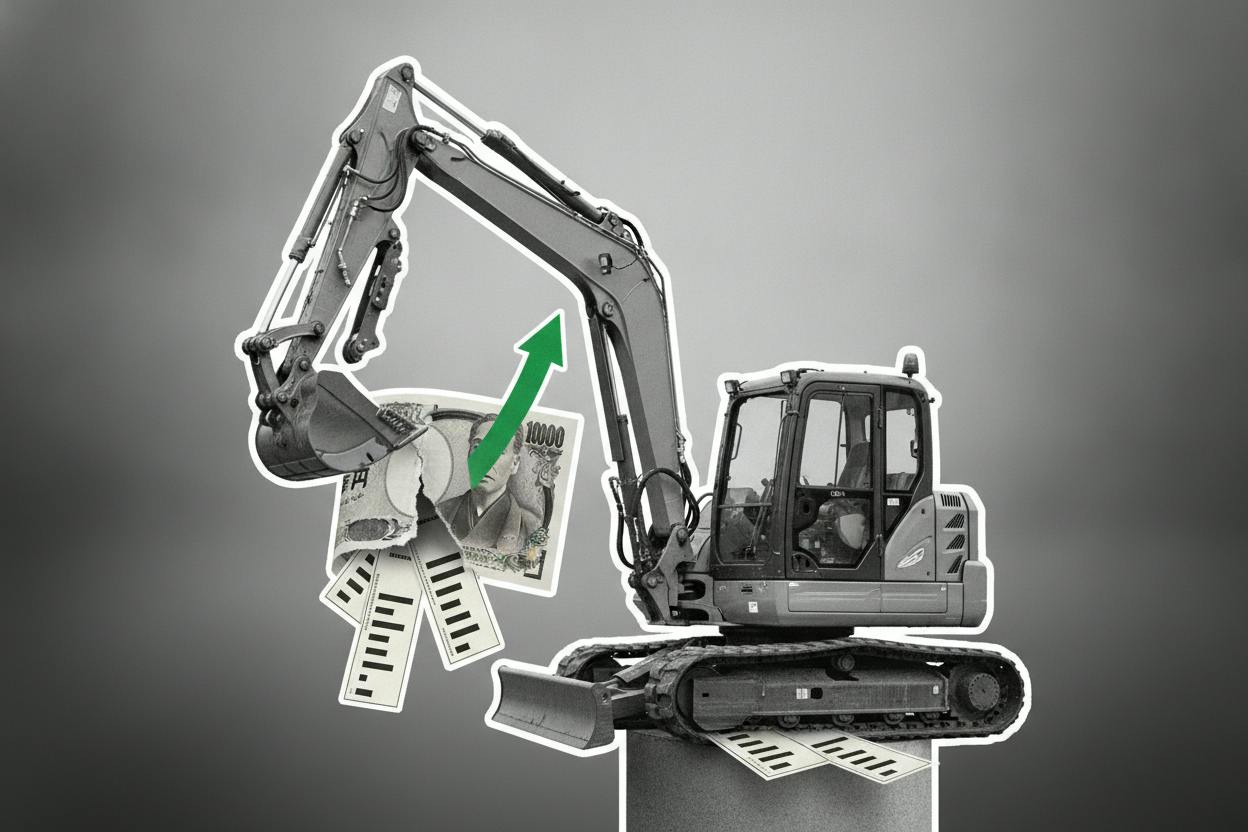
Takeuchi Mfg., the Japanese maker of compact construction equipment, has raised its profit outlook for the fiscal year ending February 2027 and increased its planned dividend, according to a filing with the Tokyo Stock Exchange. The company now expects operating profit of 31.5 billion yen, up from its previous forecast of 25.9 billion yen, and lifted its earnings per share estimate to 681.71 yen from 560.69 yen.
Sales are now projected at 261 billion yen, compared with an earlier outlook of 244 billion yen. Takeuchi attributed the upgrade to stronger-than-expected demand in North America and Europe, a weaker yen, and refunds related to US tariffs. The Asia-Oceania region, by contrast, is lagging.
What Takeuchi does and why the upgrade matters
Takeuchi is best known for compact excavators and other small earth-moving machines used in construction, landscaping and utility work. Its fortunes are closely tied to construction activity, equipment rental fleets and infrastructure spending — particularly in the United States and Europe, which are its largest markets.
When a machinery maker raises guidance this far ahead of the reporting period, it usually signals that order books and dealer demand are running ahead of internal plans. For Takeuchi, the upgrade suggests that construction equipment demand in its key Western markets has held up better than the company expected, even as broader economic growth has cooled in some regions.
The weaker yen is a second tailwind. A softer Japanese currency makes Takeuchi's products cheaper for overseas buyers and inflates the yen value of sales booked abroad. That dynamic has benefited many Japanese exporters in recent years, though it can reverse quickly if the yen strengthens.
The mention of US tariff refunds is also notable. Tariffs on imported goods can raise costs for manufacturers that ship into the United States, and refunds — whether from successful exemption claims or retroactive adjustments — can flow straight to the bottom line. Takeuchi's filing indicates those refunds are now part of its improved outlook.
Dividends: a signal to income-focused investors
Alongside the profit upgrade, Takeuchi penciled in a larger dividend. Companies typically raise payouts when they are confident in cash generation, because dividends are hard to cut without unsettling shareholders. A higher dividend can also attract income-oriented investors who compare yields across industrial and machinery stocks.
For everyday investors, the key takeaway is that Takeuchi is signalling both stronger earnings and a willingness to return more cash. That combination often supports a share price, though it does not guarantee one — markets may already have priced in some of the good news, and the stock can still fall if broader sentiment sours.
The dividend increase also fits a wider trend in Japan, where regulators and exchanges have pushed listed companies to improve capital efficiency and return more cash to shareholders. Firms that sit on large cash piles have faced pressure to lift payouts or buy back stock. Takeuchi's move can be read as part of that broader shift.
What it means for investors
Takeuchi's upgrade is a reminder that not all industrial companies are equally exposed to the same economic forces. A machinery maker with heavy US and European exposure can benefit from construction demand, currency moves and trade-policy quirks even when other regions are weak.
Investors watching the sector will want to track a few things from here. First, whether North American and European construction activity stays resilient — equipment demand tends to follow building and infrastructure spending with a lag. Second, the path of the yen, since a stronger currency would erode the export benefit. Third, any changes to US tariff policy, which could affect both costs and refunds.
It is also worth remembering that guidance is a forecast, not a result. Takeuchi's fiscal year runs to February 2027, so there is plenty of time for conditions to change. Companies in this position often revise outlooks again as the year progresses.
For income-focused investors, the dividend bump is a concrete signal, but it should be weighed against the cyclical nature of the machinery business. Construction equipment demand can swing sharply with the economic cycle, and dividends are rarely guaranteed.
Takeuchi's filing did not provide a specific dividend per share figure in the brief, so investors will need to check the full statement for exact payout details. What is clear is the direction of travel: higher profit expectations, higher sales, and a bigger return of cash to shareholders.
Related reading: HCLTech's profit beat, Tryg's Q3 beat, and China's dividend push.