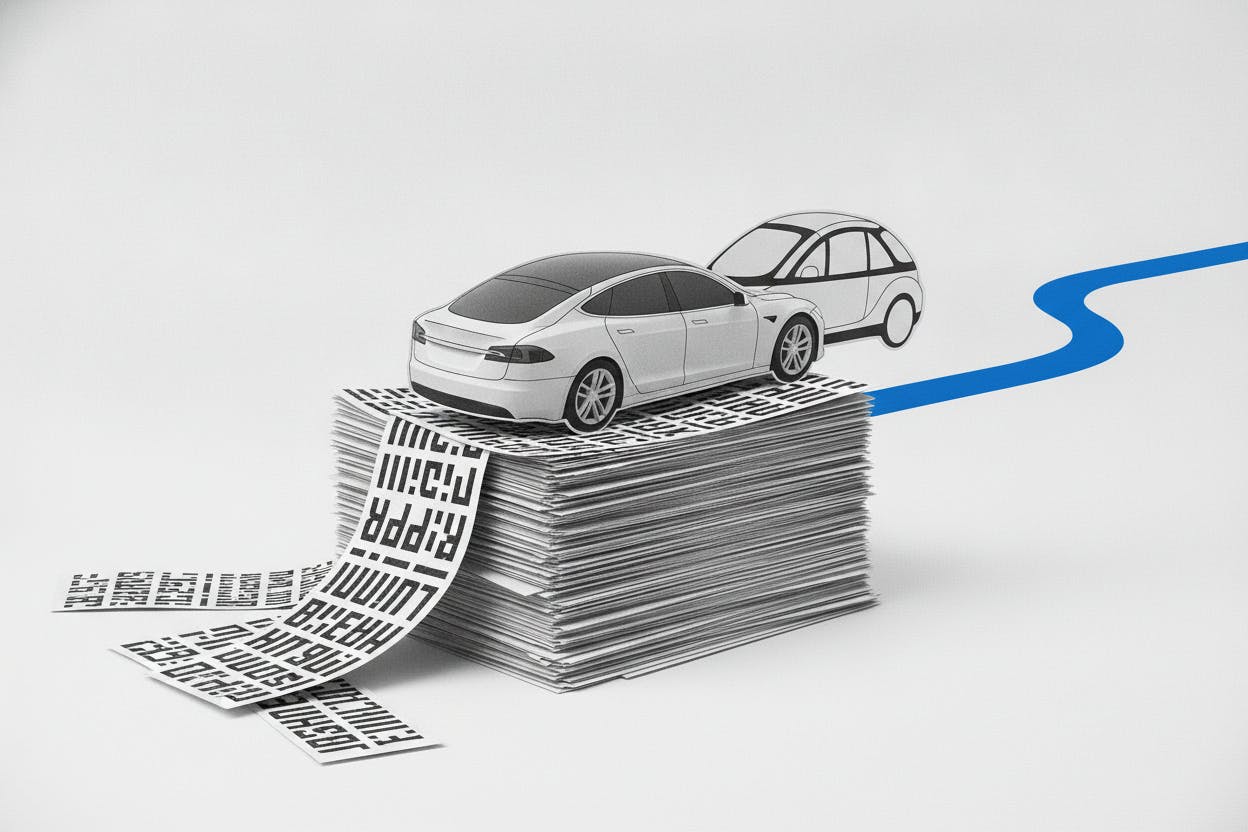
Tesla delivered 480,126 vehicles in the April-to-June period, beating Wall Street's expectations. But the stock barely reacted—shares were up less than 1% in premarket trading—signaling that investors are increasingly looking past quarterly car counts to the company's next big bets: robotaxis and artificial intelligence.
The delivery number, while above consensus, comes amid a shifting narrative for the electric-vehicle maker. Once judged almost entirely on how many cars it sells, Tesla is now being valued more on its potential in autonomous driving and AI. That transition is reshaping how the market interprets quarterly results.
Deliveries Still Matter, but Less So
Deliveries are a key metric for any automaker because they reflect demand and generate the revenue that funds future projects. For Tesla, each vehicle sold helps finance its sprawling ambitions, from new factories to battery technology. But the muted stock response to this beat suggests that the market is already pricing in a future where car sales are just one piece of a much larger puzzle.
The regional picture was mixed. Europe appears to be stabilizing after a weak stretch, with registrations surging in countries like France, Denmark, and Sweden in June, as recent data showed. China volumes have improved, even as competition from local rivals like BYD remains intense—BYD's overseas sales surged 95% in June, partly offsetting a 22% drop in its domestic deliveries, as reported. North America has been softer, with some analysts pointing to demand challenges in the region.
The Robotaxi and AI Pivot
The bigger question for Tesla is what comes next. The company has been teasing a robotaxi unveiling for months, and CEO Elon Musk has said the vehicle could be a major revenue driver. Investors are also watching Tesla's AI efforts, including its Dojo supercomputer and full self-driving (FSD) software, which the company hopes will eventually enable a fleet of autonomous taxis.
These projects are capital-intensive and years away from generating meaningful profits, but they represent the kind of high-growth opportunities that can justify Tesla's lofty valuation. The company's market cap is roughly $1.6 trillion, a multiple that traditional automakers can only dream of. That premium is based not on today's car sales but on tomorrow's technology.
“The story is shifting from volume to autonomy,” said one analyst in a note. “Deliveries are still important, but the stock's direction will increasingly depend on progress in robotaxis and AI.”
What It Means for Investors
For everyday investors, the key takeaway is that Tesla is no longer just an automaker. It's a bet on autonomous driving and artificial intelligence, with car sales serving as the engine that funds those bets. That means quarterly delivery numbers may become less of a catalyst for the stock, while announcements about robotaxi timelines, regulatory approvals, or AI milestones could move shares more.
This shift also introduces new risks. Robotaxis face regulatory hurdles, technological challenges, and public skepticism. AI is a crowded field with deep-pocketed competitors. If Tesla stumbles on either front, the stock could face pressure even if car sales hold up.
On the flip side, success in autonomous driving could open up massive new revenue streams. A fleet of robotaxis could generate recurring income, much like a ride-hailing service, with higher margins than selling cars. That potential is what keeps investors interested, even when the stock doesn't jump on a delivery beat.
In the broader market context, Tesla's performance comes amid a mixed economic backdrop. Weak jobs data recently sent gold prices surging and Treasury yields falling, as investors reassess the path of interest rates. That environment can influence demand for big-ticket items like cars, but Tesla's story is increasingly decoupled from the broader economy.
For now, the delivery beat is a positive sign that the company can still move metal in a competitive market. But the real test lies ahead, as Tesla tries to turn its robotaxi and AI ambitions into reality.