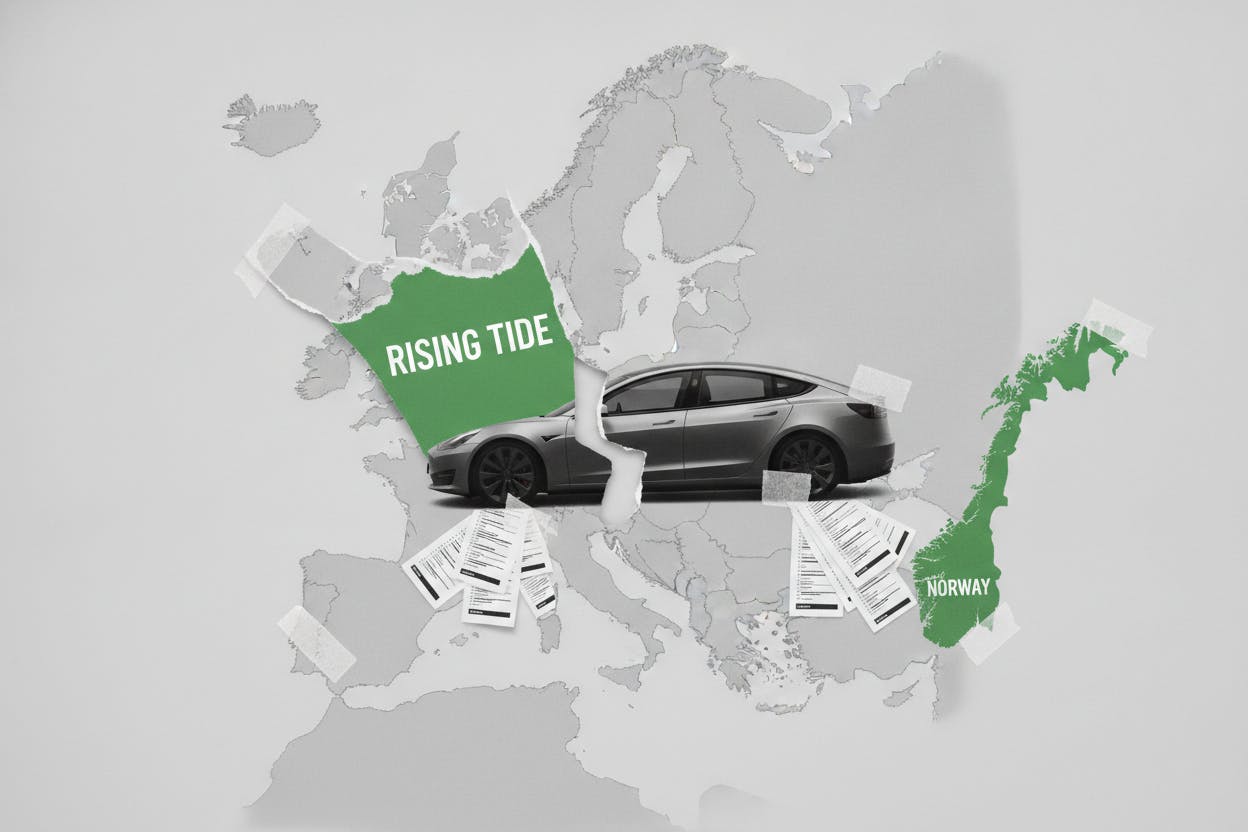
Tesla’s new-vehicle registrations in Europe showed a notable rebound in June, with numbers more than doubling in France and rising in Denmark and Sweden, even as Norway recorded a sharp year-on-year decline. The data, released by national auto industry groups, offers a mixed but encouraging signal for the electric-vehicle maker as it faces intensifying competition and a slower rollout of new models in the region.
What the Numbers Show
According to France’s auto industry group PFA, Tesla registrations in the country more than doubled compared to June last year. In Denmark, data from bilstatistik.dk showed a 39% increase, while Mobility Sweden reported a 56% rise. Norway, however, saw a year-on-year drop, though the overall European picture suggests a late-quarter pickup in demand.
Car registrations are a widely used proxy for sales, as they reflect vehicles that have been sold and officially registered for road use. The June rebound is particularly significant because it follows a period of slower growth for Tesla in Europe, where legacy automakers have been ramping up their own EV offerings and price competition has intensified.
Context and Broader Market
Tesla’s European performance is closely watched by investors as a gauge of the company’s global demand trajectory. The region has become a key battleground for EV makers, with European Union policies pushing for a phase-out of combustion engines and local brands like Volkswagen, Stellantis, and Renault aggressively expanding their electric lineups.
The June registrations come ahead of Tesla’s expected second-quarter delivery report, which analysts anticipate will show a roughly 5% increase in global deliveries. The European rebound could help offset weakness in other markets, such as China, where competition from local players like BYD has been fierce.
In related news, the NHTSA recently closed a Tesla steering probe after a software recall fixed 376,000 cars, removing one regulatory overhang for the company. Meanwhile, broader European markets have been influenced by factors like oil prices dropping toward $70 and ECB Sintra meetings, which affect investor sentiment across sectors.
What It Means for Investors
For everyday investors, the pickup in European registrations is a positive data point for Tesla’s near-term sales outlook, but it should be viewed in context. The company still faces headwinds, including a maturing EV market, price cuts that squeeze margins, and the need to deliver on its next-generation vehicle platform.
Investors should watch for Tesla’s official second-quarter delivery numbers, expected in early July, for a clearer picture. The European data alone does not guarantee a strong global quarter, but it does suggest that demand in the region may be stabilizing after a softer start to the year.
It’s also worth noting that Norway’s decline highlights the uneven nature of EV adoption across Europe. Norway has one of the highest EV penetration rates in the world, so fluctuations there may reflect market saturation rather than a broader trend. In contrast, France, Denmark, and Sweden still have room for growth as charging infrastructure expands and consumer awareness rises.
Looking Ahead
Tesla’s ability to sustain this momentum in Europe will depend on factors like pricing strategy, the rollout of the Cybertruck and other models, and the broader economic environment. European stocks have been flat as tech rebounds and oil and ECB Sintra meetings remain in focus, and any macroeconomic shifts could impact consumer spending on big-ticket items like cars.
For now, the June registration data offers a glimmer of hope that Tesla’s European sales are not in a free fall. But investors should remain cautious and wait for more comprehensive data before drawing firm conclusions about the company’s trajectory in the region.