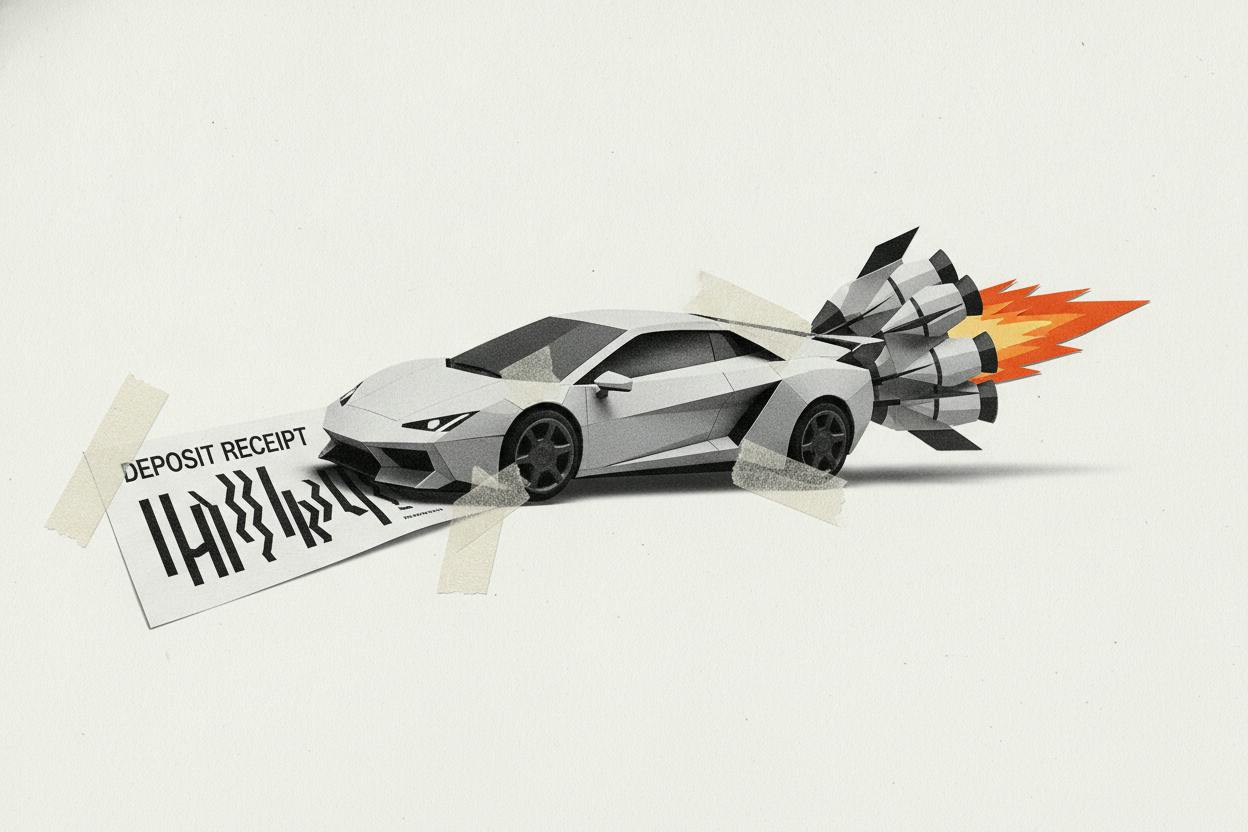
Tesla has put its next-generation Roadster back in the spotlight, announcing that production will begin in 2028 and asking customers to put down deposits ranging from $50,000 for the “Performance” version to $250,000 for the “Thrust” model. The announcement, which included SpaceX-inspired claims like “thrusters” and extreme acceleration, is more about image than immediate sales, but it carries real financial implications for the EV maker.
What we know about the new Roadster
Tesla, led by Elon Musk, has a history of teasing the Roadster. The original Roadster, launched in 2008, was the company’s first production car and helped establish its early reputation. The next-gen version has been in development for years, with Musk previously promising jaw-dropping performance. The latest update confirms a 2028 production start, but Tesla has not shared key details that investors typically look for: a final price, specifications that work on public roads, or production volume targets.
The “Thrust” model, priced at $250,000, is the headline-grabber. The name suggests SpaceX-style technology, and Tesla has hinted at cold-gas thrusters that could improve acceleration and handling. However, such features remain unproven in a road-legal vehicle, and the company has not explained how they would comply with safety regulations.
Why the Roadster matters beyond the hype
Even if the Roadster remains a niche product, it can serve as a “halo car” that showcases Tesla’s engineering prowess. That’s a common strategy in the auto industry: a high-performance model that isn’t a big seller but burnishes the brand and attracts attention. For Tesla, the Roadster also supports its broader push into software and robotics, including self-driving efforts and the Optimus humanoid robot project. The car is a way to demonstrate that Tesla is more than just an EV maker.
This isn’t the first time Tesla has used a flashy product to generate buzz. The Cybertruck, for example, drew massive attention before its launch, even though it took years to reach production. The Roadster could follow a similar path, with the 2028 date giving Tesla plenty of time to refine the technology and manage expectations.
What it means for investors
The most immediate financial impact comes from the deposits. When customers pay $50,000 to $250,000 up front, Tesla receives cash right away. But under standard accounting rules, that money is recorded as a customer deposit—a liability—until the vehicle is delivered or the deposit is refunded. That means the Roadster can boost Tesla’s cash position years before any revenue is recognized.
For investors tracking Tesla’s quarterly results, this is a key distinction. A surge in reservations could make free cash flow look stronger, even if underlying profitability hasn’t changed. Conversely, if customers cancel or demand refunds, that cash could disappear. It’s a reminder to separate working-capital swings from the longer-term question of whether the Roadster will ever become a meaningful, profitable product line.
This dynamic is similar to what happens with other pre-order-driven products. Companies like Tesla often use deposits to fund development and gauge demand, but the accounting treatment means the money isn’t “earned” until delivery. For a company that has faced cash-flow scrutiny in the past, the Roadster deposits could provide a short-term cushion.
The bigger picture
Tesla’s stock has been volatile, and the company faces increasing competition in the EV market. The Roadster is unlikely to move the needle on overall sales, but it could help maintain Tesla’s image as a technology leader. That’s important as the company shifts focus to software and robotics, areas where investors expect growth.
For everyday investors, the key takeaway is to look past the spectacle. The Roadster announcement is exciting, but it’s not a reason to buy or sell Tesla stock. Instead, watch how the deposits affect cash flow in upcoming quarters, and keep an eye on whether Tesla provides more concrete details about the car’s specs and production plans.
As with any high-priced pre-order, there’s also a risk that the Roadster never makes it to production in its promised form. Tesla has a history of delays, and the 2028 target is still years away. Investors should treat the Roadster as a long-shot bet that could pay off in brand value, but not as a near-term revenue driver.
In the meantime, Tesla’s core business—selling EVs and energy products—remains the main focus. The Roadster is a reminder that Tesla is willing to push boundaries, but the financial fundamentals are what ultimately matter.