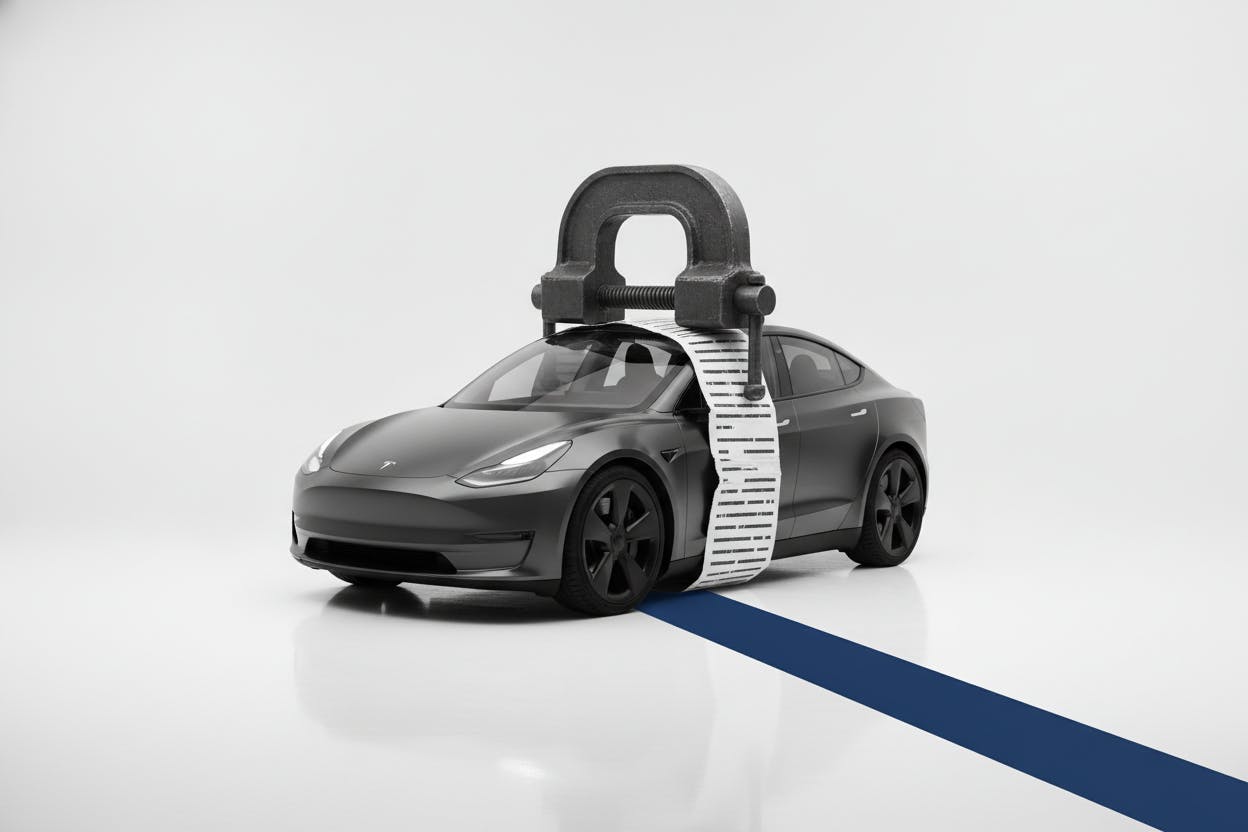
Tesla is set to unveil its long-awaited Cybercab on Thursday in Austin, Texas, putting the company's robotaxi ambitions back in the spotlight. The two-seat vehicle, which has no steering wheel, is the centerpiece of Tesla's effort to turn a limited driverless ride-hailing pilot in Texas and Florida into a much larger network.
The event comes as Tesla tries to convince regulators and the public that its autonomous technology is ready for prime time. The Cybercab is designed specifically for ride-hailing, with no manual controls, a minimalist interior, and a focus on low operating costs. Tesla has said the vehicle could eventually be produced at high volume, but the immediate challenge is scaling up the pilot under tight rules.
What is the Cybercab?
The Cybercab is a purpose-built robotaxi, different from Tesla's regular cars that have steering wheels and pedals. By removing the steering wheel, Tesla signals that the vehicle is meant to operate without a human driver in most conditions. The two-seat layout is unusual for a ride-hailing vehicle, which typically seats four or more passengers, but Tesla has argued that most rides are for one or two people, so a smaller car can be more efficient and cheaper to operate.
The unveiling in Austin is a key milestone for Tesla's robotaxi program, which has faced delays and regulatory hurdles. The company has been testing a driverless ride-hailing service in limited areas of Texas and Florida, using its existing vehicles equipped with the company's Full Self-Driving (FSD) software. The Cybercab is expected to be the vehicle that eventually powers a broader commercial service.
Why this matters for Tesla
Tesla's stock has long been priced not just on car sales but on the promise of a future autonomous ride-hailing business. CEO Elon Musk has said that robotaxis could be a massive source of revenue and profit, potentially dwarfing traditional car sales. But that vision has been slow to materialize, and the company has faced skepticism from investors and safety experts about the readiness of its technology.
The Cybercab unveiling is a chance for Tesla to show that its robotaxi plans are real and progressing. However, the company is operating under tight rules in Texas and Florida, where its pilot is limited to specific areas and conditions. Scaling up will require regulatory approval and a proven safety record, which are not guaranteed.
For everyday investors, the event is a reminder that Tesla's valuation depends heavily on future promises. The company's core auto business faces headwinds, including slowing EV sales growth in key markets like China, as competition and price wars intensify. You can read more about Tesla's slowing China EV sales in our earlier coverage.
What it means for investors
The Cybercab debut is a high-profile moment, but it is unlikely to change Tesla's financials in the near term. The robotaxi pilot is small, and the company has not disclosed how many rides it is completing or how much revenue it is generating. Investors should focus on the long-term potential and the risks.
If Tesla can successfully scale its robotaxi network, it could open up a new revenue stream and reduce the company's reliance on selling cars. But the path is uncertain. Regulatory approval, safety performance, and public acceptance are all major hurdles. Competitors like Waymo are already operating commercial robotaxi services in several cities, so Tesla is not the only player in the space.
For now, the Cybercab unveiling is more of a signal than a financial event. It shows that Tesla is still committed to its autonomous driving vision, but it does not guarantee success. Investors should watch for concrete milestones, such as expansion of the pilot to new cities, regulatory approvals, and any data on safety or ride volumes.
In the broader market, the event also highlights the growing interest in autonomous vehicles and the potential for disruption in transportation. But as with any emerging technology, there is a wide gap between hype and reality. Tesla's ability to deliver on its robotaxi promise will be a key factor in its stock's performance over the coming years.
For more on how Tesla's stock has been affected by its EV sales slowdown, see our analysis of the price war in China. And for context on how other companies are betting on AI and data center growth, you can check out PwC's projection on AI data center spending.