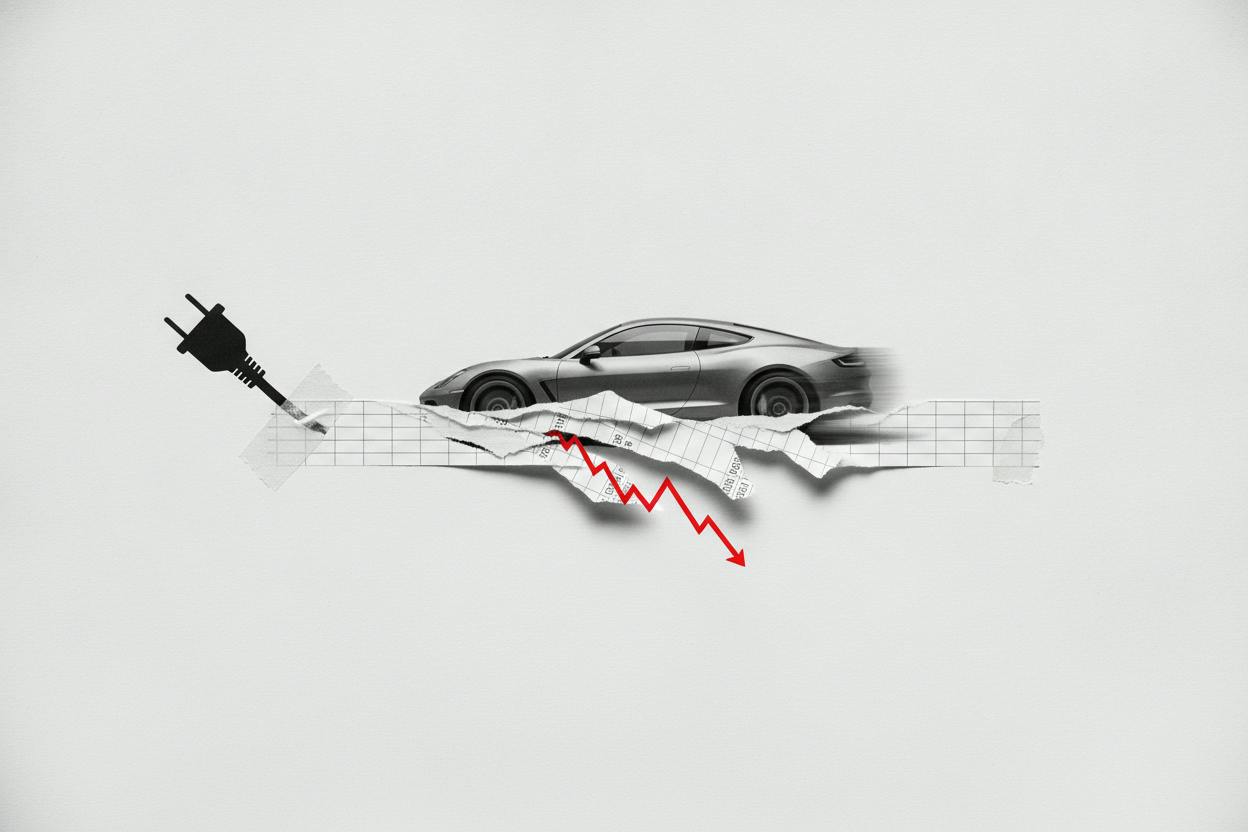
Tesla grabbed headlines Thursday with a dramatic demo of its new Roadster, claiming a sub-one-second 0-60 mph sprint. But the buzz was undercut by a 2.3% drop in the company's shares and news that its vice president of energy and charging, Mike Snyder, had stepped down, according to The Wall Street Journal.
The juxtaposition is a reminder that Tesla is always selling two stories at once: bold consumer-facing promises and the slower, operational work that turns them into cash flow. For everyday investors, the question is which story matters more for their money.
The Roadster: a halo product, not a cash cow
The Roadster is Tesla's flagship sports car, a low-volume, high-performance vehicle designed to showcase the company's engineering prowess. A sub-one-second 0-60 mph time would make it one of the fastest production cars ever built, a marketing coup that reinforces Tesla's brand as a technology leader.
But the Roadster is unlikely to move the needle on Tesla's financials. The company's revenue and profits come overwhelmingly from its Model 3 and Model Y vehicles, along with its energy generation and storage business. A halo product like the Roadster can boost sentiment and attract attention, but it doesn't pay the bills.
That's why the leadership change in the energy and charging division matters more than the demo. Snyder's departure, with AJ Booth stepping in as his replacement, touches a unit that Tesla has positioned as a key growth driver. Energy storage—like the Megapack and Powerwall—is meant to add steadier, more predictable revenue than car sales, which can be volatile. Charging infrastructure, meanwhile, supports the entire ecosystem around Tesla's vehicles.
Why an exec exit can spook investors
When a senior leader leaves a strategic unit, investors often pause and ask whether priorities, timelines, or internal coordination will shift. Even if the product roadmap stays the same, a handover can slow decisions, disrupt cross-team work, or subtly change what gets funded first.
This is especially true at Tesla, where the company's valuation has long been tied to ambitious promises—from self-driving software to robotaxis to energy storage at scale. Those promises depend on flawless execution, and any sign of instability can raise the perceived risk.
For context, Tesla's stock has been volatile in recent months, with investors weighing its growth prospects against broader market concerns. The 2.3% dip on Thursday is a modest move, but it reflects a market that is increasingly sensitive to execution risk. As AI debt worries weigh on Nasdaq futures, even positive Tesla headlines can be overshadowed by macro jitters.
What it means for investors
For markets, a 2.3% dip is noise, but a key exec change can reset confidence. Product stunts can move sentiment for a day, but valuations tend to lean on trust in delivery. A senior change in energy and charging can raise perceived execution risk: handovers can slow decisions, disrupt cross-team work, or subtly change what gets funded first.
When that happens, investors effectively demand a bigger “risk discount” for far-off plans. That's another way of saying they're less willing to pay up today for profits that depend on smooth rollout later. The result can be more fragile support for Tesla on down days, especially when the market is looking for proof that the storage-and-charging story is a stabilizer, not another question mark.
That said, leadership changes are common in large companies, and not all of them signal trouble. Snyder's departure could be part of a planned succession, and Booth's background in energy products engineering suggests continuity. But until the market sees evidence of smooth execution, the uncertainty can weigh more than a flashy demo.
For investors, the takeaway is to look beyond the headlines. The Roadster is a reminder of Tesla's innovation, but the energy and charging business is where the company is trying to build a more durable revenue stream. Watching how that division performs in the coming quarters—and whether the leadership transition disrupts its momentum—will be more telling than any 0-60 time.
As always, it's worth remembering that Tesla's stock is known for its volatility, and single-day moves can be driven by a mix of factors. For a broader view, investors might consider how Tesla's premarket pop on the Roadster tease contrasted with weakness in chip favorites, or how Toyota's adoption of Tesla-style gigacasting signals the industry's direction. But for now, the Roadster's reveal is a reminder that Tesla's future is built on more than just speed.