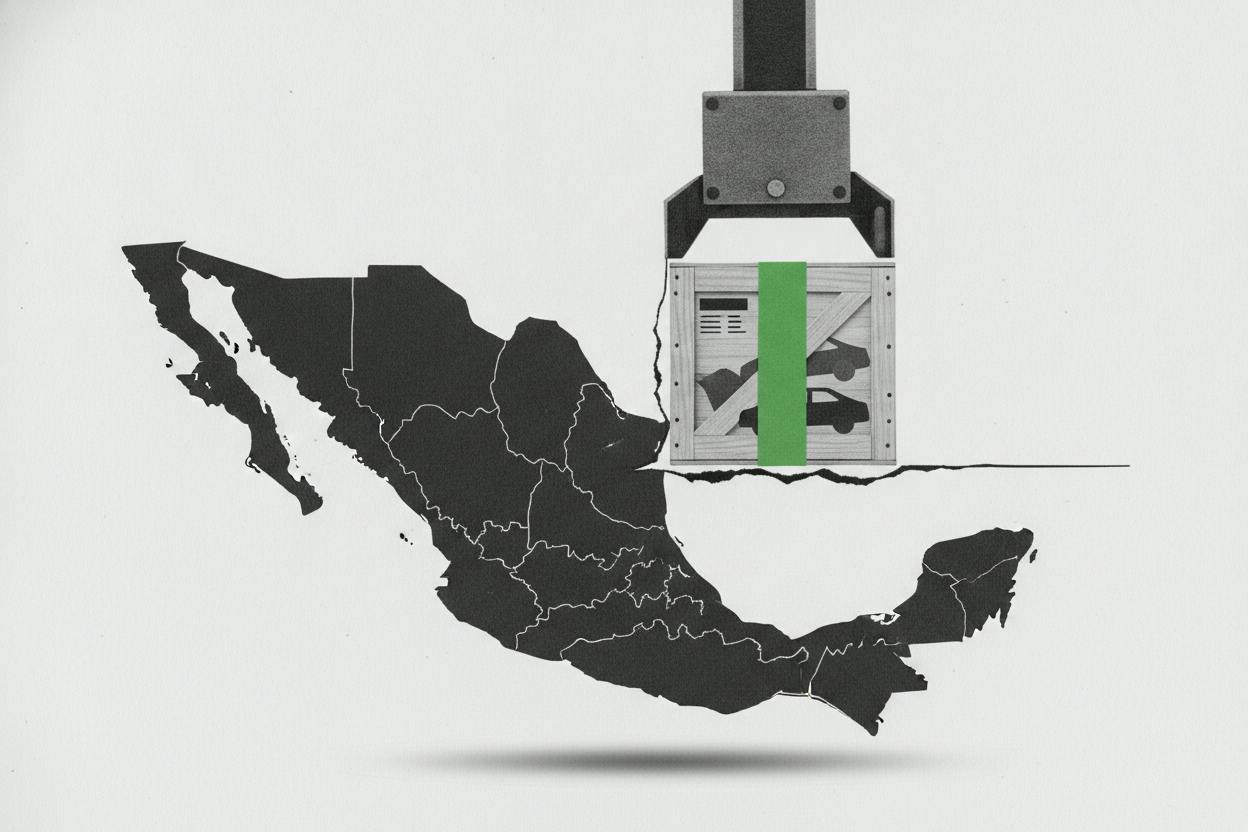
Mexico has clarified that its newly announced five-year, zero-tariff break on certain imported car parts is reserved for automakers that already have production facilities in the country. The move, which initially sparked speculation about a potential low-cost assembly hub for new brands, is now clearly a targeted benefit for the existing manufacturing base.
On Tuesday, Mexico published a decree cutting the import tariff on specific assembly parts—including semi-knocked-down (SKD) and completely knocked-down (CKD) kits—from 10% to 0%. SKD and CKD kits are partially or fully disassembled vehicles shipped in pieces, allowing automakers to assemble them locally while avoiding higher duties on finished cars. The immediate reaction was that Mexico might be opening a backdoor for new entrants, particularly Chinese automakers, to assemble vehicles cheaply within its borders.
But on Friday, Mexico's Economy Ministry narrowed that interpretation. The benefit applies only to companies with “productive installations” in Mexico that meet additional criteria, and officials said just 11 automakers qualify. Industry data reviewed by Reuters points to Audi, BMW, Ford, General Motors, Honda, Kia, Mazda, Nissan, Stellantis, Toyota, and Volkswagen.
What this means for the auto industry
In practice, the policy is less a welcome mat for new entrants and more a cost-relief measure for the automakers already embedded in Mexico's supply chain. For those 11 companies, the tariff cut on SKD and CKD kits creates a straightforward advantage: imported parts land cheaper at their Mexican plants, which can help protect profit margins or allow them to keep sticker prices competitive without taking a hit.
For would-be entrants, the door remains shut. They still face the 10% duty on the same kits, making it harder to compete on cost with the incumbents. This clarification also reduces one near-term tail risk that some investors were watching: that Mexico could become a quick assembly hub for new foreign brands, intensifying price competition for established manufacturers.
What it means for investors
For markets, the key takeaway is that Mexico's zero-tariff break is now a perk for 11 incumbents, not a doorway for newcomers. The savings from the tariff cut can flow directly to the bottom lines of eligible automakers, potentially boosting earnings or supporting more aggressive pricing strategies. Investors in these companies may see a modest positive, while those watching for a wave of new competition in Mexico can breathe a little easier.
That said, the broader trade backdrop remains fluid. Tariff policies can shift with political winds, and Mexico's decision comes amid a global environment where trade barriers are being re-examined. For instance, the eurozone's trade deficit widened in August on energy imports, and Fed officials have expressed concerns about inflation as the EU prepares its own trade defense tools. These dynamics highlight how trade policy can ripple through supply chains and affect corporate costs.
For everyday investors, the practical implication is that this policy shift is unlikely to dramatically reshape the competitive landscape in the near term. The 11 automakers that qualify are already major players in North America, and the tariff break is a modest tailwind rather than a game-changer. It's also a reminder that government incentives and tariffs can create winners and losers, but the effects are often narrower than initial headlines suggest.
Looking ahead, investors will likely watch how these automakers use the savings—whether they invest in local production, pass on savings to consumers, or simply boost margins. They'll also monitor whether Mexico extends similar benefits to other industries or adjusts the criteria, as trade policy remains a key variable for global manufacturers.