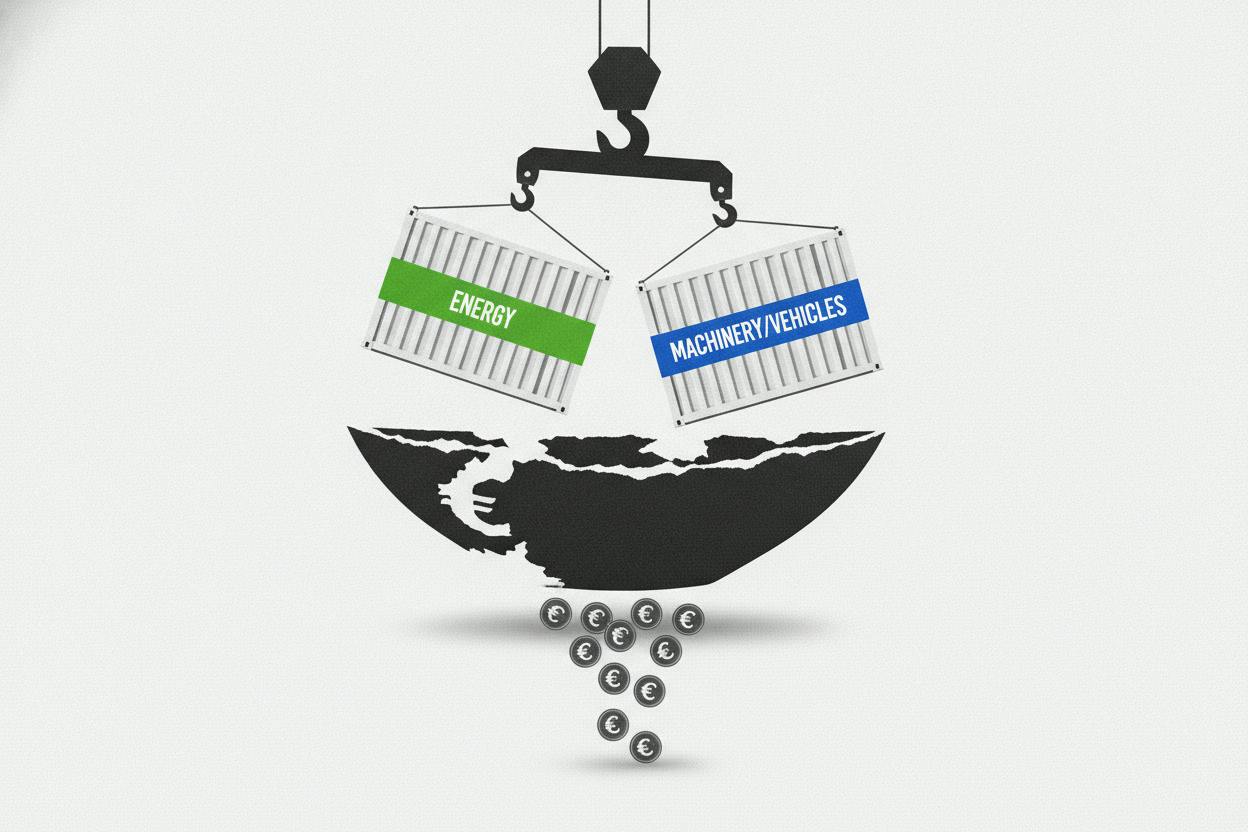
The euro area's trade balance slipped back into the red in August, as a surge in imports—led by energy, machinery, and vehicles—outpaced export growth, according to new data from Eurostat, the European Union's statistics office.
The 20-country euro zone recorded a goods trade deficit of €16.1 billion for the month, reversing the surplus seen in July. Across the wider 27-member European Union, the deficit widened to €25.2 billion, reflecting the bloc's ongoing reliance on imported energy and capital goods.
What's driving the deficit?
The main culprit was a jump in energy imports, which have become more expensive and more voluminous as Europe continues to rebuild its energy supply chains. Machinery and vehicles also contributed, as businesses and households imported more equipment—a sign of domestic demand holding up, but also a drag on the trade balance.
Exports, meanwhile, grew at a slower pace. While European goods remain competitive in global markets, softer demand from key trading partners and lingering supply-chain frictions have tempered the pace of overseas sales.
Trade deficits are not inherently bad—they can reflect a strong economy that is consuming and investing more than it produces. But persistent deficits can weigh on a currency and signal that a region is relying heavily on foreign goods, particularly when energy prices are volatile.
What this means for investors
For everyday investors, the trade data is a reminder that Europe's economy is still navigating a tricky balance between supporting growth and managing external pressures. A wider deficit can put downward pressure on the euro, which in turn affects the returns of European stocks and bonds when converted back into other currencies.
Energy costs remain a key swing factor. If energy prices stay elevated, the deficit could persist, potentially squeezing corporate margins in energy-intensive industries. On the other hand, if global energy prices ease, the trade balance could improve quickly, giving a boost to the euro and to European exporters.
Investors should also watch how the European Central Bank reacts. A widening trade deficit, combined with inflation concerns, could influence the pace of future interest rate decisions. As officials fret over inflation, the trade data adds another layer of complexity to the policy outlook.
Broader context
The euro zone's trade balance has been volatile over the past year, swinging between surplus and deficit as energy prices and global demand shift. In 2022, the bloc posted its first annual goods trade deficit in a decade, largely due to soaring energy import costs. Since then, the picture has improved, but August's data shows the recovery is not yet complete.
Europe is also grappling with structural challenges, including competition from China in electric vehicles and other high-tech sectors. The EU has been preparing a trade defense tool to protect its industries, a move that could reshape trade flows in the coming years. Meanwhile, Europe's earnings look strong, but consumer sectors are wobbling, suggesting that domestic demand may not be as robust as the import figures imply.
For investors, the key takeaway is that Europe's trade position is a barometer of its economic health. A persistent deficit could signal that the region is losing competitiveness, while a narrowing deficit would be a positive sign. As always, it's important to look beyond the headline number and consider the underlying drivers—energy prices, currency movements, and global demand.
In the near term, markets will be watching for any signs that the deficit is widening further, particularly if energy prices spike again. The Bank of England's view that energy price spillovers are limited offers some comfort, but the situation remains fluid.
For now, the August trade data is a reminder that Europe's economic recovery is still fragile, and that external factors—especially energy—can quickly change the picture. Investors should keep an eye on upcoming trade figures and central bank communications for clues about the region's direction.