Theon, a Greek defense electronics company best known for its night-vision equipment, is making a bold move to transform itself into a broader defense technology player. The company's latest quarterly results were strong, but the real story is where it's headed next.
Impressive numbers, steady outlook
In its most recent quarter, Theon reported a 35% jump in revenue, while operating margins held steady at 26%. The company also reaffirmed its full-year guidance, giving investors confidence that the momentum is sustainable. A key support is its order backlog, which stands at €1.5 billion—a healthy cushion that provides visibility into future revenue.
For context, a backlog represents orders that customers have already committed to, so it's a strong indicator of future sales. Theon's backlog suggests that demand for its existing products remains robust, even as it looks to expand into new areas.
Beyond night vision: the acquisition plan
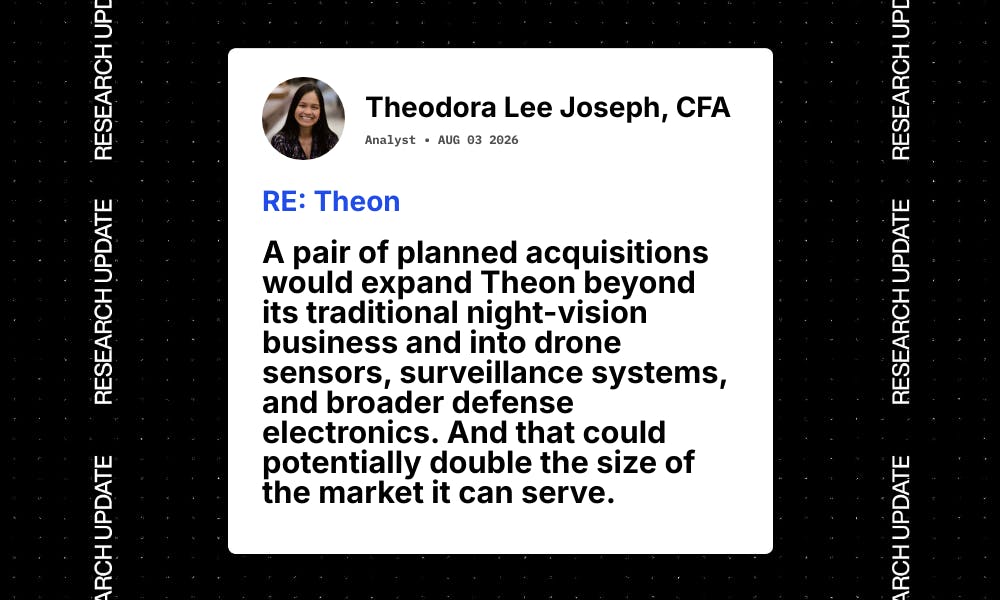
Theon has announced plans to acquire an 80% stake in MERIO and a stake in HGH Systèmes Infrarouges, a French developer of infrared systems. These deals would take Theon well beyond its traditional night-vision business and into drone sensors, surveillance systems, and broader defense electronics.
This is a significant strategic shift. Night vision is a specialized niche, but the broader defense electronics market is much larger. Management estimates that the acquisitions would roughly double Theon's addressable market to around €8 billion. That's a big opportunity for a company that has been growing quickly but operating in a relatively narrow segment.
The move also aligns with broader trends in defense spending. Many countries are increasing budgets for advanced technology, including drones and surveillance, as geopolitical tensions rise. Companies that can offer integrated solutions—combining sensors, imaging, and electronics—are often better positioned to win large contracts.
What it means for investors
For everyday investors, the key takeaway is that Theon is trying to reduce its reliance on a single product line. Diversification can be a double-edged sword: it opens up new growth avenues, but it also brings execution risks. Integrating acquisitions, especially in different but related fields, is not always smooth. Investors will want to watch how Theon manages the integration and whether it can deliver on the promised synergies.
The reaffirmed guidance and strong backlog are reassuring, but the market's attention will likely shift to the completion of these deals and the company's ability to win new business in the expanded market. If successful, Theon could become a more significant player in European defense electronics.
It's worth noting that defense stocks can be volatile, influenced by government budgets and geopolitical events. Theon's expansion into drones and surveillance could make it more sensitive to these factors, but also more attractive to investors looking for exposure to the defense tech theme.
As with any investment, it's important to do your own research and consider how a company like Theon fits into your overall portfolio. The company's growth story is compelling, but the outcome of its acquisition strategy will be crucial to watch in the coming quarters.