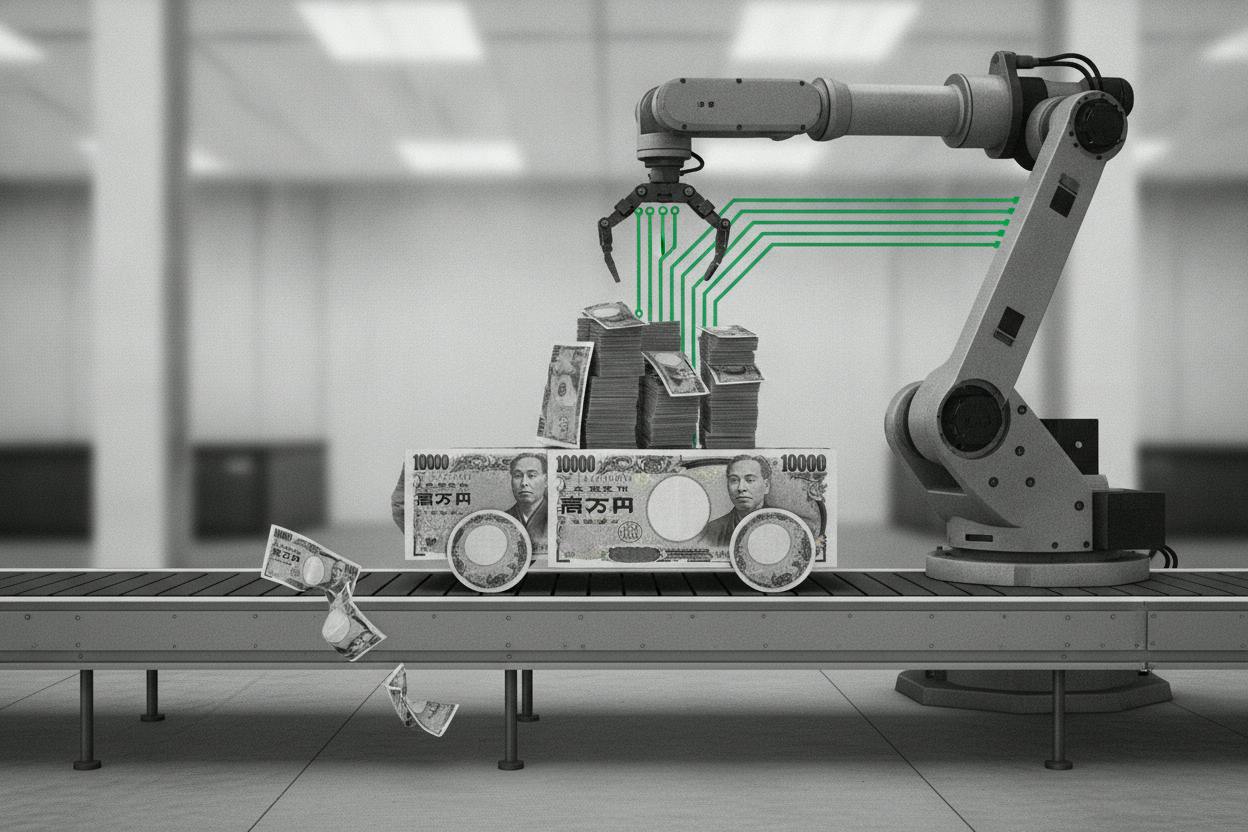
Toyota has given investors a first look at the scale of its planned factory overhaul: modernizing its production network from 2028 could cost roughly 1 trillion yen ($6.4 billion) a year and involve about 400,000 robots across Toyota, its group companies, and major suppliers, according to Reuters.
The figure is striking not just for its size, but for what it implies. An annual cost of that magnitude is closer to an ongoing budget than a one-time upgrade. It signals that Toyota sees automation not as a single project, but as a permanent shift in how it builds cars.
What the plan involves
Details of the plan remain sketchy, but the broad outline points to a factory floor that looks very different from today's. The company's vision includes industrial robots handling heavy or repetitive tasks, automated warehousing and transport inside plants, and more "human-robot" teamwork on production lines, Reuters reported.
That last piece is important. Toyota has long been known for its "lean" manufacturing system, which emphasizes continuous improvement and the skills of its workers. The new approach doesn't replace people entirely; it pairs them with machines that can take over physically demanding or monotonous jobs, potentially improving safety and quality while also cutting costs over time.
The 400,000-robot figure is also notable because it spans more than just Toyota's own factories. It includes group companies and key suppliers, meaning the automation push would ripple through a large part of Japan's auto supply chain. That could have implications for employment and for the competitiveness of smaller parts makers, many of which may need to invest heavily to keep up.
Why the timing matters
Toyota didn't commit to the plan or say how long the spending would last, according to Reuters. That leaves room for the company to adjust if market conditions change. But the 2028 start date is telling: it gives Toyota several years to develop and test the technology, and to phase in the investment without disrupting current production.
The announcement also comes at a time when automakers worldwide are wrestling with two big trends: the shift to electric vehicles and the need to make factories more flexible and efficient. Toyota has been slower than some rivals to embrace EVs, but it has been investing heavily in hybrid technology and in new manufacturing methods. A large-scale robot rollout would be a bet that automation can help it stay competitive on cost and quality as the industry transitions.
For investors, the key question is whether the spending will pay off. Toyota is one of the world's largest automakers, with deep pockets, so it can afford a multi-year investment of this size. But a 1 trillion yen annual outlay is not trivial; it would be a significant addition to the company's capital expenditure budget. If the robots deliver the promised efficiency gains, they could boost margins over the long run. If not, they could become a drag on profitability.
What it means for investors
For everyday investors, the most important takeaway is that Toyota is signaling a major strategic shift. The company is essentially telling the market that it intends to spend heavily on automation, and that this spending will be a recurring part of its business from 2028 onward.
That has a few implications. First, it could pressure Toyota's near-term cash flow and earnings, as the company will need to fund the investment. Second, it could lead to higher depreciation costs as the robots are installed, which would weigh on reported profits even if the underlying business is healthy. Third, it could create opportunities for robotics and automation suppliers, which might see increased demand from Toyota and its supply chain.
Investors should also watch how Toyota finances this. The company has a strong balance sheet, so it could fund the plan from internal cash flow. But if it chooses to take on debt, that could affect its credit rating and interest costs. The company's bond yields have been in focus recently as investors await the Bank of Japan's next move, and a large capital spending program could influence how the market views Toyota's debt.
It's also worth noting that Toyota isn't the only company betting big on automation. Rivals like Tesla have touted their own "unboxed" manufacturing processes, and other automakers are investing in flexible production lines. The broader trend toward factory modernization is not unique to Japan, but Toyota's scale makes it a bellwether.
For now, the plan is just a sketch. Toyota hasn't given a timeline for when it will make a final decision, nor has it detailed how the robots will be deployed. Investors will likely get more clarity in the coming quarters, especially as the company updates its medium-term business plan.
In the meantime, the message is clear: Toyota is preparing for a future where robots are as common on the factory floor as workers. That could be good for productivity, but it comes with a hefty price tag. Whether that price is worth paying is a question investors will be watching closely.