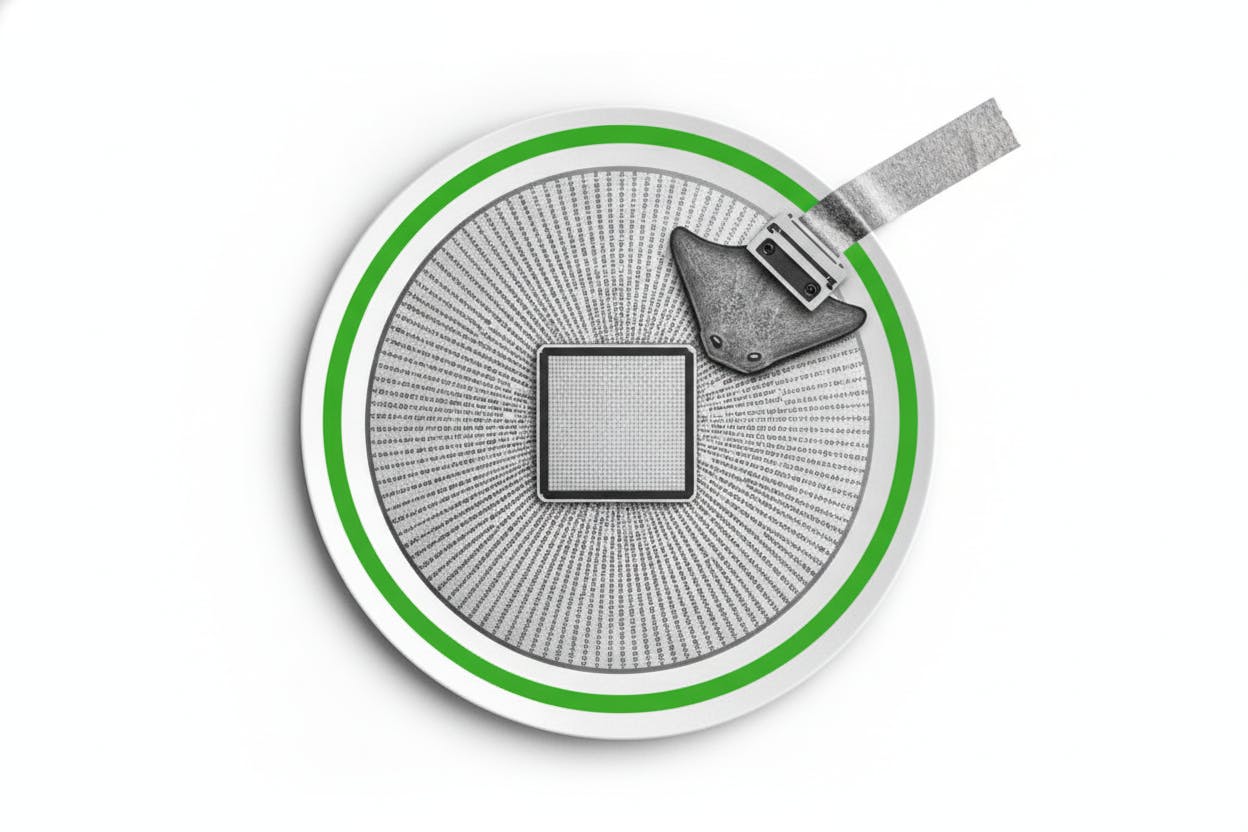
A Japanese chip startup is taking a practical approach to artificial intelligence, betting that older manufacturing technology can win in the market for running AI on everyday devices. Tokyo Artisan Intelligence has finished testing its Sting Ray prototype and is now moving toward production, with sample chips expected in the first half of next year and mass production targeted by the end of 2027.
The company's focus is on what is known as "edge AI" — running artificial intelligence directly on devices such as cameras, factory sensors, and home appliances, rather than in the cloud. This is a different world from the data-center AI that dominates headlines. On the edge, power consumption and unit cost often matter more than raw processing speed.
That philosophy explains why Tokyo Artisan is using a 40-nanometer manufacturing process from United Microelectronics (UMC), a Taiwanese contract chipmaker. Forty nanometers is an older, widely available technology, not the cutting-edge nodes used for the most advanced AI chips. For edge AI, reliability, supply stability, and economics can outweigh the need for the fastest possible performance.
How the plan works
CEO Hiroki Nakahara told Nikkei Asia that the company has completed testing of its Sting Ray prototype. The next step is to produce sample chips using UMC's 40nm process, with design support from Oppstar, an engineering services company based in Malaysia. Outsourcing both design help and manufacturing means that progress depends on partner timelines, repeated redesigns, and the slow process of qualifying a chip for real-world use.
The choice of 40nm is strategic. This "mature-node" technology is well-suited for high-volume, cost-sensitive products. It is not the kind of process used for a handful of data-center giants, but rather for chips that need to be made in large quantities at predictable prices. Edge AI chips typically require consistent yields — the share of usable chips per wafer — and stable pricing to work at scale. Achieving that can take several design-and-test loops.
The end-of-2027 mass-production target is less about a single breakthrough and more about whether UMC can provide steady capacity while the startup iterates its design. For investors watching the AI supply chain, this is a reminder that plenty of AI growth could show up in older manufacturing capacity, not just the newest, most expensive chipmaking technology.
What it means for investors
If Tokyo Artisan's plan holds, the most direct read-through lands on UMC's mature-node business. The company's 40nm lines are a key bottleneck and beneficiary. Demand for these older nodes is driven by high-volume, cost-sensitive products, not by a handful of data-center giants. Edge AI chips could add to that demand, but only if the startup can successfully navigate the design and qualification process.
For investors, the story is also a reminder that the AI boom is not just about the most advanced chips. The broader market for AI includes many applications where older, cheaper technology is perfectly adequate. That could benefit companies like UMC that specialize in mature-node manufacturing, as well as the broader ecosystem of design and engineering services.
In Japan, the development comes amid a broader push to strengthen the country's semiconductor industry. The government has been investing in chip manufacturing and design, and startups like Tokyo Artisan Intelligence are part of that effort. The company's progress will be worth watching for anyone interested in the intersection of AI and manufacturing.
For everyday investors, the key takeaway is that AI is not a single technology but a spectrum. Edge AI represents a growing segment where cost and reliability matter as much as performance. Companies that can deliver on those priorities could find a profitable niche, even if they are not using the most advanced technology available.