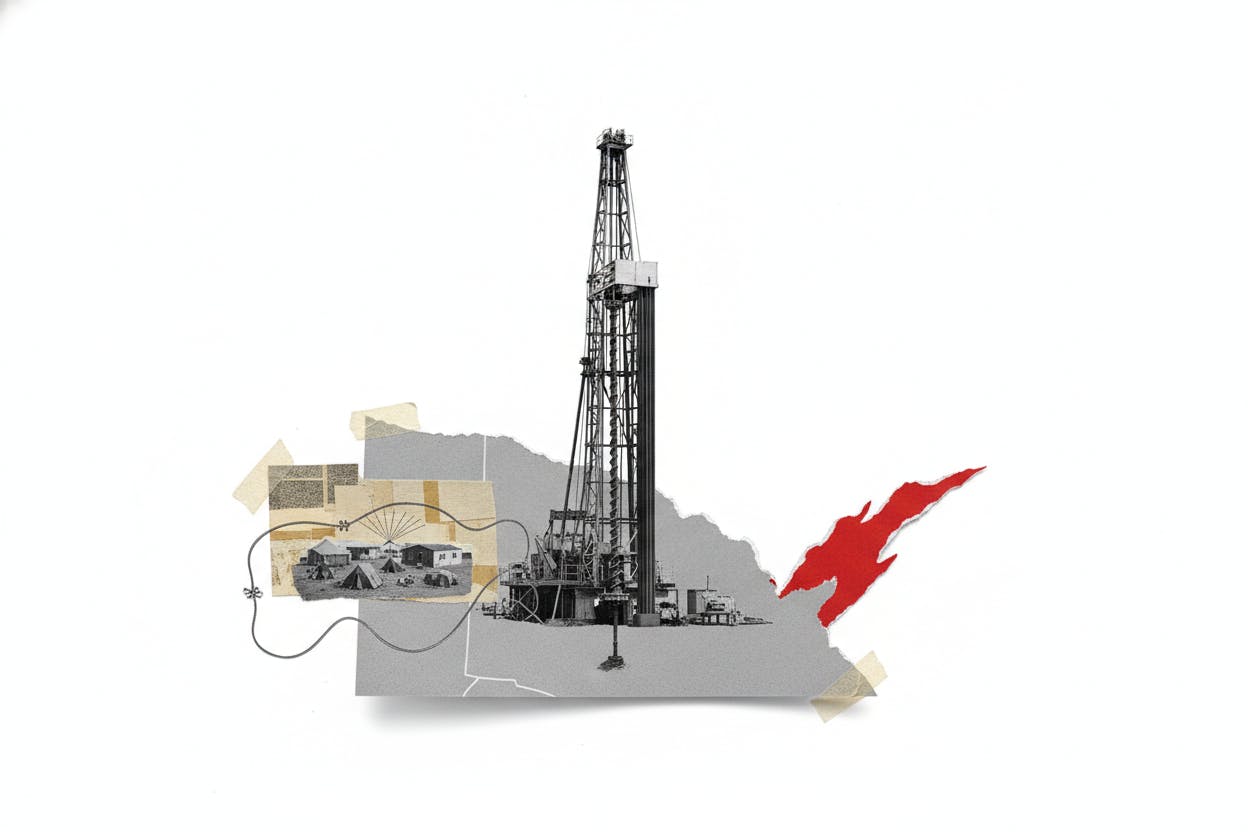
Traction Uranium, a junior explorer listed in Canada, is lining up a fall 2026 diamond drilling campaign at the Aurora uranium project in Saskatchewan's Athabasca Basin. The program will be funded by Traction and operated by Cosa Resources, a Canadian exploration company, under a structure that is common in the junior mining sector.
The drill targets were flagged by a 2024 airborne VTEM survey, a geophysical method that uses electromagnetics to identify conductive zones in the ground—often a sign of potential uranium mineralization. The upcoming campaign is part of Traction's option agreement to earn up to an 80% interest in Aurora, provided it meets agreed earn-in milestones, typically by spending on exploration over time.
What is the Athabasca Basin and why does it matter?
The Athabasca Basin in northern Saskatchewan is one of the world's most prolific uranium regions, hosting high-grade deposits that have historically supplied a significant portion of global uranium production. The basin's geology is known for unconformity-type deposits, which are often found along conductive structures that can be detected by airborne surveys like VTEM.
For junior explorers, the path to a mine is long and capital-intensive. Drilling is the primary way to test geological targets and build a resource estimate. A successful drill program can dramatically increase a company's value, while a miss can set it back. This is why the upcoming campaign is a key catalyst for both Traction and Cosa.
The operator-funder model
The arrangement between Traction and Cosa is a classic operator-funder setup. Cosa, which has the technical expertise and on-the-ground experience, will manage the drilling operations. Traction, which is providing the funding, will pay for the program. This allows each company to focus on what it does best—Cosa on execution, Traction on financing and strategic direction.
This model is increasingly common in the junior mining space, where capital is scarce and expertise is specialized. It also spreads risk: if the drilling fails to find economic mineralization, the funder bears the financial loss, while the operator's reputation may take a hit but its balance sheet remains intact.
What does this mean for investors?
For investors in Traction Uranium, this news signals that the company is actively advancing its flagship project. The fact that it is funding a drill program suggests management sees enough promise in the 2024 survey results to justify the expense. However, it's important to remember that drilling is exploratory—there is no guarantee of success.
For those watching the uranium sector, the Athabasca Basin remains a hotspot. The global push for nuclear energy as a low-carbon power source has renewed interest in uranium exploration. But junior explorers are high-risk, high-reward investments. A single drill hole can make or break a project, and share prices often swing sharply on news of assay results.
Investors should also note that the earn-in structure means Traction must continue to spend to maintain its option. If it fails to meet milestones, it could lose its stake. This is a standard feature of such agreements, but it adds a layer of uncertainty.
Looking ahead
The fall 2026 timeline gives both companies ample time to finalize permits, mobilize equipment, and refine targets. In the meantime, investors will likely watch for any updates on the earn-in milestones, as well as broader uranium market trends. The recent drilling financings in other commodities show that junior explorers are still able to raise capital, but competition for funds remains fierce.
For a sector that thrives on news flow, the next major catalyst for Traction will be the start of drilling and, eventually, assay results. Until then, the stock may trade on sentiment and uranium prices. As always, investors should do their own research and consider the risks before diving into junior explorers.