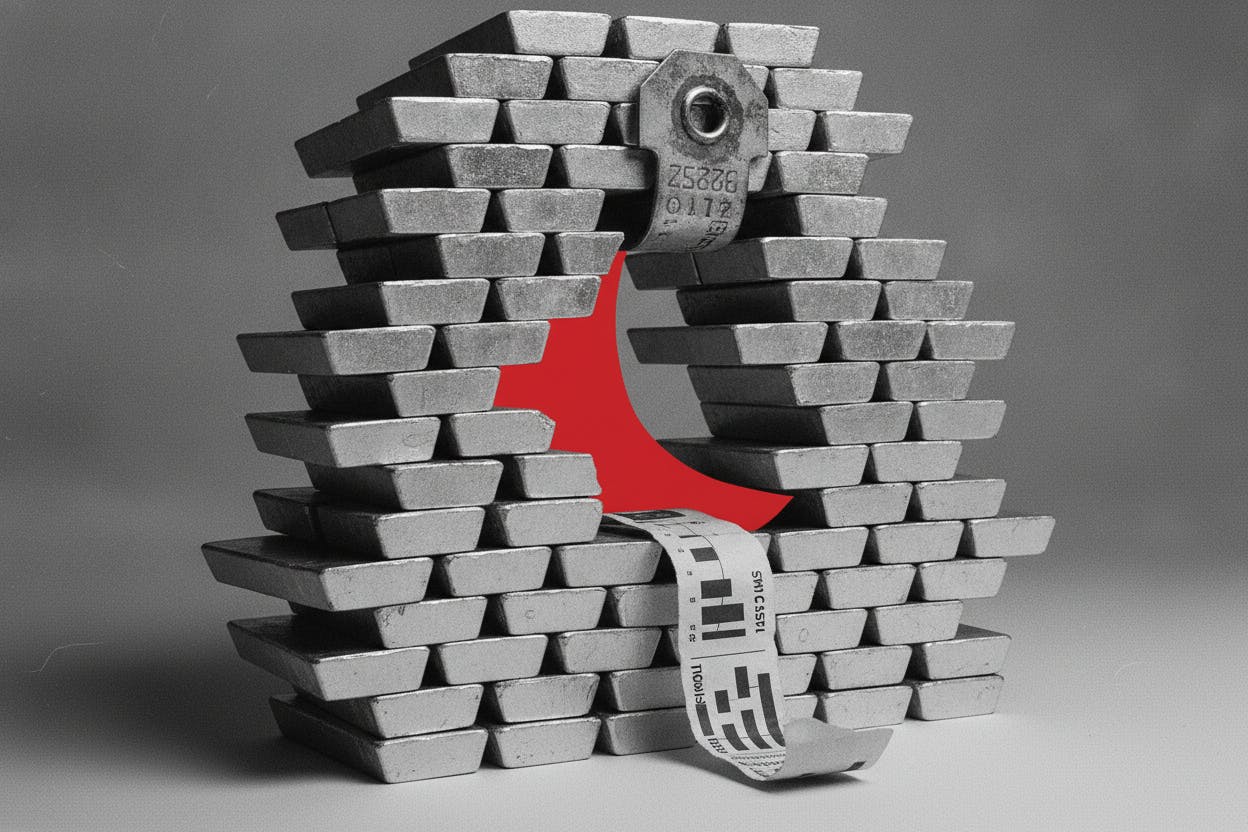
The London Metal Exchange (LME) is seeing signs of a tightening zinc market as a handful of large traders, including commodity giant Trafigura, control a significant portion of the metal that is actually available for delivery. With on-warrant stocks—metal sitting in LME warehouses and ready to settle contracts—down to just 73,850 metric tons, the market is bracing for potential volatility around the August 19 contract expiry.
According to Reuters, that inventory level represents only about two days of global consumption. In practical terms, that means the buffer of readily available zinc is razor-thin. The tightness is already showing up in prices: cash zinc is trading about $60 a ton above the three-month contract, a structure known as backwardation. That premium signals that buyers are willing to pay more for metal today than for delivery later, a classic sign of scarcity in the near term.
Why zinc matters
Zinc is an industrial metal with a very specific job: it is primarily used to galvanize steel, protecting it from corrosion. That makes it a bellwether for construction, infrastructure, and manufacturing activity. When economies are growing and building, zinc demand tends to rise; when growth stalls, zinc often weakens.
The current tightness is not happening in a vacuum. Global supply has been constrained for some time, with mine output struggling to keep pace with demand in certain regions. At the same time, industrial activity, while uneven, has shown resilience in some major economies. The result is a market where the metal that is actually available for delivery is scarce, and that scarcity is now being reflected in the price structure.
What the LME data shows
The LME publishes data on positions held by large market participants. Reuters reported that the exchange's latest data shows three large holders of zinc warrants and cash positions. Warrants are essentially title deeds for metal stored in LME warehouses; holding a large share of them gives a trader significant influence over how much metal is available to the market.
When a small group controls a big chunk of the available supply, it can create a situation where other market participants worry about being able to obtain metal when they need it. That anxiety can push cash prices higher relative to futures, as we are seeing now. It also raises the possibility of a 'squeeze'—a scenario where those who have sold metal they don't own are forced to buy it back at higher prices to cover their positions.
Trafigura, one of the world's largest independent commodity traders, is no stranger to such dynamics. The company has been a major player in base metals for decades, and its large position in zinc is not necessarily a bet on prices rising—it could simply reflect its trading and logistics operations. But the concentration of ownership is nonetheless a key factor in the current market tightness.
What it means for investors
For everyday investors, the immediate takeaway is that zinc prices could be more volatile than usual in the coming days. The August 19 expiry is a specific date when contracts must be settled, and if the tightness persists, we could see sharp moves in the cash-to-three-month spread.
That volatility is unlikely to directly affect most stock portfolios, but it can have ripple effects. Mining companies that produce zinc—such as Glencore, Teck Resources, or Newmont (which owns zinc assets)—could see their shares react to price swings. Companies that use zinc heavily, like steelmakers or galvanizers, might face higher input costs, which could squeeze margins.
For those with exposure to commodities through ETFs or mutual funds, the backwardation is a sign that the market is pricing in near-term scarcity. That can be a positive for investors holding physical metal or futures, but it also carries risk if the tightness eases quickly—for example, if more metal is delivered into LME warehouses or if demand weakens.
It's also worth noting that this is not a repeat of the 2022 nickel crisis, when the LME suspended trading after prices spiked wildly. Zinc is a larger and more liquid market, and the current backwardation, while notable, is modest compared to that episode. Still, the concentration of positions is something the LME monitors closely, and it could take steps to increase transparency or adjust position limits if it deems the situation problematic.
Looking ahead
The key date is August 19. Until then, traders will be watching LME stock data and position reports for any signs of change. If more metal is delivered into warehouses, the backwardation could narrow quickly. If not, the premium for cash zinc could widen further, and we might see more headlines about tightness in the zinc market.
For investors, the broader lesson is that commodity markets can be subject to sudden shifts in supply and demand dynamics. Even a metal as widely used as zinc can experience periods of acute scarcity, and those periods can create both opportunities and risks. As always, diversification and a long-term perspective remain the best defenses against short-term market noise.